Broken by Ivy Logan
My rating: 5 of 5 stars
I liked how the story depicts individual real life occurrences, happenings, and events so very well. The main character, Caitlin, receives a prophesy at the beginning of her life. It isn’t something she wants to have happen, so she tries to prevent it. But in so doing, she causes it to happen. I think we have all come across something like this in our lives. We can’t always prevent or know something is going to happen as a result of our actions, and we can’t foresee the outcomes. In the end, if we come to the knowledge that we caused something bad to happen or that we were responsible in some way for how someone turned out, we need to learn to forgive ourselves. That’s part of what the story of this book teaches.
The author did a great job of conveying character emotions. I felt as though I was in the story myself and feeling what the characters were feeling. The evil king irritated me because of how nasty he was, but at the same time, one had to feel kind of sorry for him given his background. It left me wondering how he would have turned out had his adoptive mother lived.
Well done, Ivy Logan!
View all my reviews
Tag: Fiction
The Cross’s Key: Chapter 1 (a Snippet)
The following text is from my new novel, The Cross’s Key
Voices quarreled, shouted, cried, prayed. It culminated Kyle’s conscious, as he lay face down on the dusty ground. Voices drew near. Kyle slid his eyes open. Dust blew by and caught in his lashes causing hi to blink a few times. He lifted his head, pushed his torso up, and lumbered to his knees. Sitting on his heals, he checked out his surroundings.
The sight before him took his breath away, and he was glad he was on his knees, or he would’ve ended up on them anyway. Although he remained at a distance, the horror before him grabbed his gut. There before him…..
The Tension Factor (Part 2)
In a previous post I talked about types of tension and where you can find it. In this post I’d like to talk more about using it in your story in order to keep your readers turning pages. I’ve read books where, once the action starts, there is no stopping until the end. I’ve watched television shows and movies where the tension was like that, too.
What also works is what I call on again off again tension. This is when the tension is rising and has the reader/viewer on the edge of their seats, then the story does an abrupt change and goes to a different scene thus breaking the tension. Those are the moments when you, the reader, might stay, “Nooo. What happens next?” You might put the book down at this point because you’re frustrated or you might continue reading. But that’s up to you. Eventually, you will pick the book up again and continue reading. Although, I don’t see you waiting very long if you are wanting to know what happens next.
Either of these two ways of creating tension is effective. It all depends on the story you are writing and how you, the author, wants to create that tension. BUT…..however you present the tension in your story, it must build as the story moves along. Continue throwing conflict at your main character(s), and continue stepping up the “gas”.
Choosing a Genre
Whether you are writing a book or reading one, you’re choosing a genre.
- Genre: The dictionary definition of genre is as follows “A class or category of artistic endeavor having a particular form, content, technique, or the like:” It involves, “a kind, category, or sort, esp. of literary or artistic work.”
Nonfiction, fiction, and poetry are the three main literary genres, but there are many subgenres within each of these three. I’m going to pick on fiction and list some of these subgenres below.
- horror
- mystery
- fantasy
- legend
- thriller
- science fiction
- crime
- romance
Let’s say you want to write a short story, but you don’t know which kind you want to write. Well, what interests you the most? If you are an avid reader of fantasy fiction, then chances are you’re familiar with that subgenre. In that case choosing fantasy would be best. But what if you wanted to challenge yourself and write in a subgenre you are not familiar with? Then choose one outside your comfort zone. If you do that, make sure you do your homework and read a few books or short stories in that unfamiliar subgenre and do some reading up on it. Trust me, they all have their particular rules one must adhere to when writing in them.
There is no hard and fast rule when it comes to choosing a genre. It really is up to you and what your goals are.
Pretend
When I was a kid, my sister and I would play pretend all the time. I loved those times because we didn’t have a care in the world. We didn’t have the responsibility of grown ups yet. The freedom to dream stuff up while we played brought about so much enjoyment. Then as we grew older our interests changed (obviously). I remember, too, as a kid, not wanting to grow up because it meant taking on responsibilities outside of being fun. I think many of you can relate. Then, when I did get older, I wanted those not so fun responsibilities. Why? Because it meant a whole different kind of fun. But the pretend didn’t go away. Not really. It changed course by coming in the form of story telling and poetry writing.

Writing fiction and creating poetry gave me that same playful satisfaction that playing pretend as a child had. But not everyone writes. We’re all different and, therefore, we enjoy different things. I have one friend who loves to fish and goes on fishing expeditions by himself. It’s a time for him to relax and regroup. Plus it gives that time to allow his mind to take in the beauty of where his is. If feeds his soul.

What is your pretend time? What is your enjoyment? If you don’t have anything that frees up your mind and body from the day’s stressors, find something. If you can’t figure out what that something is, try different things. For me, as mentioned above, it’s my writing.
Don’t Rush
Writing, whether you are writing fiction or nonfiction, is more than the act of writing itself. It is a process and it all takes time. Rushing through from the beginning to the end will only get you no where very fast. This is not a post about the writing process; although, that is come up in a future post. No. This post is about taking your time with it. Let’s dig in.
I understand the urgency to get the finished product in front of people. Trust me when I say, readers know when a writer/author sped through their writing. How, you might ask? The writing itself will be bad. There will be misspellings, awkward sentences, punctuation in places there doesn’t need to be any and vice versa, plot holes, and/or the format is all wrong. The list goes on and on. I’m not talking about a few errors, because we all make mistakes. I’m talking about many. You might say that a piece of writing like this needed a good editor. That is correct. However, here again, the time was not taken to even edit the piece. Editing takes time, too. Trust me. I’m not talking about a couple of days or a week. Instead, I’m talking about months. Then beta readers have to read it first before putting it out to the public. The beta readers, or test readers, will give you viable feedback in regards to what is and isn’t working with your story or book.
Once you get feedback from your beta readers, look at their recommendations one at a time, and fix them if you agree with their assessment. Remember, it’s your writing, so it is up to you as the writer to do with your piece as you see fit.
Here is a list that should give you a picture of the length of time it takes to write a book…..
- Planning- How you plan your story is up to you.
- Draft one- Depending on the length of your story (book length) it can take 1 to 3 years for draft one. My second novel is over 500 pages and took me three years to finish the first draft. But remember, we are all different, and life gets in the way.
- Draft two- No, you are not starting over from the beginning. What you are doing at this stage is taking your first draft and working with it from the beginning to the end. What you will be doing is tweaking your story, characters, structure, looking for plot holes, etc.
- Draft three- Repeat draft two process. Yes, there might be things you will miss.
- Do you need a fourth draft and beyond? That is up to you.
- Self editing- You will want to edit your story/manuscript first before you send it to an editor.
- Editing- Get a good editor. Shop around. Don’t hire the first one that comes along unless they come with good references.
As you can see, writing a book is not a quick process. Take great care with what you are writing. You want to please your readers not make them shut the book before it begins.
Theme: Where to Find It
To start with, theme is a lesson or idea the story teaches and is carried throughout the story. But where do we find a theme to center our stories around? We can Google a list of possible themes and go from there. After all, sometimes our mind goes blank right at that moment you want to think of something. Google helps boost our minds. Of course, there are other search engines, so the choice is yours which one you use.
Another possibility is yourself. You’re probably going, huh? That’s right. Your own experiences can shed light on various themes you can center your story around. In your lifetime what have you learned? How did you learn it? Did you have to learn how to get along with someone you didn’t like? Did you have to learn how to give more? Did you have to learn to be patient? Maybe you had to learn to take risks. The list goes on and on. Or maybe you know of someone who had a learning experience.
Does this all mean your story has to be directly related to your learning experience? No, absolutely not. You aren’t creating nonfiction. You are wanting to create fiction. All I am saying is to use your learning experience (or someone else’s) and come up with a fictional story that centers around the theme (or what you learned) from your own life.
There are times, though, when all you have to do is start writing a story and the theme will present itself as the story unfolds. Yes, there are some writers who write this way. I am one of them. I don’t like to restrict myself, and I find it more freeing to just start writing. How about you?
Theme: That Sticky Thing Some Have Issues With
How do you insert a theme into your story? Well, there are different ways of doing this. Just so you know, how this is done differs from writer to writer. After all, we are all different minded individuals. I tend to do things a little backwards. At least in my mind I do. To start with, theme is a lesson or idea the story teaches and is carried throughout the story. A story can have more than one, so don’t think you can’t go beyond that.
Examples
1. Good vs. evil
2. Power of corruption
3. Love
4. Free will
5. Tragedy
Of course, there are many many more. But, how do you incorporated it into your story? I have come to the knowledge over the years that it has much to do with how you write. I am a panster. In other words, I don’t plan. I make the story up as I go along. I know in advance the type of theme I am wanting to work with, so I set out writing my story. As I am writing, the theme is working in the background, a.k.a simmering in my subconscious. It will come to the surface as the story unfolds.
In my latest book The Cross’s Key, when I finished it, I started at the beginning of the book and looked for anything that pertained to the story’s theme and made notations of it. When that was finished, I went back to each notation and decided whether or not the theme was developed enough. If it wasn’t, what did I need to insert in order to develop it more. Was there anything that didn’t make any sense that needed clarification? Did the theme flow with the rest of the story, or was there something out of place that might derail the reader? Trust me, it’s your story, so you will know the answers to these questions at the moment you’re going through it.
If you are a planner and plan your story out before you set to writing that first chapter, then you are going to outline your chosen theme during the planning process. If this is the way you work, what I would do is come up with a theme first. Next, I would write down in a couple of sentences what my book is about (or a general idea anyway). Then go back to your theme and brainstorm various ways that theme could be incorporated into your story.
Whatever way you choose, please note, theme is an integral part of your story. Yes, I know there are many elements to a story that are important, but theme will pull at the reader’s mind and work toward making connections in ways only they will know.
Developing Story Ideas
Steps to developing your story ideas don’t have to be difficult. Here are some ways to do this.
Create a Character
Describe his/her physical attributes, personality, their likes and dislikes. You can include their race and ethnicity. What is their job? What other details about them are there?
Identify Your Character’s Desire
What is it specifically that drives your character into action?
Choose a Resistance
What or who will stand in your character’s way?
The Change
Decide on how your character will grow throughout the story.
Captivating Settings
What is going on in and around your character’s world?
Putting it all together
When you first start your story idea, the above will work as a guideline. Jot down some ideas in a journal or notebook for each of the above areas to get yourself started. Then go back and develop each area in more detail. Continue this process until you have enough details written in each of the above areas to bein your story. However, when you begin writing, your story will be up to you. Everybody is different. You may not need many details to start, but others will.
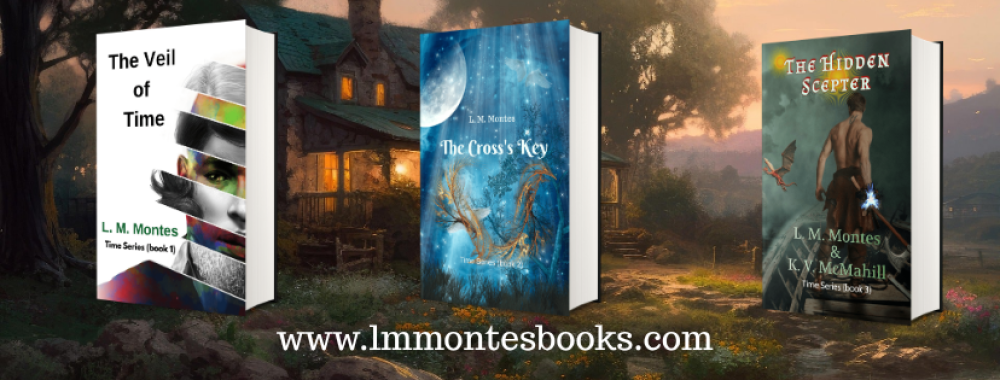
The Cross’s Key
The Kindle/eBook version and all formats of my new novel are now live on Amazon.

