Posted in Starts

The What If…

On March 8, 2022 I wrote an article for this blog on starting your story/book/novel. Well, that was a general overview of starting your writing journey. Here in this article I am going to be more specific. There are many ways in which one can start a story. One way I’m going to touch on today is the ‘what if’ statement.

Let’s say you want to write a story but you don’t know where to begin. Start with a ‘what if’ statement. It doesn’t have to be complex; it just needs to catch attention.

Examples:

  • What if a girl is at the beach with her friends and finds a locket dated from the early 1900’s, and on the inside is a photo of her great grandmother and another man who is not the girl’s great grandfather.
  • What if a young man (in his 20’s) is at work and receives a message that his wife has fallen ill, but the thing is he has no wife.
  • What if three male friends are walking in the woods taking a short cut to another friend’s house. On the way only two of them are carrying on a conversation while the third friend stays silent and listening. One of the other two turn to the third to get his opinion on something only to find he’s not there.
  • What if a man in his thirties who lives in an apartment steps out and is on his way down the hall to go out to his car but stops short at the open door to his neighbor’s apartment. There’s blood on the threshold and on the arm of the couch just to the left of the open door.
  • What if an uninvited stranger walks into your party, singles you out, and tells you, “He’s here.” But you don’t know who ‘he’ is.

Feel free to steal the above ideas. Maybe one of these will help you come up with a ‘what if’ of your own. Have fun with them. The idea is to create a ‘what if’ statement that creates questions. Once you have a ‘what if’ statement you want to use, continue building on it. You’d be surprised how your mind will start spewing out idea after idea that will expand on that one ‘what if’ statement.

Posted in Dialogue

More on Dialogue

  1. Begin a new paragraph every time a new person speaks. If you don’t do this, the reader gets confused about who is supposed to be speaking. You don’t want that. You want your readers’ minds to be engrossed in the story, not outside the story.
  2. Remember to use quotation marks whenever someone speaks. Doing this will differentiate between someone speaking out loud and what is going on inside the character’s mind, narration, or description. Here again, you don’t want confused readers.
  3. Just a reminder here: use dialogue tags (see previous article entitled Dialogue Tags from July 28, 2022 for more details).
Posted in Dialogue

Dialogue Tags

I had a conversation with a first time story writer yesterday. She told me she has a problem with stopping shortly after she starts a story, then she never goes back to it. I asked her what was stopping her. She told me it was the dialogue. When I asked her what specifically about dialogue she was having issues with, she said it was difficult starting it and how to use it.

To be honest dialogue can be confusing to someone who has never written it. There are rules that apply. I’m only going to hit on one here. I went over this with her yesterday, and it cleared up so much for her.

Dialogue Tags—A phrase that precedes, breaks up, or follows dialogue and indicates who is speaking, how it is being delivered, and whether or not a new speaker is talking.

One thing to keep in mind is that you don’t necessarily have to use dialogue tags in each piece of dialogue. When there are two speakers, use a dialogue tag in the first two to four pieces of dialogue, then stop for the rest of the characters’ conversation. Trust me, the reader will be able to follow who is talking. But, to remind the reader of the order of who is speaking, add a dialogue tag or two somewhere in the middle of the conversation. Normally, two people in a dialogue speak every other piece of dialogue unless otherwise indicated. See example below:

“Let’s get cracking,” said Jack. “These leaves aren’t going to rake themselves.”

“Really? Do you have to be so bossy? I mean, there isn’t a whole lot to do here. Besides, mom said it was optional, and I choose to meet Kayla at the lake,” said Jim.

“Mom will appreciate it so get busy.”

“No.”

Jack thrust his rake to the ground and stalked after his brother. Upon reaching him he grabbed for his shirt. (Indicator that disrupts the dialogue order of who is to speak next).

Jim spun to the right and watched his brother tumble to the ground. “That’ll teach you.” (We know it is Jim speaking here because this sentence is in his point of view at the moment. Therefore, no dialogue tag is needed).

Jack stood and glared at Jim. “You’re an idiot.”

“Maybe so. But at least I know how to have fun.”

“What’s that supposed to mean?” asked Jack wiping sweat off his brow. (Reminder of who is speaking next).

“Ever since dad died, all you do is work. You used to have fun. We used to hang out together.”

“Yeah, well things have to get done around here. Someone has to do it.”

As you can see in the example above, other indicators, other than dialogue tags, can indicate when someone is talking (But that’s for another blog post; you got a taste of it here). The idea is to make the dialogue between characters flow. You don’t want it to be choppy. So use the dialogue tags wisely. It takes practice. Also, next time you’re reading a work of fiction, pay attention to the dialogue tags and how the author uses them.

Posted in Writing

The Chapter of Sludge

Ya know, there always seems to be that one chapter or scene that seems forced. Now, we all know creativity can’t be forced. But, sometimes it just is. So how do you get past that? Sometimes you just can’t. You have to wait. That was my day yesterday. I sat down to continue working on chapter 37. At first I couldn’t think of anything. My characters were standing around getting ready to do a fight scene, but they wouldn’t do anything. This writer’s mind was stumped. To rectify this problem I put on some fantasy music hoping this would stir the creative juice pot. It did to some extent, and I completed 600 words. Am I happy with it? Eh. Maybe. Maybe not.

One has to consider what is going on around them that might be a cause for the creativity rut. Part of our house is being renovated, so there are workers here during the week. I am taking care of the business end of this renovation. You know, phone calls, questions, updates, paperwork, etc… I think this has much to do with throwing monkey wrenches into any creative situation.

The show must go on. Keep writing even if it’s a slow and/or disruptive day. The story must get written.

Posted in Books

What is Coming

Projects I am currently working on will be coming to completion in the coming months. Please see the list below.

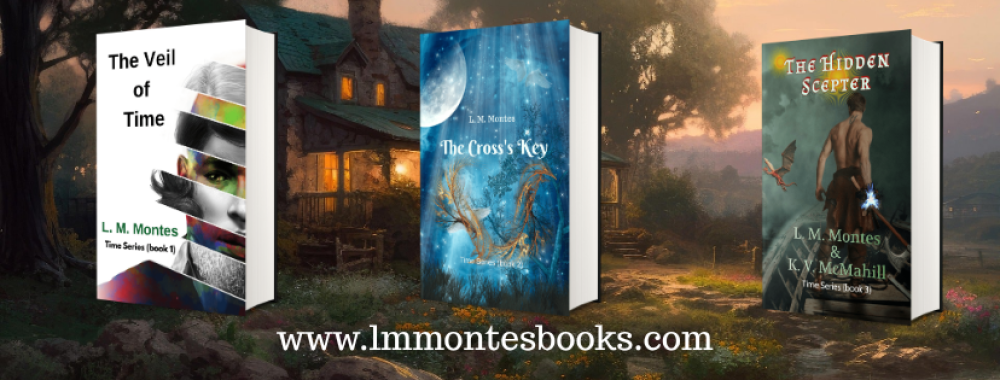
  1. THIS BOOK IS NOW OUT😁😃. My novel: The Cross’s Key. I plan on this being published in August. However, issues have arisen with our house which may cause some delays (I hope not). But if there are delays, it will be published in September.
  2. My book of poems: Hanging by His Hand. This will be published in September.
  3. My book of short stories: Lights of Fantasy and other Short Stories. This will be published in January 2023.
Posted in Writing

Your Fans

What keeps you motivated to continue writing? There are many motivators, but what I am focusing on at the moment are your fans. I don’t merely mean readers. I mean true blue, unadulterated fans. Those individuals who love your work. They love it so much they will come back for more. They throw complements at you telling you they LOVE your stories and to PLEASE write more. They chomp at the bit waiting.

What this does is feed your mind and continues to sprinkle a positive light on it. We all love complements, don’t we? So use this to make your writing better. And as you’re writing, you’ll be focused on how can I make this even better?

In a nutshell, your fans keep you on your toes, and they make you a better writer.

Posted in Writing

The Career of Writing

If you want a career in writing, you have to write everyday. But, as a writer and author myself, do I write everyday? Well, yes and no. When I am not writing, I am working on my story. Some of that non-writing time is spent thinking about my story, such as:

  • The plot– Where do I want the current scene to go? What complications can I throw into the mix to create a hardship for my characters?
  • Characters– How can I make them stand out better? What emotions should they be feeling in the current scene? Are there any other physical characteristics they need to be given?
  • How can I fix a plot hole I inadvertently created?
  • Setting– Maybe there is another setting I need to create, or maybe I need to work on a current one and make it stand out more.
  • Maybe I hit a brick wall, and I am having difficulties moving forward with the story. At this point I would need to examine my story structure. I say this because usually when this happens its because the right scene is in the wrong place in the story. Example: a scene I wrote in Act II should be in Act I. (Seriously, it happens).

While I am thinking of any of the above items, I am doing something else that helps to clear my head of irrelevant stuff and focus more on the story. For an article about clearing your head activities, see Never at a Loss for Words published June 10, 2022.

You don’t want writing to become boring, though. Keep it interesting. Take yourself on a field trip somewhere that can add flavor to your setting. Are you writing a murder mystery that takes place in a small coastal town not far from where you live? Go there, take notes. You know stuff like that.

If you love to write, keep doing it.

Posted in Writing

The Tarnish

Draft one of your story is like tarnish on your good silverware or your jewelry. There are parts of it that are discolored, or in the case of your story, make no sense, or is in need of more information. Your grammar and spelling may need to be cleaned up as well. That’s what the first draft is: a mess that needs to be fixed. But, hey, you have it down on paper (in an electronic document) right? Right. That’s what counts.

Once you get that first draft done, that’s when it’s time to clean the “tarnish” off and polish it up. So, you go back to the beginning of your story and start reading through it, all the while making notations of changes you might want to make. When that’s done, go back to the beginning once more and make those changes you noted.

Keep going over and over your story like that until it’s the way you want it. Make sure everything makes sense. Lastly, you want to check grammar and spelling and word redundancies. When that’s done, you will have a finely polished story that will shine its brightest.

Posted in Fiction

An Author’s Journey Pictorial (Fun with Pictures)

IDEA

Photo by MAFIK OLAMIDE on Pexels.com

JOT DOWN IDEAS FOR YOUR STORY

Photo by MESSALA CIULLA on Pexels.com

CREATE CHARACTERS

Photo by Ron Lach on Pexels.com

OUTLINE YOUR STORY (IF YOU ARE A PLANNER) AND WRITE IT

Photo by Ken Tomita on Pexels.com

YOUR FINISHED BOOK

Photo by d.n.c films on Pexels.com
Posted in Characterization

Character Richness

Have you ever read a book, and you liked the characters so much that you didn’t want the book to end? Oh yes, I’ve been down that road myself. That means the author did their job of creating characters that stand out and touch your heart. But, how did they do that?

  1. Their characters displayed emotion to the point that the reader ‘felt’ right along with them.
  2. The character displayed a habit or two. This personalizes the character, makes them human.
  3. The character was relatable. We as a reader could identify with that character. We may have understood what they were experiencing. If not, then we could at least feel for them and/or root for them.
  4. The dialogue sounded real and not mechanical or robotic. Maybe they made you laugh or cry.

These are just some of the elements a writer uses in order to bring a richness to their characters. Take your time developing them. Observe people around you and jot down notes of things you see or hear them say or do.