Posted in Scenes

Starting a Scene

In fiction, there are 5 ways to start a scene

With Action– Hook the reader by providing something about the character. Maybe their past, choices they’ve made, their desires. It will depend on the story you’re writing. Make sure it flows with the plot.

With Summary– Not all writing within a story is showing. There are times you need to tell, too. This is where that comes in. When necessary, and when the story calls for it, begin a scene with some expository writing. Make sure it’s relevant and prepares the reader for forthcoming events.

Introduce Your Narrator– What you’re doing here is introducing your narrator to your readers. Open readers up to the narrator’s mind. What makes them interesting?

With Scene Setting– Describe a scene. I like to call this introducing what’s coming with visual flavoring particles. What you’re doing here is giving the reader a visual setup of the environment within the scene that will then lead to the action/reaction within it. It’s setting the stage, in other words. You’re just doing it with description.

With Dialogue– There is nothing like starting a scene with tense dialogue or, what I call, inviting dialogue. It’s the type of dialogue that invites the reader into it to become a part. It’s done in such a way that engrosses the reader, and they won’t put your story down.

Which of the above you choose to begin your scenes will depend upon your story and its the flow.

Posted in Emotions

Character Reactions within a Story

When throwing the unexpected at your characters, it’s important for those characters to react in a way that’s realistic to the situation. If you don’t, the reader is going to end up rolling their eyes or pause in their reading and scratch their head in wonder, which you don’t want. You want your readers to be into your story and to keep going with it. Worse, they could put the story down and never finish reading it.

If you aren’t sure if your characters’ reactions aren’t what they should be, have someone else, like a test/beta reader, read it first before publishing it to the world. Get their feedback. It’s important.

Examples:

Unrealistic: A couple of your characters, let’s say to John and Kevin, are out hunting Big Foot, a.k.a. Sasquatch. They are walking through the forest at night then hear the snap of twigs. They stop and look around. Sasquatch jumps out in front of them and they start laughing.

Realistic: The same characters scream, when Sasquatch jumps out at them, and they run. (Be more creative with their terror besides screaming and running. But you get the idea.)

Unrealistic: One of your characters teleports for the first time in their life and they react as though they’ve been doing it all their life. (Trust me, that’s not a realistic reaction.)

Realistic: The same character teleports for the first time in their life and feels feint afterwards. (Here again, get creative with this.)

Overall, you want your readers to enjoy and take in the story you took so much time and care to write. You want them to experience it and feel it. So don’t ruin that experience for them by causing them to roll their eyes or put the book down.

Posted in Poetry

Pinkish Hues by L. M. Montes

Pinkish hues of gradient splendor
spread your colored robes so free,
across the sky a dance you render
for such souls who yearn to see.

A vacuumed hush with mists of dusk
whisper songs of silence floating,
nature’s calm and slowness brusque
gives way to darkness’ dewy coating.

Nighttime shines with speckled lights’
canopy gently dotting ebony skies,
moonlight hovers beams so tight
commanding coverage until rise.

Morning rays o’er the horizon render
with arms caressing soft and free,
pinkish hues of gradient splendor
for such souls who yearn to see.

Posted in Editing

Adverbs and Your Writing

I have read quite a bit regarding the usage of adverbs when writing fiction. Most of what I’ve read says not to use them. Period. Yet, I still see adverbs in fiction. Can we catch them all. Hmm…maybe. I think the key is to go back through during your edits and look for those and those alone and nothing else. Yes, do an edit just for searching out adverbs in your writing. When you do your initial search for them, circle them, then go back through and rework the sentences they’re in so that they aren’t there at all.

What do adverbs do that are so bad? They make the writing sound amateurish and unprofessional, they take away from any real action going on, and they take away the show out of the “show don’t tell” rule. There are better ways to say/write something.

Example 1:
(with adverb) Jason stepped lightly across the room to surprise Jill.
(without adverb) Jason tiptoed across the room to surprise Jill.

Example 2:
(with adverbs) Max’s harshly spoken words undoubtedly jumpstarted angry thoughts within Jason’s own mind.
(without adverbs) Max spat his words out.
Jason glared back at him, as angry thoughts jumpstarted within in his own mind.

After reading each example, how does each sound to you? The sentence with the adverb doesn’t do much for the reader at all. Plus, the action that should be there isn’t because the adverb throws “water on it” so to speak. But, the examples without the adverb creates more feeling, action, and pictures within the reader and makes for a better reading experience. You may have to play around with the words and create more than one sentence when you move to fix it without the adverbs. That’s ok, as long as it sounds better. Hence, the “show don’t tell” rule.

Posted in Emotions

Adding Humor

It’s said that in fiction there must be a pet-the-dog moment. These are times within the story where the protagonist (main character), pets a dog (or other vulnerable creature). What this does is sympathizes your main character. At the same time, if the the pet-the-dog moment is done just right, it will add suspense to the scene or the story as a whole. I have done this with the books I’ve written/published. But…..

I like to also add some humor, kind of sprinkled here and there. What this does is show your MC has a sense of humor as well. In addition, it should also add to your scene (see example below the next paragraph).

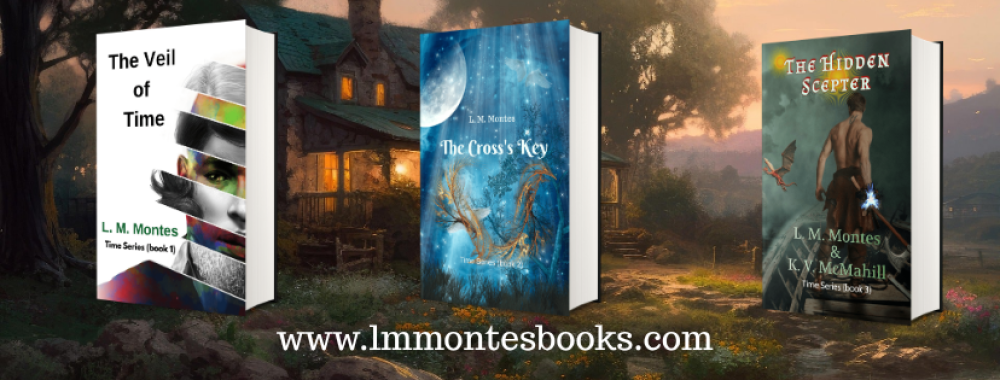
Below is an example of humor from my new novel The Cross’s Key. My main character, Kyle Stevens, is trying to glean information from one of the other characters who is being rather difficult or evasive. He does a good job of getting what he wants, while creating humor for the reader at he same time.

Why did you not ask it that way before?”

“My other three brothers would have understood what I was asking,” Kyle spat out. “Now, answer my question. Unless you don’t know. If that’s the case, admit you’re ignorant and send me on my way.” The increase in irritation caused his abdomen to rumble. The result was a noise he hadn’t intended.

“Really, you chose now to pass wind?”

Realizing Jarron must be trying to get on his nerves, Kyle relaxed and chose not to play that game anymore. “Yes, I chose now to pass wind, and I’ll continue to do so unless you answer my question.” For a minute, no one spoke. Then, “I can do this all day,” responded Kyle with a cheesy grin.

Do you have to do this every time? No. Only when I feel the need for it. At the same time, I want my readers to get a chuckle/giggle while they’re reading. s

Posted in Books

Book Deal

Starting today, March 9th and running through March 16th, the Kindle version of my new novel entitled The Cross’s Key is on sale for only $2.99. It’s marked down from $8.99. That’s a savings of 67%. Get your copy of it now before the price goes back up. The link to the book is in the book title above, below, and is also featured on the home screen on my blog.

Posted in Fiction

Book 3

Recently I began writing my third book in my Time Series. The title is tentative, so I am not going to share it just yet. But what I wanted to write about was how exciting it can be to embark on a new project yet challenging at the same time. One might think an author would feel as though beginning to write a new novel is nothing new, that it’s commonplace. One might get used to it, and the newness of it wears off. That is all wrong. Each time I started to write a new book, I felt the exciting twist of wonderment as a new opportunity to create another story began to weave its web across the pages.

Photo by Stanislav Kondratiev on Pexels.com

Granted, I have only published two books and one book of poems. But it doesn’t matter. Each one is different, so your brain isn’t getting tired of the same old thing every time. What I enjoy best is the new conflict and plot twists I will have fun creating and inserting into the story.

Photo by lil artsy on Pexels.com

I have to admit though. Going into book 3 was slow going at first. I wrote the prologue and put it away. Then a couple days later I went back to write chapter 1. I wrote approximately 500 words of chapter 1, then put it away. A couple days later I wrote more. I have chapter 1 finished now, but I was still lacking something. I ended up making a list of things I needed for the story so I can move on with it, then I sat back for about a week or so and let those ideas work in my subconscious as I moved along with the rest of my life. I didn’t sit immobile and try to think of something. Doing that would have been way too boring, and it would have gotten me no where. But now I have it. As I went about my days, I would think about my story and what it needed, relaxed, let my imagination run rampant, thought about different ideas, etcetera.

Photo by Pixabay on Pexels.com

Book 3 is now making its way across the pages of my manuscript with much more ease. If you find yourself stuck like this, don’t put too much pressure on yourself to come up with ideas. They will come to you. You just have to give yourself a break.

Posted in Writing

Feed Your Creativity

What do we need for nourishment? Food. When we eat food, we feel better. Our body feels sustained. It might also depend on what you eat, but that is neither here nor there. Actually, I’m eating as I write this article (Hahaha, no really). But how do we feed our creativity when we’re trying to think of material for writing a story? I’m not talking about writer’s block. I’m talking about putting some oomph into your story, something that stands out to readers. The answer to this question will vary from individual to individual because we are all different. Below are some ideas on things you can do to wake up your creative mind.

  • Read books.
  • Listen to music (I hear classical music is good for this).
  • Do a craft of some sort.
  • Put a jigsaw puzzle together. You’d be surprised how much this works.
  • Create ideas with some one else. Hey, two heads are better than one.
  • Take a drive somewhere that appeals to your senses.
  • Look at beautiful photos and imagine yourself inside the picture. Use your senses and describe it.
  • Take a stroll through a cemetery.
  • Cook/bake something.
  • Go to the beach.
Posted in Dialogue

Tag Lines

In a story in order to determine who is speaking a piece of dialogue, tag lines are used. Notice in the following example the last two lines don’t have a tag line. That’s because one is not always needed once it’s been established who is talking. Generally, a person will do the speaking every other line. So, in this example, it is assumed that Tia is then doing the speaking in line 3 and Sarah is doing the speaking in line 4. If a tag line is added every time someone speaks, the flow of the dialogue sounds odd. BUT, every now and then, throw in a tag line so that readers can keep track of who is speaking. There’s nothing more irritating than having to go back through a long piece of dialogue in order to keep track of who is doing the speaking.

Example: “I don’t like it one bit. It won’t work,” said Tia.
“Sure it will,” replied Sarah. “Trust me.”
“That’s the problem. None of your ideas ever work.”
“They do too.”

Please keep in mind that you don’t always have to use the word ‘said’ when creating a tag line. Here are some options in the list below. There are many many more than what is here. This is just a taste.

  • replied Tia
  • responded Tia
  • stated Tia
  • whispered Tia
  • answered Tia
  • demanded Jack
  • claimed Susan
  • asked Bill
  • agreed Susan
  • added Susan
  • admitted Jack
  • fumed Bill
  • feared Sally
  • giggled Jane
  • indicated Jack
  • joked Tia
  • decided Tia