Posted in Writing

Writing Advice and Pointers

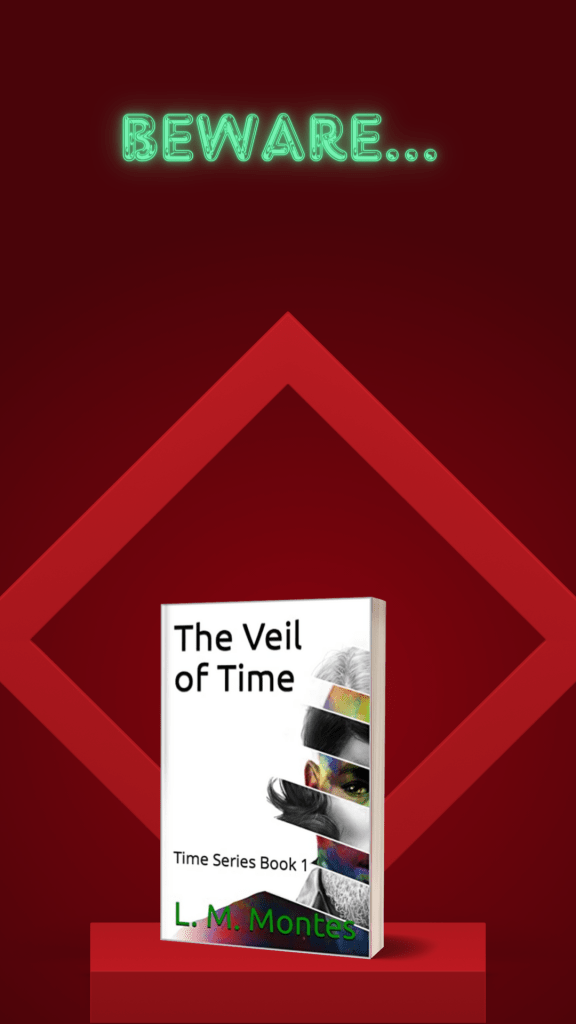
There are those individuals out there who charge for the information they give out on writing. You know, pay a fee and you can get writing pointers and tips on how to write a book, etc… That’s all well and good if that is what they want to do. They have every right to do that. However, I don’t believe in doing that unless I am publishing a book on the subject. That is the only way I will charge for the writing tips and information I give out. LOL, I don’t want to write a book about that. I enjoy what I do here on this blog. My published books are fiction for the most part. I have a book of poems published as well.

That being said, if you have any questions at all about anything having to do with writing fiction, please ask me.

Posted in Writing

So…You Want to Write a Book

You want to write a book, but you don’t know where to start. First of all, the whole process from beginning to end will take a while. I’m not saying that to scare you away. I’m just being realistic. The upside to this is you will finish if you stick to it. Do not back down. Take a break, yes, but don’t get discouraged. The ideas and creativity will come and go. Jesus is my inspiration. Without Him my efforts are meh.

All that being said, what do you do first? Well, there are some things one must think about and decide on before sitting down at the computer to write. Those things come in the form of questions to answer first and/or things to think about. You will find them below.

  1. Do you want to write fiction or nonfiction?
  2. In what genre do you want to write? If you want to write fantasy, what type of fantasy? High/epic fantasy? Low fantasy? Magical realism? Sword and sorcery? Dark fantasy? Fables? Fairy tales? Superhero fiction? Be specific. If you want to write a romance, there are quite a few of those, too. I just decided to pick on fantasy at the moment.
  3. Who is your reader? Young adult? Children? Older adults? Adults?
  4. Why are you writing the book?
  5. Learn the three act structure of a book (fiction).
  6. Get to know your characters.
  7. Ask yourself ‘what if’ questions. This will help you with creating your story and give you something to build it around.
  8. Decide on the best time of day to write and write everyday.
  9. Explore ideas.
  10. Loosen up your writing and relax.

As you can see from this list, there is much to think about. Relax, take your time with it, and about all…have fun.

Posted in Action Words

Other Words for ‘Walk’

There are times in our writing a story when we want to use another word for walk, especially if we want to depict a certain way the character is walking. If the character is angry, we don’t want them to walk away. Instead we might want them to walk away angry, but what words can we use to depict the action and at the same time convey the emotion the character is feeling. Simple, don’t use the word ‘walk’. Use something else. You will find a list of other words for walk along with the emotions they represent.

Angrily
stomp
tramp
careen
stalk
flounder
skulk

Relaxed/Sadness
stroll
saunter
amble
wander
meander
ramble
traipse
dally

Excited
skip
prance
with quick steps
trot
hasten

Confidence
parade
sashay
swank
flounce
stride
stalk


Posted in Writing

Story Strengthening

If you are a writer, whether you write fiction or nonfiction, learn about what adds strength to your writing. There is a difference between what strengthens your writing, the do’s and don’ts (which are finite), and what works for you (writing methods that work for you and are comfortable for you). Strengthening your writing means drawing your reader into your story, essay, research, etc., and keeping them there. You don’t want your readers to be half with you. I’ll pick on fictional writing here. See the list below.

Photo by fauxels on Pexels.com

DO’s/DON’TS:

  1. Create strong characters your readers can relate to (see numbers 11 and 12 below for more details).
  2. Be direct. By this I mean use action verbs not adverbs (see my posts from April 12, 2023 Adverbs and Your Writing, and from April 19, 2023 The Opposite Side of Adverb Usage for more information on this subject).
  3. Use the three act structure for fictional stories. Story Structure–Demystified by Larry Brooks will help you learn where to put in your story what you write. Trust me…you want to read this book.
  4. Be relevant. This means to make sure that what you put into your scenes has something to do with your story. There is nothing more boring than reading a book and being bored because what you’re reading has nothing to do with the story. Readers can figure out real quick when there’s information in a scene that doesn’t need to be there.
  5. Edit, edit, edit. Edit your book/story first, then give it to an editor to do the rest. Trust me, too many mistakes will cause the reader to put the book/story down, not finish it, and/or give you a bad review.
  6. Ensure your story has conflict. Conflict ensures the turning of pages.
  7. Setting. The one thing you don’t want your readers to do is ask, “Where are they”, or “What do the surroundings look like”. Be sure to include where the story is taking place and describe it. You want your readers to ‘see’ where the story is taking place.
  8. Don’t be predictable. Add some twists and turns, you know…unexpected story surprises. Have fun with this.
  9. Learn how to write dialogue. Yes, this can be messed up if not done correctly.
  10. Use of clichés. Don’t use them.
  11. Unrealistic characters. Creating credible characters who’s motives, actions, and backstories is important if you want your readers to relate to them.
  12. Unlikable characters. Your protagonists must be likable, and if they aren’t completely likeable, then they should be relatable. Create some kind of commonality through emotions or use of humanity. Here again, it’s about connecting your characters to your readers, so your readers will care about what happens to them (characters),whether it is the protagonist or villain.

Of course there are more, but this is a good ‘meat and potatoes’ list. Learn as you go.

Posted in Action Words, Emotions

Narrative

When reading a book, I enjoy the story’s visuals brought on by the author’s well crafted writing. Narration can be boring if it isn’t spiced up with words that get the readers attention. Believe me, I’ve read some books that were boring in parts because there wasn’t any ‘flavoring particles’ in the narration. It was just relaying information. I get that information must be conveyed to the reader somehow, but there’s a way to tell/show that entices the reader to keep reading. Make it interesting.

  1. Keep linking verbs to a minimum and use action verbs instead.
  2. Use words that depict feeling. Example: The hammering continued its incessant bang, bang, until I my teeth ground. I shot out of my chair, stomped to the window, and opened my mouth to scream at the culprit wielding the damn thing. But then it stopped. Everyday for the last week someone next door hammered like that all day. Yet, when asked what they were working on, the answer was “not a damn thing.”

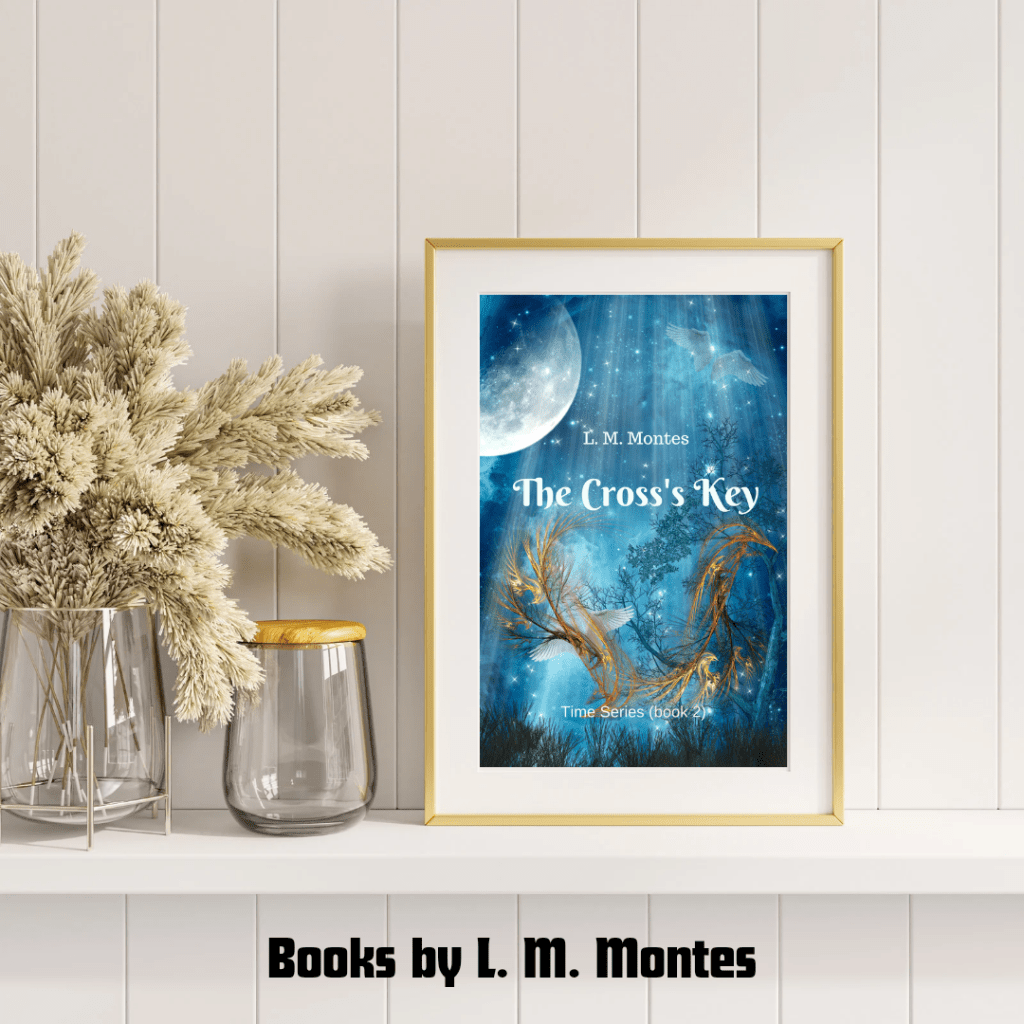
Below is a paragraph taken from my second book entitled The Cross’s Key. The character’s name whose point of view this paragraph is from is Kyle. He’s in another realm called Between Time, and he’s looking for a particular cave.

‘As he walked, thoughts of his last conversation with Nadira haunted him. Didn’t she have confidence in him? What if something did happen to him here, and the Quivicar was out of reach? How would he get a message to her? He glanced at his left palm. The Quivicar sat nice and mesh with the inside of his hand, an anomaly that occurred when it was in use, so it was unlikely to move. The edges of the inner workings of the artifact glowed a feint golden light.’

However you make your narration interesting, whether using action verbs, words conveying emotion, or by any other means is up to you. But keep your reader turning pages.

Posted in Characterization, Plot/Story

Backstory or Bust

Your main character’s backstory, or history, is presented in the first act. Sometimes in act 2 but never in act 3. The bulk of it gets inserted in act 1. I like to think of the backstory as a spring board for what is to come. Will all of it have a bearing on the main story? No. Some of it will work toward the reader getting to know your character and even creating empathy for your character within the reader. But how do you introduce backstory, and what will your character’s backstory be? I will tell you how I did it, and you can take it from there.

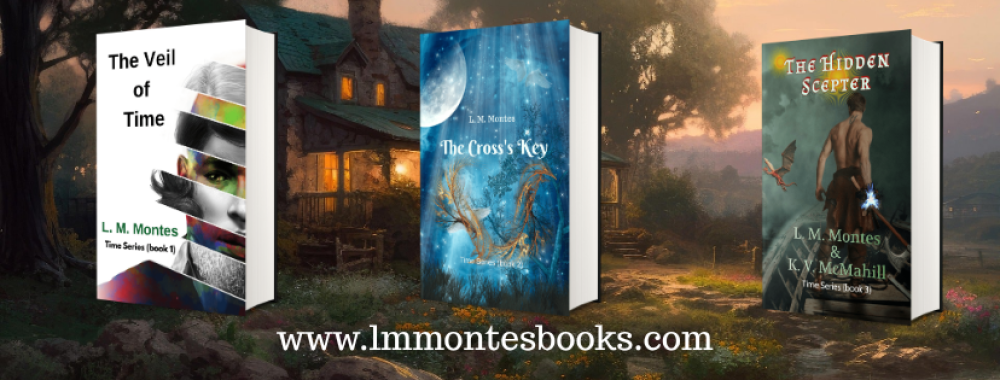
So far, I have had to create backstory for three main characters. Once in book 1, once in book 2, and now in book 3. Each time I accomplished this, I did it a different way. In book 1 I used a flashback and introspection with the main character to convey her personal history. By doing this, the reader gained insight into the main character’s state of mind and the relationship she had with her mother. It also conveyed insight into her past behaviors. Where did I get her backstory from? I used a little of my own history and embellished it.

In book 2, we meet Kyle Stevens as our main character. For his backstory, I presented it in a vision he had while in another realm. So, he was actually seeing a memory being played out in front of him. Mixed in with it were memories he had no idea he had. Everything he saw in that vision played an active role in the story to come, physically and mentally. Later in act 2 more backstory is peppered throughout but sparingly. Remember that. Kyle’s history just jumped at me as I was writing it. I made it up as I was going along. That’s a rare thing. I had so much fun writing book 2. Can you tell?

Now, I am in the middle of writing book 3. John Cummings is now the main character. He was a side character in books 1 and 2, but we never gained any real detailed information about him. Until now. The way I present his backstory to the reader is through verbal means. In other words, he has to tell the love of his life about his past. So this time it comes out in a way that’s straight forward. The back story for book 3 I am still working out. I have a journal I write notes in, so this morning as I was working on my manuscript, I got to the part where John is to tell Maggie about his past. I had an idea, but it wasn’t coming clear (not like it did for Kyle in book2). So I sat thinking about John and the other players in the story and the events thus far. Ideas started to click but not to the point where I could make it up as I went along, as before. So I pulled out my journal and jotted down notes about John’s history. That’s where I’m at with that at this point.

Do you have to do what I did? No. You can if you choose, but take my ideas and use them as springboards to other ideas you may come up with. We’re all different and do things in ways that work for us.

Posted in Characterization, Writing

What Works

If you’ve chosen to be a writer, whether it’s fiction or non-fiction, you will see quite a few books and articles regarding the do’s and don’ts if you want to be successful. I’m here to tell you there is no hard and fast rule you must follow to be a definite success. What I will tell you is to read what others have tried in the past and try it. If it works for you, continue using it. If not, either tweak it to your liking or stop using it. We are all different writers with different writing styles. What works for one writer will not work for another.

Example: Characterization
Some writers like to make a detailed personality sketch of their characters. This is a great idea because you can use it to refer back to, while writing your story. Does every author/writer have to do this in order to create great characters that come alive and stand out? Certainly not. You might be the writer/author who would prefer to make a video about your character. How you do this is up to you, of course. Or, you might make it up as you go along. Hey, whatever works for you and creates memorable characters.

Don’t stress yourself out by trying to write how others write and whether or not you’re getting it just right. Use their strategies, but use them in YOUR OWN way.

Photo by Andrea Piacquadio on Pexels.com
Posted in Writing

Writing Like Others

Have you ever observed someone else do something very well and wished you could do that just like them? I’m a writer, so I’ll pick on writing. There are some pretty talented writers out there. J. K. Rowling, Stephen King, Dean Koontz, Tess Gerritsen, just to name a few, are some them. We would all like to write like them. Truth be told, no one can write like them because no one else is them. I am me, so I can only write like me. You are you, so you can only write like you. We are all different, thank God. If we all wrote like the each other, stories would be pretty boring. What we can do is improve our writing to be the best us we can be.

Photo by Karolina Grabowska on Pexels.com
Posted in Emotions

Story Tension

Tension within a story is the sense that something ominous/foreboding is around the corner. What are some ways you can create tension within your story?

Forms of Tension

  1. Increase conflict between your characters.
  2. Make the situation worse for your character(s). Ahh, the tension of the task. Don’t make what your characters have to do easy. Don’t allow them to get what they want right away.
  3. There is tension in surprise. Readers like to be surprised, whether it’s good or bad. Prolong it. Keep stringing them along until just the right time.
  4. Create an air of mystery. We all love a mystery.
Posted in Starts

Learning Blowout

If you are in the beginning stages of learning how to write fiction, DO NOT…I repeat… DO NOT inundate yourself with too much information at one time. You will get overwhelmed and risk putting out that learning “flame”. Take one topic, for example characterization, and learn a little about it each day. Take small bites. Trust me on this. Also, taking fiction writing class works just as well.