Posted in Fiction

The Crying None

Photo by burak kostak on Pexels.com

In a previous post I wrote about writing a critique and how easy it is not. Well, receiving them can be difficult too. We want to hear that our writing/story/novel is good/great/excellent or even a masterpiece. The truth is, yes, some will give you accolades like that. But, some won’t. Some individuals don’t know how to be diplomatic and spell things out in a constructive less hurtful way. They are blunt about the negatives in your writing. Well, I say…….LET THEM. Yes, I said let them. It hurts, yes. But you can’t stop them. So, don’t cry about something you have no control over.

I have read reviews of other authors that ripped their story/novel to shreds (so to speak). Did that affect the author any? NO. It did NOT. The author moved on with her writing. She continued. Her books are still published and most of her readers LOVE her writing, including me.

Sift through the criticism that helps you. Learn from the feedback reviewers give you. How can you make your writing better as a result of using their suggestions. Will you use every piece of advice they give you? No. Again. Sift through it. Use what you can.

Don’t Cry Over Nothing.

Posted in Fiction

Water’s Time by L. M. Montes

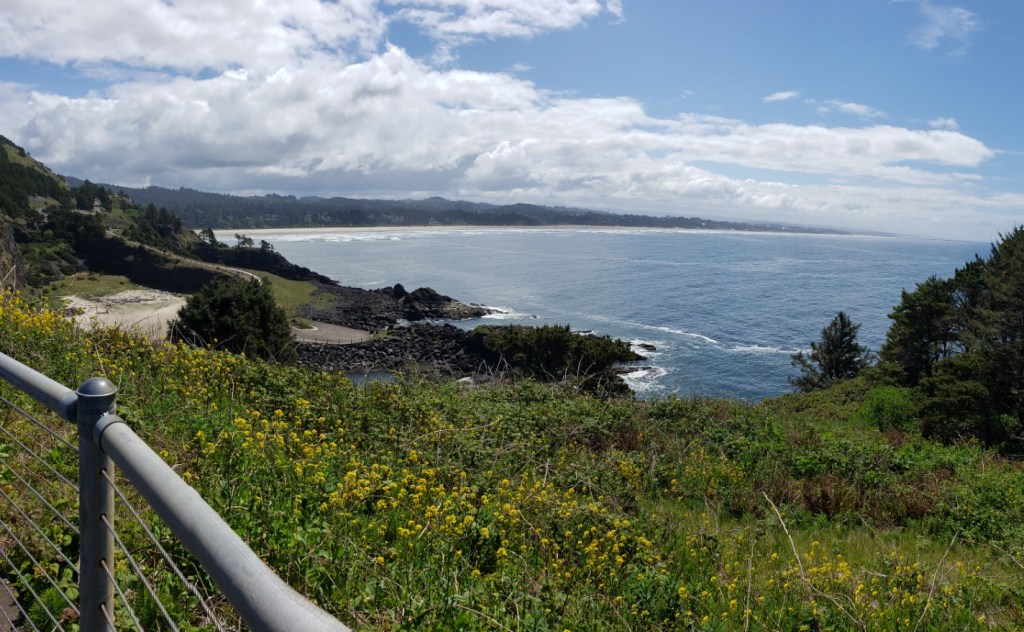
Quarry Cove, Oregon Coast

Water is as old as time,
the stories it tells
are yours and mine.

From whales to pirates,
from ships to wrecks,
these tales of old in our minds do rest.

Posted in Fiction

Writing a Critique

Photo by Andrea Piacquadio on Pexels.com

Writing a critique or a review about another piece of writing is not easy. There’s quite a bit of thought that goes into the process. Yes, a process. You don’t just want to jump right on your computer and type out what you want to say. Truth be told, you want to write what you want to say in such a way so it doesn’t hurt the feelings of the author of the piece of writing you’re critiquing.

What you want to do is write it so the author can learn from what you are saying, AND take away from it what was GOOD about their story/book. So, how does one accomplish this?

  1. Introduce the piece of writing you are critiquing/reviewing. Give a brief summary of the book/piece of writing.
  2. Discuss various details you liked about the selection. In other words insert the positives first.
  3. Discuss what you didn’t like about the selection. Talk about what the selection was lacking. What needed more work? What didn’t work well? Be as objective as possible.
  4. Summarize your review.

The idea is NOT to hurt the authors feelings. The idea is to help them so they can grow as a writer. Below is a book review by H. L. Walsh about my novel The Triunix of Time. His review was very well done. (Disclaimer: The strong-willed best friend Maggie will be back in book 2. LOL. There’s a reason that I didn’t go back to her in book 1. It’s a storyline that only works for the scenario in which she is depicted in book 2).

Sample Book Review
I was a bit unsure of this book when I first picked it up not sure what to expect. L. M. Montes didn’t disappoint me. I would recommend this book to anyone who loves a good time travel story with magical elements. Montes does a wonderful job at keeping the reader’s attention throughout the story. Her characters are well rounded and unique and you grow to care about them as you go through the story. She keeps a good pace throughout the book so much so I never felt there was a point where it was a good time to put the book down. The mysteries of Tora’s past and her future destiny keep you moving through the book and the ending leaves you with the hope of a second book. Overall, I think this book is definitely worth a read and will keep you on the edge of your seat throughout the story.

However, there were still a few things I think could have been improved. The biggest issue I think was some of the reaction of the characters. One thing that sticks in my mind is the first time Tora teleports. A mundane, every day, down to earth girl who has never before teleported in her life and the first words out of her mouth are “Want something to drink while we wait?” The lack of reaction, or what feels like the wrong reaction to certain situations throughout the book, I think was the weakest point of the writing. Another thing that stuck out to me is, I felt like Montes tried to throw too many new things in the last quarter of the book when the action was moving the fastest. It was hard to keep up and remember all the abilities of different characters.

The last thing I want to talk about is certainly the least problematic, however the most unexpected. I mentioned before how well she wrote her characters, which is why I was so surprised when she seems to simply forget about one of her characters halfway through her story never to be heard from again. I expected the strong-willed best friend to be in the story from start to finished but after she is captured by the bad guy and gets away she is dropped off in a safe house and is never mentioned again. I really liked this character and was hoping to see a lot more of her and to see her grow as a sidekick. I do hope Montes brings her back, or has a reason for her absence, in the second book.

Bottom line, I think this book is definitely worth picking up even with the few issues it has. None of these issues ever caused me to put down the book. They only gave me pause for a minute to make sure I read things correctly.

Posted in Fiction, Writing

Emotions

You’re creating a scenes within your novel. You want your audience to not only know what is going on but to feel what is going on as well. Is it enough to just describe the action, setting, and characters? No. Emotion must play a large role if your readers are going to keep reading. You want your readers to feel your character’s vulnerability, excitement, or sadness (and more). So, how do you do this?

When you’re watching a TV show or movie, you are able to SEE the characters’ emotions, but in a book readers aren’t readily able to SEE that, so they need to be SHOWN. Words aren’t enough, so we will need to insert some body language.

My previous post talked about emotions as it related to atmosphere/setting. Let’s go a little further with this; specifically, the scene itself. A scene occurs within a setting, so your descriptions of the actions and body language in conjunction with the surroundings will bring forth that emotion. The result? When done well, these emotions will ‘touch’ the reader and further draw them into your story.

Below are some short examples of visuals depicting emotion.

Sadness = downcast, a tear escaping down one’s cheek, sagging shoulders, shuffling feet with hands in pockets….
Excitement = smiling eyes, hurrying and bustling around trying to get ready to meet a particular someone they’d been wanting to meet for a long time, jumping up and down, a victory dance…
Relaxed = warm breeze, deep breath, a soft sound such as waves strolling onto shore, the rustling of leaves as the breeze whispers through them…
Anger = a blank stare, pursed lips, contorted face with squinted eyes, talking through one’s teeth, redness in the face…
Embarrassment = blushing cheeks, shy smile, glancing around the room as everyone stares at them, running out of the room…
Danger/Foreboding = a twisting in one’s gut, something is too neat, an unexplained noise, the lighting, shadows…

There is so much more that can be added to these examples, but you get the idea. It isn’t easy to incorporate emotions into a scene. You might have to experiment and play around with words before you FEEL that you have the right wording that will effectively convey just the right emotions to your readers.

Posted in Fiction, Writing

Atmospheric Emotion Continued

On (April 8, 2021) I posted a photo of a lightning storm and titled the post Atmospheric Emotion. In your writing you will need to convey emotions to your atmosphere/setting. This then creates a connection to your readers because they start to feel these emotions too. Typically, darkness or a dark room conveys foreboding or unease. A warm setting with trees, green grass, a cozy cabin with a small pond depicts serenity. But what if you want that calm serene scene to depict foreboding without the darkness? What can you insert into that scene to create that foreboding? Perhaps it’s too calm. Maybe the friend of yours who lives there is no where to be found. Her belongings and car are there, but she is not. Her cellphone is sitting on the patio table, so calling her won’t do any good. Or, perhaps he/she was there a minute ago and now he/she is not. He/she vanished in the midst of this calm setting.

When it comes to emotions and projecting them onto a setting, you must go beyond narration. Just telling your reader the back yard was creepy or gave your main character a creepy feeling or a sense of foreboding, is not enough. They must FEEL that sense. These emotional projections from a story to its reader(s) is part of what makes for a great book/story.

Example 1:

Bad
I hadn’t been in my friend, Elliot’s, basement before. Elliot had always been so upbeat all the time; full of jokes. But the black walls and purple lights were the opposite of my friend’s personality, so it was creepy.

Good
I hadn’t been in my friend, Elliot’s, basement before. I never understood why until now. In the past Elliot’s upbeat demeanor magnetized others. People drew to him. So, my breath caught in my chest, when I reached the bottom of his basement steps and flicked on the light. A deep purple glow radiated throughout the room in front of me. The color of the walls appeared to be black, but the purple light made it impossible to tell. A kind of mist seeped through a few cracks in the walls. It hit my nostrils and a dank stench reached my stomach, giving me the dry heaves. Peering to the left, a cot stood in the far corner. Was it my imagination, or was there an indentation of a body on the one and a half inch mattress? I inched that way to take a closer look. I came within five feet, and the indentation moved. No body was visible…..

Example 2:

Bad
I took my tea, opened the sliding glass door and stepped onto the back deck. The grass had been freshly mowed the day before and the flower gardens weeded. A well kept yard makes for a relaxing mood. I spotted the lounge chair to my right, walked over to it, and sat down.

Good
I lifted my tea to my nose and inhaled the ginger fragrance, causing me to smile at the sweet scent. The sun peeked out from behind a cloud and shown through the sliding glass door. I opened it and stepped out onto the back deck. A warm breeze whispered by and pushed my shoulder length hair back as I took in the freshly cut lawn and sweet scented flowers. Standing there taking in all of the beauty reminded of a mental massage of sorts. I stepped over to the cushioned lounge chair and sunk in, closing my eyes and relishing the clapping of the leaves on the trees as the breeze moved them.

In Example 1 the bad sample tells us that the character feels creepy, but do you the reader feel it? In don’t. We get that the main character feels creepy, but WE don’t feel as creeped out as he/she does. We don’t even believe he/she feels creeped out because the seriousness of the situation doesn’t come across.

In the good sample of Example 1 we feel the main character’s emotions of fear and apprehension, and we feel his disbelief of a friend who is normally upbeat but has a basement that’s dark and dreary. We are as creeped out as he/she is.

In Example 2 the bad sample is rather mundane and stale. We understand the environment is relaxed in nature but it doesn’t come across in the writing. The environment doesn’t evoke emotion at all.

However, the good sample of Example 2 conveys the imagery needed to evoke the relaxed and warm atmosphere to the reader. We can actually identify with this because most of us have experienced this type of relaxation. But, it wasn’t told to us as in the bad sample. It was SHOWN to us. Did you feel relaxed? I did.

Overall, emotions play a huge role in any story, especially when it comes to atmosphere/setting. They draw your readers into the text and keep them there. That’s where you want them, and you want them there to stay.


Posted in Fiction

Real Life with a Twist

Photo by Pixabay on Pexels.com

You are up in the mountains hiking with a friend. Along your path you come across a lone pint size milk carton. You’re a fiction writer, and you’re looking for ideas for another story but coming up with zilch. The hike in the mountains you feel will do you some good and perhaps get the wheels of creativity going. The milk carton accomplishes this goal as soon as you see it. It’s as if an electric spark shocked that story center of the right side of your brain. In an instant, your mind has a ‘What if scenario in place.

What if the milk carton had drops of blood on it, and the blood belonged to someone who vanished without a trace 50 years ago? The blood is fairly fresh too.

In reality, the milk carton is just a milk carton and it most likely belonged to another hiker. They finished the milk and didn’t want to take the carton with them, so they left it there. BOOM. That’s it. BUT, what you did with yourwhat ifscenario is put a twist on reality. That’s what fiction does. I love to put a creative spin on things. It makes life interesting.

Posted in Fiction

The Hook

Posted in Fiction

Your Odyssey

Everyone has an odyssey of sorts. If you are still in your 20’s, your odyssey is still in the beginning stages. If your are older, say in your 50’s, your odyssey is still in progress, but you have quite a life journey up to that point even more so.

We all have experiences that lead us somewhere. Maybe yours led you exactly to the point at which you wanted to be, even though how you got there wasn’t the road you wanted to take. Or, maybe it was. If you’re a writer, your odyssey is chucked full of material from which you can choose to include in your story. This goes along with a post I did earlier that talked about writing what you know. Today I want to touch on the variety of events in one’s journey/odyssey. I’ll use my own as an example.

My odyssey is in 2 parts. The first part started out in the beautiful state of Michigan, which is where I’m from. There isn’t a lack of places to camp and swim because of the huge coastline due to the lakes we have access to year round. As a result, my family camped quite a bit. The explorations, hiking, bike riding, fishing, and swimming added to the adventures. One summer at the age of 16 was the last camping trip me and my family went on together. An incident happened involving me. A moment of tragedy can happen in an instant but last a lifetime. This began the beginning of my second odyssey. From this point forward there was much I had to overcome, and it wasn’t easy. I, like many human beings, made right decisions and wrong decisions. These decisions helped me to learn and grow from. They gave me something to reflect on and use in order to mature and end up at a place in my life that leaves me saying to myself, “I made it. The journey was rough, but I made it.”

This doesn’t mean that there aren’t still decisions and mistakes to be made, but at least now I have some concrete lessons to base my decision making process on. I’m more informed. Even more, I have something I can reflect on by using these experiences in my books, which is what I did in my novel The Triunix of Time. The book isn’t about my life, but some truths lay within it. In your stories, you will embed your own truths, as many writers do. What I found by doing this is that these bits of truth enrich the story itself because you are leaving your mark. Your feelings regarding them come through to the reader by way of your story characters, your descriptions, and the like.

Don’t use all of your odyssey in one story/book (unless you’re writing an autobiography). Use them as they apply to the story you’re writing. This way, in future books/stories you will have more to use.

Posted in Fiction, Writing

Inspiration

Photo by Zen Chung on Pexels.com
Photo by Rachel Claire on Pexels.com

What inspires you? Is it a beach somewhere? Is it on a balcony overlooking palm trees and a beautiful garden? Is it on your couch at home in the comfort of your living room and your imagination? I’ve done my story writing at my kitchen table a few times, but truthfully, it’s difficult for me to be creative that way. I love being comfortable, so on my couch it is. If I’m writing while at a beach or outside at a park, I’d rather take my writing journal and put pen to paper. We all have our preferred modes of writing. What’s yours?

Another way to find inspiration is to use Pinterest. Yes, Pinterest. I do this. I have private boards for my fiction writing use. In each of these private boards I have sections for each type part of my story I’m working on.

These sections include:

  • Setting
  • Characterization
  • Artifacts
  • Vintage clothing
  • Gems

For great information on how use Pinterest for your writing, click the 4:45 minute YouTube link below.

I would love to hear about what inspires you and what your favorite places to write are, so please feel free to comment.

Posted in Fiction

Knowing

We’ve all heard the mantra ‘write what you know’. Well, what do you know? You might get stuck here, and the reason I say this is because you may not think you know enough. Trust me when I say, you do. You have a whole lifetime of experience to use in your writing. You don’t necessarily need to know anything about any one thing in order to write what you know.

In my book The Triunix of Time I have lots of real life experiences included in the story. No, I’m not going to tell you which ones (LOL). There is also included in the story dialogue from conversations I had with others; snippets. Then, the icing on the cake, embellishment. Yes, use what you know and have fun fictionalizing it and building on it.

Here’s an example:

We’ve all had at least one favorite summer; maybe more than one. What made that summer your favorite? Maybe you spent it at the beach most often and you met a new friend, or maybe you spent two weeks of it with a cousin on a farm. Yes, lets use the farm experience. Cousins are a lot of fun. If you have cousins, and I’m sure you do, you know what I’m talking about here. Let’s say you want to write a mystery, but you don’t know what to use as it pertains to setting, characters, etc. Use your experience with your cousins on their farm. Let’s say you and your cousin found a wallet in the barn while cleaning the stalls. It ended up being your uncle’s wallet. Let’s fictionalize that a bit. Maybe you and your cousins were in your early teens. Write a YA mystery involving a bag of wallets you found in a hay loft in a small barn you were both told to stay out of. You were caught by your uncle’s friend when he walked in and heard someone up in the loft. You and Johnny in your haste put the bag of wallets back in a rush and call out. “Just getting some hay for the horses’ stalls.” And on the story would go. Do you see how you could create something wonderful from one experience? By the way, feel free to steal this idea.

Photo by Lachlan Ross on Pexels.com