Posted in Fiction, Writing

Inspiration

Photo by Zen Chung on Pexels.com
Photo by Rachel Claire on Pexels.com

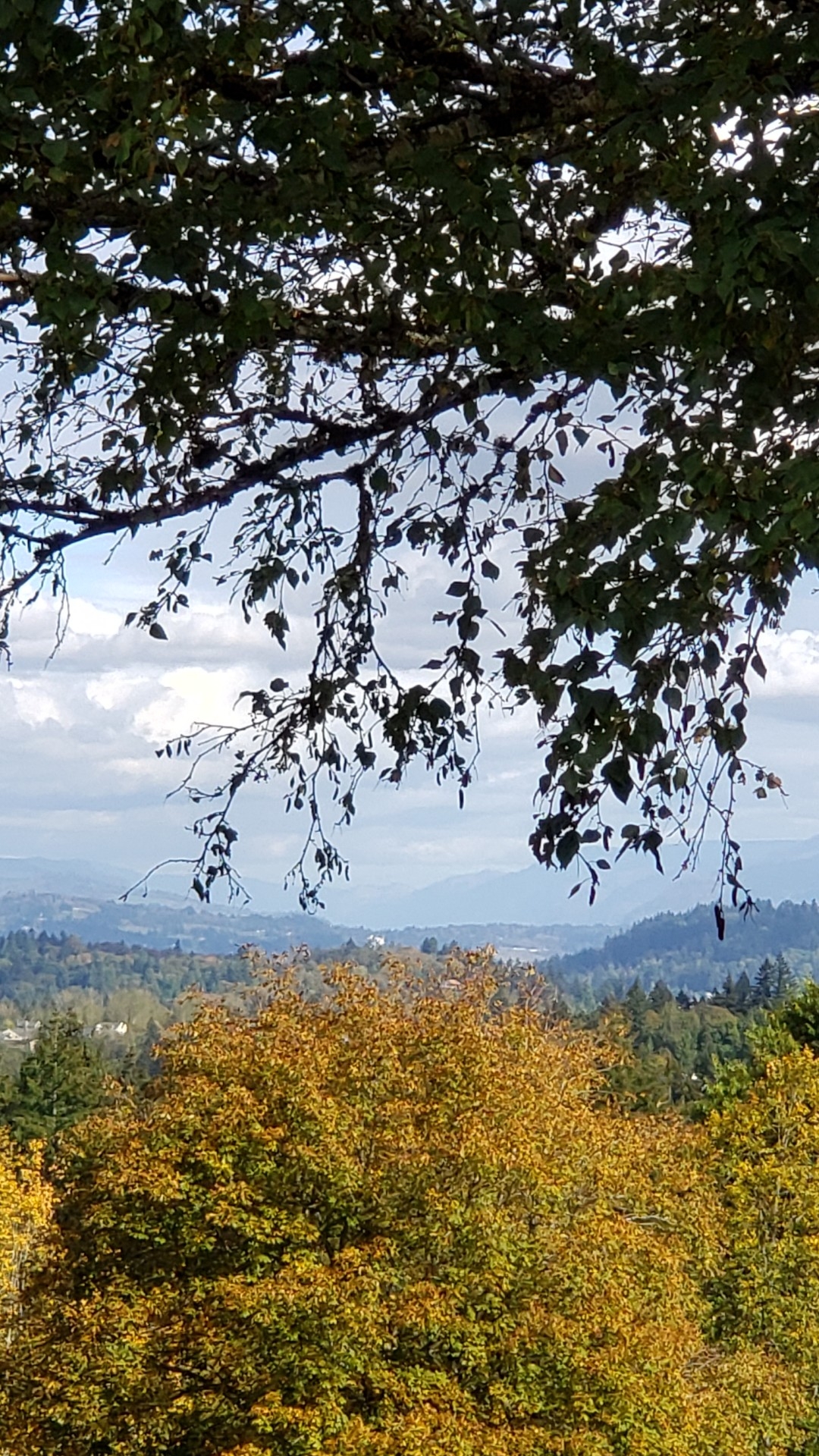
What inspires you? Is it a beach somewhere? Is it on a balcony overlooking palm trees and a beautiful garden? Is it on your couch at home in the comfort of your living room and your imagination? I’ve done my story writing at my kitchen table a few times, but truthfully, it’s difficult for me to be creative that way. I love being comfortable, so on my couch it is. If I’m writing while at a beach or outside at a park, I’d rather take my writing journal and put pen to paper. We all have our preferred modes of writing. What’s yours?

Another way to find inspiration is to use Pinterest. Yes, Pinterest. I do this. I have private boards for my fiction writing use. In each of these private boards I have sections for each type part of my story I’m working on.

These sections include:

  • Setting
  • Characterization
  • Artifacts
  • Vintage clothing
  • Gems

For great information on how use Pinterest for your writing, click the 4:45 minute YouTube link below.

I would love to hear about what inspires you and what your favorite places to write are, so please feel free to comment.

Posted in Fiction

Knowing

We’ve all heard the mantra ‘write what you know’. Well, what do you know? You might get stuck here, and the reason I say this is because you may not think you know enough. Trust me when I say, you do. You have a whole lifetime of experience to use in your writing. You don’t necessarily need to know anything about any one thing in order to write what you know.

In my book The Triunix of Time I have lots of real life experiences included in the story. No, I’m not going to tell you which ones (LOL). There is also included in the story dialogue from conversations I had with others; snippets. Then, the icing on the cake, embellishment. Yes, use what you know and have fun fictionalizing it and building on it.

Here’s an example:

We’ve all had at least one favorite summer; maybe more than one. What made that summer your favorite? Maybe you spent it at the beach most often and you met a new friend, or maybe you spent two weeks of it with a cousin on a farm. Yes, lets use the farm experience. Cousins are a lot of fun. If you have cousins, and I’m sure you do, you know what I’m talking about here. Let’s say you want to write a mystery, but you don’t know what to use as it pertains to setting, characters, etc. Use your experience with your cousins on their farm. Let’s say you and your cousin found a wallet in the barn while cleaning the stalls. It ended up being your uncle’s wallet. Let’s fictionalize that a bit. Maybe you and your cousins were in your early teens. Write a YA mystery involving a bag of wallets you found in a hay loft in a small barn you were both told to stay out of. You were caught by your uncle’s friend when he walked in and heard someone up in the loft. You and Johnny in your haste put the bag of wallets back in a rush and call out. “Just getting some hay for the horses’ stalls.” And on the story would go. Do you see how you could create something wonderful from one experience? By the way, feel free to steal this idea.

Photo by Lachlan Ross on Pexels.com

Posted in Fiction

Book Trailer

Tora is a headstrong career driven woman who sets out to find the truth about her parents and discovers a family secret that goes back to the Magi. #WritingCommunity #amwriting #5amwritersclub #story https://www.instagram.com/tv/B_VZn8cHRmi/?igshid=xs2v2u2qv6c9

Posted in Fiction

The Triunix of Time

Posted in Fiction

Into Oregon

Posted in Fiction

Legs

(How many of you can relate to a story like this?)

I laughed at the comedy on TV. It was welcoming because I hadn’t gotten into a program in a long time.

Work, crafts, writing, they all had taken my time lately. But that’s ok. I’d rather do those things than spend all of my time watching television. A good brain workout doing other things than TV was better anyway. Then it happened.

The brown, hairy, eight legged thing revealed itself as I threw my head back in laughter once again. Damn, there was always something that had to spoil the fun. And just when no one else was here to kill it for me. I pursed my lips together wondering how I was going to do this. The way I saw it, I had one of two choices. I could sit and stare at it until my husband got home…….six hours from now, or I could face this and get it myself. Neither option appealed to me. Of all the places it could be, the ceiling. The only choice I had was the fly swatter.

With the fly swatter in hand, I steadied it below where said spider was. I was still too short. Damn! I trudged over to the step stool and placed it just to the right of where that ugly thing sat. I stepped up. Now I was too close. I shot out a breath. “Well, this has to be done for my own peace of mind.” I looked up and hunkered down out of its way just in case it fell. I didn’t want it dropping on me. Steadying the fly swatter just below the spider, I paused. Then, smack. But, instead of pulling the fly swatter away, I left it there, moving it back and forth to make sure I had killed it.

I stepped down off the stool and released the fly swatter at the same time. Peering down at the brown blob on top of it, I breathed a sigh of relief.

Posted in Fiction

Character Names

What’s in a name? When we name our kids, we want to make sure we give him or her the right name. We want it to mean something. We want it to sound right. Maybe the child will be named after someone we admire? The process can be very simple or it can be long and tedious. The same can be said for story characters. I believe this is especially true for story characters.

In my novel The Triunix of Time my main character started out with the name Amanda. The antagonist started out with the name Dominick. Yes, I still laugh at that. At the time I named my main character I didn’t have a clear focus on where exactly my story line was going. I had an idea, but it wasn’t solid. Amanda was the only name that popped in my head at the time. It seemed like a nice name, so I chose it. Then, I realized I didn’t know how to take my story and carry it through to the end. I didn’t have a road map, and, because I didn’t have a road map, I didn’t have a clear focus about what my main character’s name should be. Yes, the two should go together, but in a way that blends. You don’t want to create a stereotype, so stay away from the name Biff for a tough guy. There are better names to give him that aren’t so obvious.

Since I needed to learn about story structure, I put my manuscript down for a while and did some research. In my research, I discovered the three act structure. I won’t go into the particulars on this. That’s for another post entirely. I delved into this structure and learned everything about it. I focused on what types of information and scenes are placed into each act. Once I learned this, I had a road map for my story. THEN, I picked it back up, I wrote my ideas into a journal. I brainstormed and visualized, and right in the middle of it all I also realized my main character’s name had to change.

I deleted the name Amanda and went on Google. BUT, I didn’t just look at names to look at names. What I did was look at names and their meanings. I wanted to choose a name that meshed with my main character’s goal and who she was as a person. I wouldn’t have been able to do this without knowing what the story was going to be. I needed to have that first. As it turned out, I did something VERY unique with her name. I’d tell you but that would give away part of the story.

My antagonist I worked much the same way. I needed to know what his motivations were. He was a bad guy but that’s all I knew. At first I gave him the name of Dominick. Here again, this was before I had a clear story line, so I was stuck. Once I learned story structure, I had a name for him; a nick name. It isn’t until later in the story that I dubbed him with a regular name outside of the nick name. (Laughing) He wasn’t happy with me either. I didn’t care. It worked and he was stuck with it. Here again, his nick name and his regular name also meshes with the story line.

So, give some real thought about your character’s names. Research and know your story. Jot down notes here and there that you can refer to later if you need to. Enjoy the process.

Posted in Fiction

Story Organization

Organizing your story can be rather daunting if you’re new to it. Not knowing the various ways in which one can go about doing this will bring on this feeling. To feel confident about story organization, learn some tricks that other authors do, then choose one or two methods that suits your style.

What I do

I start by moving from general to specific. I do quite a bit of thinking and brainstorming by rolling around various what if scenarios in my head and write down a list as I go. Many of my ideas come from real life events from my past. When I started writing the Triunix of Time, I began with a story about a relationship. It was supposed to be about a man and a woman who started out as friends and ended up falling in love. A simple plot. Right? Ha!!! At first yes. Where it ended up years later wasn’t where I started from. There is some romance in there, yes. But, it was secondary to the main story, which was something else entirely. That’s the nature of writing a book. It’s going to change as you write it.

Once I pick a scenario I’m happy with, I come up with a one line premise. This one line will sum up what your whole story is about, yet it will do this in general terms. See the example below:

  • Tora is a headstrong, career driven woman who sets out to find the truth about her parents and discovers a family secret that goes back to the Magi.

The above example is the one line premise for my novel The Triunix of Time. Once I had this down (It didn’t start out perfect. I had to rework it a few times, and so will you with yours), I expanded it to include four more sentences. So now you are moving toward being a little more specific. Once you get your one five sentence paragraph that sums up your story, take each of those five sentences and turn each of them into a paragraph so you end up with a five paragraph synopsis of what your story is about. Keep expanding on this summary until you have a long synopsis (this length is up to you). This method will take some thought. You will end up changing things around along the way until you’re happy with it. That’s just how it goes. Have fun with it. Believe it or not, when you finish writing your novel, you will condense this long synopsis until you are able to use it on the back of your book when you publish it. Below is an example of the five sentence summary that expands from the one sentence premise above:

  • Tora arrives home after a long drive from Norfolk, Virginia. Soon, she discovers a journey she must take. At the onset of this journey she comes to the knowledge that there are secrets regarding herself and her family. Add to that, she, along with Kyle and John, must defeat the Black Mamba. But, this will not be easy. Tora is the Triunifier, so without her this mission cannot be accomplished. She gets her strength from Kyle and John. Soon they are racing against the clock and must obtain possession of the pieces of the Triunix. They accomplish this, but the Black Mamba tricks them and Tora (now Nadira) merges with him.

Notice that mine is a little more than five sentences. That’s okay. You get the point. This summary paragraph and every summary/synopsis you write must move your story progressively from the beginning of the story to the end.

Posted in Fiction, Writing

The Writer’s Way

Is there one correct way to write a novel? I say no…….there isn’t. Are there elements of a novel that must be used? Yes…….there is. How do these two entities go together? It’s simple. You take the required elements and use them in a way that suits you and your writing style. Everybody is different, so the way in which we go about writing our book will be different. If you don’t know how you yourself would write a novel, then learn the different methods that have worked for other writers, try them out and go with what suits you. It’s a learning process and might take you a while to figure out what works for you. But it might not take you long at all.

A very important aspect to know is whether or not you are a “pantser” (you make the story up as you go along with no planning) or an out-liner/planner. Now, I’ve come to discover that you can be a little of both. I’m a little of both. I didn’t know this of course until I tried each style and found it difficult to use just one. The one I use at the time I’m writing depends on the part of the story I’m writing. When I get stuck, then I go to planning and thinking, which gets the wheels turning again. Then I’m back to pantsing.

Another important part to note is setting. People like pictures. When we were little, we started out reading picture books and many of our children’s books have pictures. Gradually as we get older, the pictures in the books become less and less. Eventually, all we have are words and it’s up to us to create the pictures in our minds as we’re reading. BUT the author plays a huge role in this part because they are the ones who are creating the pictures for us to see. They’re just not doing it with pictures, instead they’re doing it with words. HOW they do this is up to them. It’s their style of creating that contributes to creating the settings depicted in their novels. You will figure this out as well. I can’t tell you how, but I can give you ideas about how I go about do it. But that’s for another blog post.

Lastly, I wanted to touch on the creation of characters. I know how I do it, but I only figured out how to do this by reading how others did it, and used what worked for me. I combined that with a few of my own ideas. So much goes into the creating of a character. We are complex individuals and so are your characters. They have to be complex if they’re going to be believable. In my mind: who a character is on the inside + who a character is on the outside (actions and what they say) = a believable and complex character. See my earlier blog post from May 12 entitled Character Building for more information on this topic.

In the end, it’s YOUR story. Make it yours. Write it YOUR way, but by all means learn from others. Through it all, you will find your style and what works for you.

Thank You So Much For Stopping By My Blog. Please Share This Blog/Blog Posts. I Welcome Everyone.

Posted in Fiction

Inspiration

Story ideas