Posted in Fiction

Painting Your Picture

Story setting is essential. It’s one of the elements that pulls readers into the story and places them there. Can you imagine what reading a story would be like if there wasn’t any description of the places in it? Flat, that’s what it would be….flat. I would cast it aside in a heartbeat.

How do we paint a picture of what we want our readers to see when they read your story? It really is up to the writer. I say this because we’re all different and have our own ways of doing things. So, take what you will from this post and make it yours. I like to create my settings in such a way, so that when someone reads it, it sounds natural. What I don’t want is for the action/story to stop so that I can describe something. Doing that takes away from the story. Note the two examples below.

Example 1: Laural stepped into the room with her bare feet. The room was white with plush carpet. White curtains hung on the windows and blew in the breeze. To the right of the window sat a small square table with a bright green tablecloth. In spite of the brightness of the room, she should have felt comforted, but no. There was an eeriness that made her feel uneasy. A lock of her blond hair fell forward and she moved to push it back. She stopped midway as she felt his finger along her cheek.

Example 2: Laural stepped into the white room. Now barefoot, she stepped onto the plush, white carpet. At one time this feeling would have comforted her, but today the cushion of the carpet only served to increase that eerie sensation twisting in her gut. White curtains billowed as the breeze from the open window whispered into the room. Again, a false sense of comfort played in her gut. It were as though the room was dark, not light. The only color in the room came from a plant sitting on a small square end table to the right of the open window. A single black rose stood dead center of a plant whose bright green heart shaped leaves came to thin tips. His calling card. A lock of blond hair pushed forward over her right shoulder. Moving her hand up to push it out of the way, she froze midway as his finger caressed her cheek. Her breath caught in her chest. She wanted to run, but her legs wouldn’t move.

“You look pale, my sweet,” he said.

In the first example the setting description does nothing to move the story along and it doesn’t create any kind of feeling either. We are told that Laural is feeling uneasy, but the description doesn’t heighten this feeling at all.

The second example combines description of the room with how Laural is feeling, which in turn goes along with the story.

When you’re writing, and get stuck on how to describe something, sit back and relax. Close your eyes and picture your setting or situation. Then, when you’re ready, describe it simply. When you’re done with that, embellish it to fit the story/scene. It takes practice.

Posted in Fiction

Character Building

So much goes into the creation of a storybook character. The goal is to make them as unique as possible so that they stand out to the reader, making them memorable. But to do this you must build them from the ground up. Go from simple to complex. The more complex the character, the more real they become. After all, humans are complex creatures aren’t we?

As a writer and a human, we are all different and have different writing styles and ways of doing things. This method I am about to show you is my way, so take it and mold it into YOUR way. What you’ll notice after you compile all of the information about your characters, is that you won’t use all of it in your story. BUT you will have it in case you DO need it later. Maybe you want to write a book series, so information regarding your character that you didn’t use in the first book might come in handy in later books.

Beginning (Simple): Brainstorm a list of characteristics. These items are more on the surface and feel free to add to it. My list, should I put it all here, would be extremely lengthy.

  • Eye color
  • Hair color
  • Height
  • Weight
  • Ethnic heritage
  • Age
  • Birth date
  • Religious beliefs
  • Hobbies
  • Favorite color
  • Physical description
  • Political beliefs
  • Favorite music
  • Style of dress
  • Educational background
  • Description of home
  • Contents of wallet (this can say a lot about a person)
  • Habits

Digging Deeper: Here again, feel free to add your own ideas to this list

  • Strong character trait
  • Weak character trait
  • Best childhood memory
  • Worst childhood memory
  • One line summary of their personality
  • What triggers certain moods
  • What is their ambition
  • Sense of humor
  • What is his/her greatest hope
  • Character’s paradox
  • How does he/she see himself or herself
  • Philosophy of life
  • Character flaw (This is essential to the story because at one point he/she realizes this flaw and is able to overcome it. That’s integral in creating their character arc and accomplishing the story goal)

I keep this list written down in my binder and on my computer. It serves me well throughout the writing of my book. I add to it along the way too. Have fun with it.

Character Name: I created the details of my character before I came up with a name. By doing this I was better able to find a name that suited the description of my character. Some names elicit certain unspoken character traits. At least they do to me. For one of my male characters I ended up changing his name two times. I wasn’t happy with his character, so I tweaked it and changed some things, like his reaction to certain events and people. Then I found a better name that fit. You will have your own way of plugging away through this process. That’s good. Make it your own and happy creating.

Posted in Fiction

Watch The Triunix of Time

Posted in Fiction

Book Trailer

Tora is a headstrong career driven woman who sets out to find the truth about her parents and discovers a family secret going back to the Magi. What is this secret?

Posted in Fiction

Writing Struggles

For fiction writers everywhere:

No matter where we are on our writing journey, there is something we all struggle with. Whether it’s one thing or a compilation of a few things, it’s there sticking up out of nowhere. Recently, one of my followers on Twitter posed this question. What do you struggle with in your writing? I couldn’t honestly answer this question because I don’t usually struggle with any one thing in particular, and what I struggle with varies at different points in my writing. What do you do with it? How do you work with it?

Sometimes the problem has to do with not knowing when you should use dialogue and when you shouldn’t. I don’t think there is any one right answer for this. I use dialogue when the story calls for it. When I am writing I get this ‘itch’. This ‘itch’ is a strong feeling dialogue is needed or description or exposition is called for. For me it’s a feeling of just knowing. This doesn’t mean I am right every time. I do go back and realize later that I need to cut back on something. That’s okay. It really is up to you as the author when you use a device and when you don’t. It’s your story.

Character arc is another big one. How are we going to show our protagonists growth from beginning to end? Yes. Yes. This is huge. To make the story and your character believable there needs to be growth in this character from beginning to end. What in the story itself causes your protagonist’s grow? The story movement depends on how your character acts, reacts, makes choices, etc… Are your characters afraid and unsure of themselves from beginning to end? I hope not. They may be apprehensive at the beginning, but by the end of the story they should be braver or brave enough to bring down the antagonist. Larry Brooks, in his book Story Engineering: Mastering the 6 Core Competencies of Successful Writing devotes a whole part to character. In fact it’s number 2 out of the 6 core competencies. I highly recommend this book.

Posted in Fiction

People Watching

I know what you’re thinking, “A picture is worth 1000 words”. Well yes, it is. But go that one step further. Go inside the picture. In other words look at it in real time. Sit on a park bench or on the beach or wherever you feel most comfortable, and watch people. Throw some what if scenarios around in your head and make up stories about who you are observing based on what they are doing. If you’re not within earshot of the conversation, make one up. Have a journal with you to jot down your ideas. You would be surprised how much this exercise awakens your creative side.

All at once the ideas start to flow. An Idea enters that river of creativity. It picks up speed as the current of thoughts continue to take it down river. It picks up more ideas as it flows along. A mile or two down river you have something BIG, HUGE even. All at once your pen is flowing and you can’t stop. The current has taken you and there is no turning back. One plot twist leads to another and you now come to a fork in the river. Which one do you take? Hmmmmm. You decide to take all of them by making each one a subplot. Aha!!! Now you have story that will take your reader on a spellbinding journey.

Posted in Fiction

Names Can Be Hair Raising

Choosing a name for your fictional characters may appear easy first, and for your minor characters it most likely is. For me it was anyway. But for your major characters it can be time consuming (and maybe a little hair raising). That could depend on the author too. I had fun with this task even though it took quite a bit of time.

Things I considered when choosing a name for my characters are listed below. Please keep in mind not everyone will have the same ideas.

  • Character’s personality— It’s been my experience that names reflect a certain quality or personality trait of a person. But it does come down to personal choice. Would you want your hero to be named Melvin, Jack, Evan, or Bubba. I know, I know, we can run the risk of being stereotypical which is what you don’t want. See why this can be more difficult that you think?
  • What is their role in the story?— In other words the meaning of their name is directly connected to the story itself. In which case you will need to look at the meanings of names in addition to the names themselves. I found that by doing this, the name you choose won’t be so stereotypical.
  • Ethnic group— You have to know your character, their background, ethnicity, etc. If your character is Italian, maybe his/her parents wanted to stick with tradition and name them a name that’s traditionally Italian. On the other hand, maybe his/her parents wanted to break away from tradition and go with a French name instead of an Italian one. Bring that out in your story because by doing that it makes your character more real and stand out, which will bring about a connection with your readers.
  • Ask others for ideas— Just like in my last post. I employ my son’s assistance even with this. I had to change a character’s name toward the 3/4 mark of my book. But this time it was my daughter who was instrumental in this decision.

Make this task fun. I know, some things can be a chore if it takes to long. The trick is not to put too much pressure on yourself. There was a point in my book when I had to give my protagonist a title. I had absolutely no clue whatsoever what to give her. After racking my brain, I couldn’t come up with anything, I gave her a temporary title. I called her The One ( I still laugh at this). It worked though because, when I went back to it later (much later), I was able to give her the appropriate title of Triunifier. Relax your brain, write, and keep writing. The ideas are there. They just need coaxing to get them out.

Posted in Fiction, Writing

The Story Is There Somewhere

I used so many different ways to come up with material to write about when I was stuck. I still use them. The truth of it is, the wheels of our brains get stuck (writer’s block) and needs oil to get them running again. Ideas, ideas, where do ideas come from. That’s right, the brain. But that makes no sense you say. No, it doesn’t given what I just wrote.

Let me clear things up a bit. The information is in our heads. It’s just that the file cabinet drawer is stuck and needs prying to get it open. What to do, what to do? Find stimuli, something or an experience that wakes the right side of your brain up. Keep in mind everyone will use something different because we’re all different. Below I list things I do.

  1. Take a walk through a cemetery. Look at the headstones. Read the information and try to determine that person’s story. How does it relate to the story you are writing? Did they have children? What was their job? Did they travel? You get the idea.
  2. Use meditation. Emptying your mind of all the clutter will give you a better chance to free it up for something new. At some point in your meditation insert your story and let it run its course.
  3. Take a walk. This is my favorite because it works well for me. I enjoy feeling the breeze on my face and through my hair. It’s freeing. During this time I think of the part in my story where I’m stuck and let it play out without putting any undo pressure on myself. Somehow doing that and being a part of nature helps.
  4. Hash out your ideas with another person. I use my son for this because he reads the kind of fiction I like to write, so he’s attuned to what I’m looking for.
  5. Use writing prompts. You can find these anywhere. Pinterest is ripe with these types of pins. I have a board full of them.

The above ideas are just a few of many. You may have some of your own. If so, please feel free to share them here on my blog, and I will write another post listing them as ideas from others.

Posted in Books, Fiction

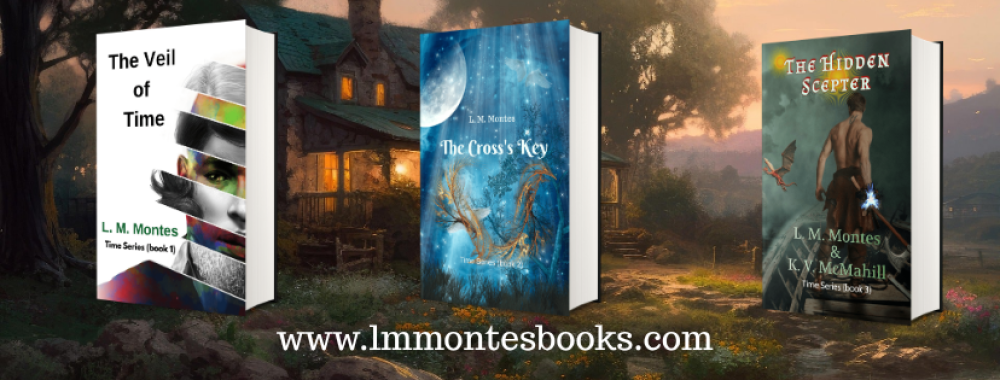
The Triunix of Time

In my last post I mentioned that I recently published my first novel. Well, it would be unfair of me to say that and then not post specific information about it. So, below is a summary of it.

Tora arrives home in East Tawas, Michigan after a long drive from Norfolk, Virginia. Doing so reminds her of the tragedy that befell her parents a year ago, so she doesn’t want to stay too long. She wants to finish with her parents’ affairs and get back to Virginia. However, her friend and fate have different plans for her, so she stays…. for now. She starts by going through her parents’ belongings, and, while cleaning out the attic, comes across a letter her father left her; a letter with a secret that turns her world upside down.

In the meantime, she meets Kyle Stevens and John Cummings and discovers her connection to them goes beyond the here and now. Through them she soon discovers more clues that lead not only to more secrets about her family and herself but also to a whole other world and a quest to go with it. The journey won’t be easy. Her adversary, the Black Mamba, is there at every turn threatening her whole existence. It isn’t just him but the darkness he represents. she finds a calm in the darkness, and it scares her.

Will Kyle help her stay in the light and be the protector he claims to be, or will she succumb to the darkness? After all, he has his own secrets. At first, it goes well, but when Tora, Kyle, and John hit a snag, something goes very wrong. Soon they are in a race against time.

If you are interested in my book, it can be found on Amazon in kindle and paperback formats.