Posted in Writing

Story Starters

What do you think about when you’re standing at the top of a mountain? What’s going through your mind? Is your imagination poking at your brain? Is fear setting in? There weren’t any side rails along the road on the way up, so you’re wondering how you’re going to get back down without going over the edge. Getting up there was easy. What if you get stuck on the way down (if you climbed up)? Questions questions.

Story ideas start with questions. Usually they’re ‘what if’ questions, but that doesn’t mean they have to be (see above questions for examples). I like the ‘what if’ questions only because that’s what my brain goes to automatically. Below are some ‘what if’ questions you can steal. Remember, one what if question can create more than one story.

  • What if you were eating in a Chinese restaurant and received a fortune cookie made gold?
  • What if someone knocked at your front door? You answer it and it’s your late grandfather. You give him a hug and immediately that takes you back in time to his era.
  • What if you’re walking to the elevator in the busy office building you work in, and you suddenly realize you’re alone. You’re the only one in the whole building.
  • What if you stumble upon your parents who aren’t your parents but they look like them?
  • What if the spiritual realm became visible only to you?
  • What if a one hundred dollar bill was found stuck in your second story bedroom window and you know it’s not yours?
  • What if you bit into a cookie and found a ring inside with an inscription?

Posted in Fiction

Character Names

What’s in a name? When we name our kids, we want to make sure we give him or her the right name. We want it to mean something. We want it to sound right. Maybe the child will be named after someone we admire? The process can be very simple or it can be long and tedious. The same can be said for story characters. I believe this is especially true for story characters.

In my novel The Triunix of Time my main character started out with the name Amanda. The antagonist started out with the name Dominick. Yes, I still laugh at that. At the time I named my main character I didn’t have a clear focus on where exactly my story line was going. I had an idea, but it wasn’t solid. Amanda was the only name that popped in my head at the time. It seemed like a nice name, so I chose it. Then, I realized I didn’t know how to take my story and carry it through to the end. I didn’t have a road map, and, because I didn’t have a road map, I didn’t have a clear focus about what my main character’s name should be. Yes, the two should go together, but in a way that blends. You don’t want to create a stereotype, so stay away from the name Biff for a tough guy. There are better names to give him that aren’t so obvious.

Since I needed to learn about story structure, I put my manuscript down for a while and did some research. In my research, I discovered the three act structure. I won’t go into the particulars on this. That’s for another post entirely. I delved into this structure and learned everything about it. I focused on what types of information and scenes are placed into each act. Once I learned this, I had a road map for my story. THEN, I picked it back up, I wrote my ideas into a journal. I brainstormed and visualized, and right in the middle of it all I also realized my main character’s name had to change.

I deleted the name Amanda and went on Google. BUT, I didn’t just look at names to look at names. What I did was look at names and their meanings. I wanted to choose a name that meshed with my main character’s goal and who she was as a person. I wouldn’t have been able to do this without knowing what the story was going to be. I needed to have that first. As it turned out, I did something VERY unique with her name. I’d tell you but that would give away part of the story.

My antagonist I worked much the same way. I needed to know what his motivations were. He was a bad guy but that’s all I knew. At first I gave him the name of Dominick. Here again, this was before I had a clear story line, so I was stuck. Once I learned story structure, I had a name for him; a nick name. It isn’t until later in the story that I dubbed him with a regular name outside of the nick name. (Laughing) He wasn’t happy with me either. I didn’t care. It worked and he was stuck with it. Here again, his nick name and his regular name also meshes with the story line.

So, give some real thought about your character’s names. Research and know your story. Jot down notes here and there that you can refer to later if you need to. Enjoy the process.

Posted in Fiction

Story Organization

Organizing your story can be rather daunting if you’re new to it. Not knowing the various ways in which one can go about doing this will bring on this feeling. To feel confident about story organization, learn some tricks that other authors do, then choose one or two methods that suits your style.

What I do

I start by moving from general to specific. I do quite a bit of thinking and brainstorming by rolling around various what if scenarios in my head and write down a list as I go. Many of my ideas come from real life events from my past. When I started writing the Triunix of Time, I began with a story about a relationship. It was supposed to be about a man and a woman who started out as friends and ended up falling in love. A simple plot. Right? Ha!!! At first yes. Where it ended up years later wasn’t where I started from. There is some romance in there, yes. But, it was secondary to the main story, which was something else entirely. That’s the nature of writing a book. It’s going to change as you write it.

Once I pick a scenario I’m happy with, I come up with a one line premise. This one line will sum up what your whole story is about, yet it will do this in general terms. See the example below:

  • Tora is a headstrong, career driven woman who sets out to find the truth about her parents and discovers a family secret that goes back to the Magi.

The above example is the one line premise for my novel The Triunix of Time. Once I had this down (It didn’t start out perfect. I had to rework it a few times, and so will you with yours), I expanded it to include four more sentences. So now you are moving toward being a little more specific. Once you get your one five sentence paragraph that sums up your story, take each of those five sentences and turn each of them into a paragraph so you end up with a five paragraph synopsis of what your story is about. Keep expanding on this summary until you have a long synopsis (this length is up to you). This method will take some thought. You will end up changing things around along the way until you’re happy with it. That’s just how it goes. Have fun with it. Believe it or not, when you finish writing your novel, you will condense this long synopsis until you are able to use it on the back of your book when you publish it. Below is an example of the five sentence summary that expands from the one sentence premise above:

  • Tora arrives home after a long drive from Norfolk, Virginia. Soon, she discovers a journey she must take. At the onset of this journey she comes to the knowledge that there are secrets regarding herself and her family. Add to that, she, along with Kyle and John, must defeat the Black Mamba. But, this will not be easy. Tora is the Triunifier, so without her this mission cannot be accomplished. She gets her strength from Kyle and John. Soon they are racing against the clock and must obtain possession of the pieces of the Triunix. They accomplish this, but the Black Mamba tricks them and Tora (now Nadira) merges with him.

Notice that mine is a little more than five sentences. That’s okay. You get the point. This summary paragraph and every summary/synopsis you write must move your story progressively from the beginning of the story to the end.

Posted in Fiction, Writing

The Writer’s Way

Is there one correct way to write a novel? I say no…….there isn’t. Are there elements of a novel that must be used? Yes…….there is. How do these two entities go together? It’s simple. You take the required elements and use them in a way that suits you and your writing style. Everybody is different, so the way in which we go about writing our book will be different. If you don’t know how you yourself would write a novel, then learn the different methods that have worked for other writers, try them out and go with what suits you. It’s a learning process and might take you a while to figure out what works for you. But it might not take you long at all.

A very important aspect to know is whether or not you are a “pantser” (you make the story up as you go along with no planning) or an out-liner/planner. Now, I’ve come to discover that you can be a little of both. I’m a little of both. I didn’t know this of course until I tried each style and found it difficult to use just one. The one I use at the time I’m writing depends on the part of the story I’m writing. When I get stuck, then I go to planning and thinking, which gets the wheels turning again. Then I’m back to pantsing.

Another important part to note is setting. People like pictures. When we were little, we started out reading picture books and many of our children’s books have pictures. Gradually as we get older, the pictures in the books become less and less. Eventually, all we have are words and it’s up to us to create the pictures in our minds as we’re reading. BUT the author plays a huge role in this part because they are the ones who are creating the pictures for us to see. They’re just not doing it with pictures, instead they’re doing it with words. HOW they do this is up to them. It’s their style of creating that contributes to creating the settings depicted in their novels. You will figure this out as well. I can’t tell you how, but I can give you ideas about how I go about do it. But that’s for another blog post.

Lastly, I wanted to touch on the creation of characters. I know how I do it, but I only figured out how to do this by reading how others did it, and used what worked for me. I combined that with a few of my own ideas. So much goes into the creating of a character. We are complex individuals and so are your characters. They have to be complex if they’re going to be believable. In my mind: who a character is on the inside + who a character is on the outside (actions and what they say) = a believable and complex character. See my earlier blog post from May 12 entitled Character Building for more information on this topic.

In the end, it’s YOUR story. Make it yours. Write it YOUR way, but by all means learn from others. Through it all, you will find your style and what works for you.

Thank You So Much For Stopping By My Blog. Please Share This Blog/Blog Posts. I Welcome Everyone.

Posted in Fiction

Inspiration

Story ideas
Posted in Fiction

Painting Your Picture

Story setting is essential. It’s one of the elements that pulls readers into the story and places them there. Can you imagine what reading a story would be like if there wasn’t any description of the places in it? Flat, that’s what it would be….flat. I would cast it aside in a heartbeat.

How do we paint a picture of what we want our readers to see when they read your story? It really is up to the writer. I say this because we’re all different and have our own ways of doing things. So, take what you will from this post and make it yours. I like to create my settings in such a way, so that when someone reads it, it sounds natural. What I don’t want is for the action/story to stop so that I can describe something. Doing that takes away from the story. Note the two examples below.

Example 1: Laural stepped into the room with her bare feet. The room was white with plush carpet. White curtains hung on the windows and blew in the breeze. To the right of the window sat a small square table with a bright green tablecloth. In spite of the brightness of the room, she should have felt comforted, but no. There was an eeriness that made her feel uneasy. A lock of her blond hair fell forward and she moved to push it back. She stopped midway as she felt his finger along her cheek.

Example 2: Laural stepped into the white room. Now barefoot, she stepped onto the plush, white carpet. At one time this feeling would have comforted her, but today the cushion of the carpet only served to increase that eerie sensation twisting in her gut. White curtains billowed as the breeze from the open window whispered into the room. Again, a false sense of comfort played in her gut. It were as though the room was dark, not light. The only color in the room came from a plant sitting on a small square end table to the right of the open window. A single black rose stood dead center of a plant whose bright green heart shaped leaves came to thin tips. His calling card. A lock of blond hair pushed forward over her right shoulder. Moving her hand up to push it out of the way, she froze midway as his finger caressed her cheek. Her breath caught in her chest. She wanted to run, but her legs wouldn’t move.

“You look pale, my sweet,” he said.

In the first example the setting description does nothing to move the story along and it doesn’t create any kind of feeling either. We are told that Laural is feeling uneasy, but the description doesn’t heighten this feeling at all.

The second example combines description of the room with how Laural is feeling, which in turn goes along with the story.

When you’re writing, and get stuck on how to describe something, sit back and relax. Close your eyes and picture your setting or situation. Then, when you’re ready, describe it simply. When you’re done with that, embellish it to fit the story/scene. It takes practice.

Posted in Writing

Book 2 Update

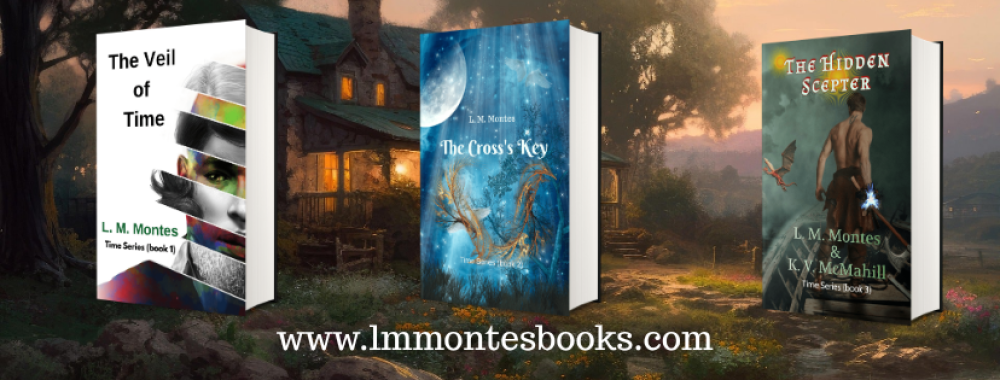
I discovered 2 things this morning. First, the long awaited title for book 2 in my novel series is finally here. It will be called, The Cross’s Key. Second, since I started book 2 I have been having placement issues. I was never happy with the order in which I put each chapter, and just when I think I have it right, I find I don’t like the order at all. So I continued to rearrange. THEN…….Then, this morning I realized that it isn’t necessarily the chapters I have out of place. It’s that the chapters I have written should be in Act II not Act I. Nothing like starting in the middle. HaHaHa, at least now after I create Act I and get to Act II, I’ll be a step ahead. Gotta love writing.

Also, book 2 features Kyle Stevens, who was a main side character in book 1, as the protagonist. He has been given a most exceptional gift. Will he be open to its mysteries, or will he ignore it and rely on his own merits?

Posted in Fiction

Character Building

So much goes into the creation of a storybook character. The goal is to make them as unique as possible so that they stand out to the reader, making them memorable. But to do this you must build them from the ground up. Go from simple to complex. The more complex the character, the more real they become. After all, humans are complex creatures aren’t we?

As a writer and a human, we are all different and have different writing styles and ways of doing things. This method I am about to show you is my way, so take it and mold it into YOUR way. What you’ll notice after you compile all of the information about your characters, is that you won’t use all of it in your story. BUT you will have it in case you DO need it later. Maybe you want to write a book series, so information regarding your character that you didn’t use in the first book might come in handy in later books.

Beginning (Simple): Brainstorm a list of characteristics. These items are more on the surface and feel free to add to it. My list, should I put it all here, would be extremely lengthy.

  • Eye color
  • Hair color
  • Height
  • Weight
  • Ethnic heritage
  • Age
  • Birth date
  • Religious beliefs
  • Hobbies
  • Favorite color
  • Physical description
  • Political beliefs
  • Favorite music
  • Style of dress
  • Educational background
  • Description of home
  • Contents of wallet (this can say a lot about a person)
  • Habits

Digging Deeper: Here again, feel free to add your own ideas to this list

  • Strong character trait
  • Weak character trait
  • Best childhood memory
  • Worst childhood memory
  • One line summary of their personality
  • What triggers certain moods
  • What is their ambition
  • Sense of humor
  • What is his/her greatest hope
  • Character’s paradox
  • How does he/she see himself or herself
  • Philosophy of life
  • Character flaw (This is essential to the story because at one point he/she realizes this flaw and is able to overcome it. That’s integral in creating their character arc and accomplishing the story goal)

I keep this list written down in my binder and on my computer. It serves me well throughout the writing of my book. I add to it along the way too. Have fun with it.

Character Name: I created the details of my character before I came up with a name. By doing this I was better able to find a name that suited the description of my character. Some names elicit certain unspoken character traits. At least they do to me. For one of my male characters I ended up changing his name two times. I wasn’t happy with his character, so I tweaked it and changed some things, like his reaction to certain events and people. Then I found a better name that fit. You will have your own way of plugging away through this process. That’s good. Make it your own and happy creating.

Posted in Social

Being Bold

Fear is the Killer. How many times have you told yourself you wanted to do something but never followed through with those ideas? Why did’t you follow through? Was it lack of funds, lack of support from family or friends, was it fear? I understand the lack of funds thing. If you don’t have the money, don’t break the bank because you’ll only get yourself into trouble. However, lack of support or fear are just space takers. They take up space. TOO much. I get it though. The thing is those two factors keep us back. What if you were meant to do something but were too afraid to do it? The excitement is there, the motivation is there. But then the fear creeps in and steals your thunder. DON’T LET IT. Oh, and don’t get me started on lack of support from those around you. They can’t have it themselves, so they have to negate your plans because they don’t want you too be any more successful then themselves. AHA! The old misery loves company routine. Push it away, far far away.

Be Bold. Going against the grain and outside of your comfort zone is hard to do. We think too much and when we do that we end up stopping ourselves. Don’t stop yourself. Be bold. Be very bold, and just do it. Step out and do what you need to do to. I used to teach, and I remember back when I first made that decision, I was scared. I didn’t like getting up in front of people. At all. But I wanted to be a teacher, so I did it anyway. Yes, it was scary, but the more I did it the less scared I was and the more confident I became. There were individuals who didn’t think I could do it. I did it. It’s like walking into a storm. Face it head on, look straight at it, prepare yourself, and move forward keeping the end in sight.

Posted in Fiction

Watch The Triunix of Time