Posted in Editing

First Draft Woes

The first draft of your manuscript can be rather turbulent. I get it. Really I do. When it’s finished, you look it over and think, “Uh oh, I don’t like this at all.” Two things you can do here. You can either chuck it altogether, or you can use it. Whatever you do, DON’T CHUCK IT. Why? I say this because, even if you don’t use some of it, part of it you will/can use. You can also use the whole thing but polish it up some or a lot. Only you know your story, so only you know how to fix it. In the end, you will have learned more as a writer, and your story will have grown and developed in ways you would not have imagined. If need be, walk away from it for a while. Take a break, think of other things. Then, go back to it.

I remember when I lost part of my manuscript when I was transferring if from my desktop to my new laptop. I was blindsided and distraught. I put the whole thing down and vowed I wouldn’t go back to it. Eventually, I did go back to it, and I made it better. The ideas flowed, big changes were made, and the story became more clear as it relates to where I wanted to go with it. So something bad can turn into a blessing if you let it.

Posted in Writing

Motivation

Staying motivated is hard work. Why is it so hard? Well, I think it’s different for everyone depending on their situation. The road is long, there will be hills to traverse, an unknowing rut will surprise you, making you trip and fall, but it’s how you work around these setbacks that is key. I put down my manuscript more times than I can count. One of the biggest reasons for this was largely due to losing part of my manuscript when I went from my desktop to a new laptop. My desktop bit the dust. In transferring my book, half of it got deleted somehow. I had done so much work on it too. So I put it down and was resigned to give up on it.

After this happened, I went to work the next day and told a colleague what had happened. He had been following my success thus far and felt bad for what happened. When I told him I was giving up on the whole project, he said, “You’ll finish it one day.” I said, “No I won’t. I’m done.” He said, “No, you’ll finish. I have faith in you.” I’m glad he had that faith in me because what he said stuck with me in the months that followed. Roughly a year later, I picked up my laptop and went back to it. The result was an even better story. I also kept an extra copy of everything I wrote from that point forward.

Another roadblock was not knowing the three act structure for writing a novel. I had to learn this or I was getting no where. Before I knew this structure, I got stuck so many times and had writers block. There was no direction, no map telling me what type of information went where. As a result, I would stop writing. Frustrating, I know.

Don’t let life and situations pull you down or make you quit. Keep going. If something crosses your path and slows you down, come up with a way to get around it. If you lose your work, start over. It will be that much better. Keep information in a writer’s binder and/or a journal, so you can reference it just in case. Back up your information on the Cloud AND on an external drive (multiple places). Continue to learn. Even though you may know how to write a novel, you can always learn something more. Above all else. KEEP AT IT. DON’T STOP.

Posted in Writing

Filler Words: Dandelions and Flowers

Filler words (weak words) can run rampant if you aren’t paying attention. Those pesky dandelions can do the same thing. We wake up one morning and they’re there. Overall they look pretty, but they’re still a weed and need to be gotten rid of because they do turn ugly. Filler words turn your beautiful piece of writing ugly too. You can’t see it though until you go back over your piece of writing and realize they are everywhere and they sound awful. A list of filler words are listed below. There are more than the ones I have listed here. These are just some of them.

Just Only Much
A lot Perhaps Always
Very Really Actually
Rather Stuff Literally
In order That Slightly
Seem Sort of Kind of
A little Somehow Can
Then See/saw Definitely

There are better ways of saying what you want to say without using the above. Do you have to go without using them? No. By any means use them if you so choose. But if you do, be aware they don’t pack a punch. Don’t get me wrong, sometimes you have to use them. In oral conversation we use these words all the time to get our point across and to emphasize something. In the written realm you want to make sure what people are reading creates the intended visual of what you’re saying to they’re retention of it is good. You want to make your point.

The question becomes: when do we use them and when do we not use them? There is a sure fire way to know this. If your sentence makes sense without it, delete it. Also ask yourself this question: is there a better way of saying this? If you get stuck trying to figure out a better word to use for a particular weak word, you can always go to Google and look up stronger words for the word ‘very’ for example. You will get a list of ideas.

Being concise is what you want, so be careful with what words you use. Write first fix later.

Posted in Description

Painted Words

When I was in the U.S. Navy Reserves back in 2005, I did my annual training on the USS Bohomme Richard LHD 6. At that time smart phones weren’t really a thing yet. A lot of my friends including myself had the flip phone and there was no camera on it. So, when I went on this AT, the ship sailed from San Diego, CA to Seattle WA. Since I didn’t have a camera on my cell phone, I had to take with me a couple of disposable cameras. Well, I really wish I had taken more of those cameras because I ended up running out of film. Here I was sitting on a park bench looking out over the bay in Seattle watching cruise ships and viewing the vast and majestic Mt. Rainier feeling the light breeze and enjoying a rare blue sky and sunshiny day, and I had no camera to capture it all. What did I do? I took my journal out and painted my own picture of it with words.

Think outside the box here. Do this your way. Free write this description and get down any and all words you can that describes everything you see and go back later and cut and change what you don’t want. On the other hand, you can slow down, breathe, enjoy the fresh salty air floating up off the water being carried by the breeze. Close your eyes, listen to the sounds, smell the scents and then take out your journal and pen/pencil and ‘paint’ your picture(s). You will be surprised at what your brain comes up with. These two methods are what works for me, but I much prefer the latter.

Keep this and all writings you have because they can be used later in a short story or a novel or two. Doing this also allows you to see how you’ve grown in your writing as time goes by. I recently went back to one of my journals in which I ‘took a picture with words’ and reread it. It was from a vacation I took with my husband and kids in 1997. As I was reading it my mind began making some mental changes to what I wrote that would make it better. My thought here? OMG I can use this in my next book. Oh the discovery of it all. Writing is truly fun.

Posted in Introduction

Exciting Journeys

Writing a novel is an exciting adventure because what you create lies within you. You are the master of your story, you can visit your story anytime you want, and you can mold it to your liking. That having been said, it is a learning experience. I spent 20 years writing my first novel. In that 20 years not only did I write my book, but I learned how to do it and all while experiencing set backs. Now, some of you reading this might be thinking, “Wow, 20 years”, or “Why so long”.

I took my time with it, and I took time off at various points in time. At one time I scrapped it all together because I had written a large chunk only for it to get deleted somehow. I vowed never to go back to it. A friend of mine begged to differ with me on that and told me I would finish it one day. “Ha,” I said. “Not likely.” Well, I was wrong. I did go back to it but only after learning more about story structure. If you take a peek at the Books page on this blog you will see a link to a book that helped me tremendously. I highly recommend it. Once I read this book my novel crept its way back into my brain and kept poking me. My characters stood there with their hands on their hips giving me a look of impatience. They had a story they were dying to be a part of. Soon the ideas began to flow again. Visuals played out in my head and before long it was anything goes.

Then I stopped again and took time off from it but not permanently this time. The story still sat in my mind. It was part of my everyday life in that I would take issues, scenery, pictures, situations (good or bad) snippets of dialogue I over heard and other aspects of real life and used it for ideas. I created a binder and a journal with sections in each and wrote all of my ideas down. Yes, there is a mountain of information in them I didn’t use, but I still have those ideas, and I am able to use them in future books.

Along the way though, life kicks in sometimes and throws mud at you, so you have to take time off. However, it’s how you work with these situations that makes all the difference. The important thing is to learn from them. USE them if you can because you never know how they can help. I think the death of a loved one is one of the biggest moments in life that causes us to take pause. Maybe it’s not necessarily someone in your own family; it could also be the death of a member of a friend’s family. Here again, write, and write some more. Your emotions regarding these situations can enrich your written words in so many ways.

Does every novel you write have to take as long as 20 years to finish? Absolutely not, because once you get your ‘rhythm’, you get in that groove, but you have to write everyday, or you run the risk of losing your readership. Above all else, have fun with it and stay close to those who encourage you. The journey is exhilarating.

Posted in Introduction, Writing

L.M. MONTES

Introduction

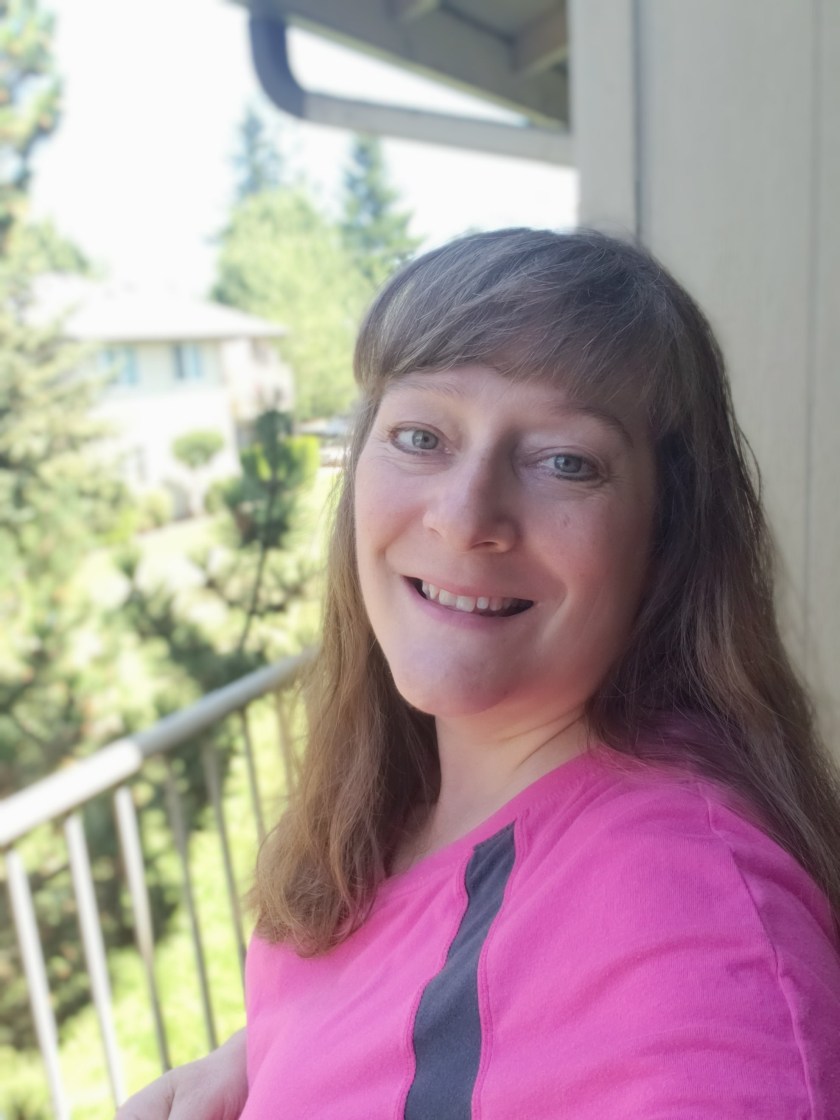
Hello everyone and welcome to my blog. I’m a new author but I’m not new to the field of writing. As an English teacher I had the pleasure of teaching young adults the writing process and putting together creative works of their own. The self-discovery they experienced was so much fun to witness. During this time I was creating a little something of my own. Writing a novel, short story, and even poetry is a journey, and, like my students, I made some self-discoveries of my own. Seeing as though I was working on my first novel, there was much I needed to learn, so I learned at the same time that I was writing my novel. Yes, this was a long road, but it’s the process one goes through that counts because by the end of it all you’ve grown not only as a writer but also as an individual.

My goal with this blog is to share with you the writing journey I took and teach/share with you what worked and what didn’t. I also want to share ideas, which in the world of writing are numerous. Whether you have writer’s block and need techniques to get over that hump, plotting out a story, or creating characters, the ideas are endless.

Before I get into everything writing, let me tell you a little about myself. As mentioned above, I was/am a teacher. Although I don’t teach anymore, I still consider myself a teacher. I taught secondary education for 8 glorious years. I learned as much from them as they did from me. It was fun, but I wanted to expand my skills as a teacher in other ways, so I became a teaching parent in a group home for boys. Working in this atmosphere was different but very rewarding because now it was all about teaching these teens about life skills. During this time I continued to write my novel as well.

I did quite a bit of traveling too and lived in many different places. As part of being a military wife, I lived in Germany. What an experience that was. There was culture shock at first, but there was so much to see and do that the culture shock didn’t last long. I even picked up some of the language. Later in college I learned it more fluently. Other places I lived were Arizona, Kansas, Georgia, Texas, and Michigan (I’m originally from here). Currently, I live in Oregon. I’ve traveled to Gettysburg; Washington DC., Arlington Cemetery, sailed on the USS Bonhomme Richard LHD-6 as naval reservist., and much more. Throughout these travels I still worked on my novel.

I’m currently married with a wonderful husband and 5 children. They are my life and have been very supportive of my career as a teacher and as a writer. Throughout raising my kids I still worked on my novel. My point here is that my life and what I know now and learned along the way has shaped me as a writer. Write everything down. Keep a journal or binder or both and refer back to them. Use this material because it can only serve to enrich your writing.

Again, welcome to my blog and thank you for stopping by. Please take a moment to subscribe below. Happy writing and learning.