I discovered 2 things this morning. First, the long awaited title for book 2 in my novel series is finally here. It will be called, The Cross’s Key. Second, since I started book 2 I have been having placement issues. I was never happy with the order in which I put each chapter, and just when I think I have it right, I find I don’t like the order at all. So I continued to rearrange. THEN…….Then, this morning I realized that it isn’t necessarily the chapters I have out of place. It’s that the chapters I have written should be in Act II not Act I. Nothing like starting in the middle. HaHaHa, at least now after I create Act I and get to Act II, I’ll be a step ahead. Gotta love writing.
Also, book 2 features Kyle Stevens, who was a main side character in book 1, as the protagonist. He has been given a most exceptional gift. Will he be open to its mysteries, or will he ignore it and rely on his own merits?
Sometimes we all feel like we’re floating along. The wind is blowing but your boat is going nowhere. It’s stagnate. You put your oars in the water and stroke, but instead of moving along, you go in circles. Life is funny. At times we think there is nothing out there for us. You want to write a novel, short stories, and/or poetry, but you don’t know how to get started or how to expand on what you already have. I’ve been down that road. Let me tell you, I wanted to be an author, but I had so much to learn. The problem was I wanted it NOW. Well, life doesn’t happen that way. Some things are a process and believe me writing is a process. What I learned though over the years of writing my first book was that it isn’t necessarily the finished product that is the most important. It’s important, yes, but there is another aspect to it that is even more precious. It’s the journey, the writing you do everyday, the process itself, the getting from point A to point B in your manuscript/story that plays a certain kind of music in your insides. THAT is what matters most. The finished product, when you hold it in front of you, speaks volumes. You end up saying to yourself, “It was all worth every time consuming minute.”
The summer of 2009 stands out to me because I looked out from the Navy Pier in Chicago, Illinois to see the above clipper ship. The crisp white of the sails and the clear blue sky brought forth that WOW feeling. Prior to that moment there was another WOW that stands out in my mind. It also involves a ship. It was the summer of 2002. We were vacationing in the east. We hit Gettysburg, Pennsylvania; Norfolk, Virginia; Washington D.C.; just to name a few. It was in Norfolk when I saw this aircraft carrier coming into port. The size alone commanded a presence. Sailors stood at attention on the outline of the entire flight deck around the ship. I wanted to be there. I wanted to know that feeling of standing on that deck. I didn’t know at the time that I would get that chance three years later. It was everything I thought it would be.
There are many moments in our lives that give us that feeling of WOW. Do you “collect” them? If you’re a writer you do. Use these moments in your writing. Have fun with them by embellishing them. One thing you can do is center a story around them. You are at the helm. Your mind wants to go on tangents. Let it. Let it run freely among the memories of your imagination.
So much goes on during the holidays, and it’s either good, bad, or in between. One year I was rushing around to get all of my Christmas shopping done. It was evening, so it was dark not to mention busy. The traffic standstill gave me a headache, but I had to get things done. I’m sure you can identify. I was in Toys’R’Us, which was crowded to the max, and it was my last stop. Dinner was next, so I was on the homeward stretch. I paid for my purchases, put my things in my car, and went to KFC to pick up my dinner. I was in the drive through waiting to give my order, when I reached for my purse and discovered it wasn’t there. Now, those of you who have discovered your purse or wallet missing while in public, can relate to this. My blood ran cold and my heart stopped. I still had over $400 in it. I got out of line and retraced my “steps”. I went back to Toys’R’Us to the exact parking spot I had just vacated. My cart was there but my purse wasn’t (I burst out into tears). However, there was a car in the spot I had been parked in and the people were still in it (A mom and her teenage daughter). I knocked on their window and inquired about my purse. THEY HAD IT!!!! What luck. They had my purse and were looking at my driver’s license to see whose purse it was. The woman gave me back my purse, and, upon seeing my distress, got out of her car and gave me a big hug.
Sometimes in our writing the story, process, characters and what have you can be just busy with so much “going on”. You can see the story in your head and it’s all coming at you at once. What does one do with such a rush of information that is out of order and disorganized? It almost seems as though you’ll forget this valuable information if you don’t rush to get it down. All I can say is, RELAX. Take the information that is rushing through your head. Do a free write and get it all down on paper or computer screen, then go back and organize it. When you organize it, prioritize it. What piece of information, according to your project, should get more attention? Work from most important to least important.
What do I mean by importance? All of your story elements are important and the importance of each depends on what you are working on each day, so this will change daily. Those of you who like to write by the seat of your pants have your own way of staying organized without planning ahead. Those of you who plan everything out in advance will do just that. Every writer’s process for writing is different, which is why I’m not going into detail here. I will say this though, what I do is keep a binder with dividers. Some sections are identified according what the story is.
In a nutshell don’t let the bombardment of your story fluster you. Take it in. Inhale it. Relax and place the information where you want it.
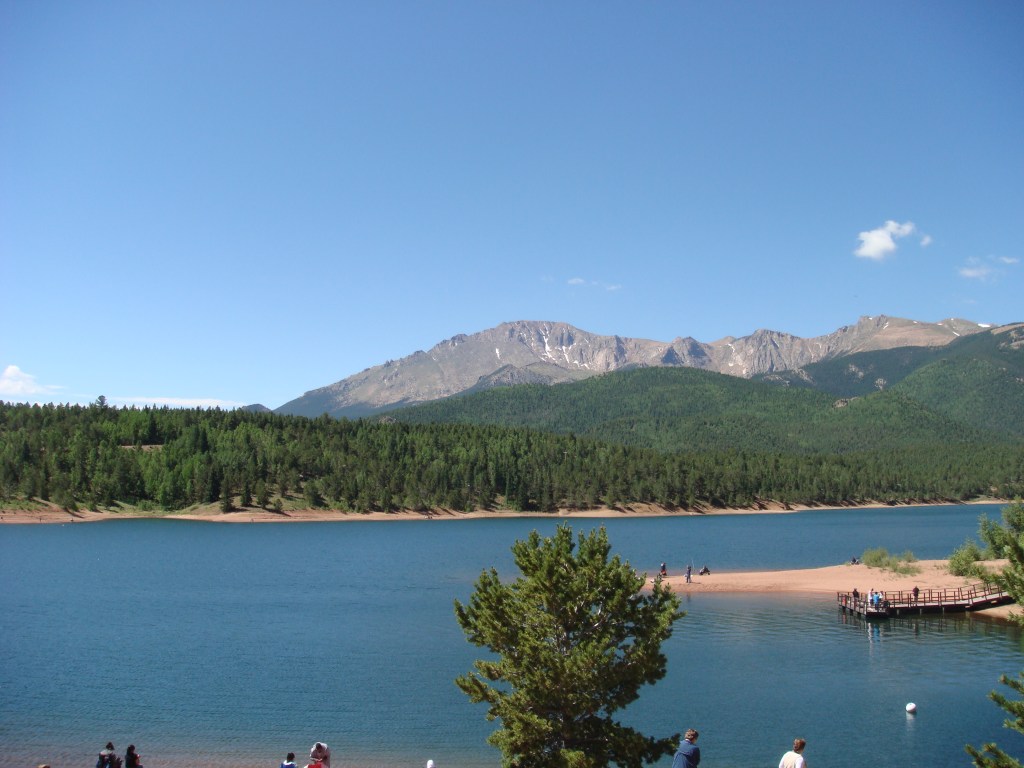
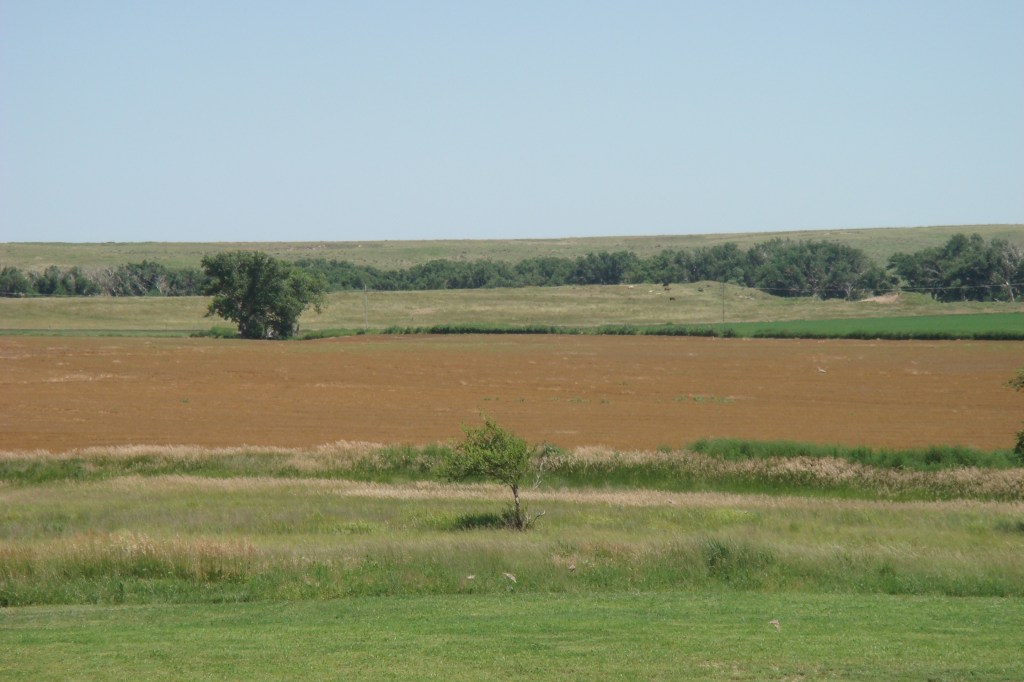
You can take a piece of something intoxicatingly boring and mundane and give it that creative flare. I call it “dressing it up”. Take the pictures above for example. Yes, I agree. They go on forever, or so it appears. Some would see beauty in them; some would see lack of an appeal. I see both actually. I didn’t grow up in an environment such as this, so the vast open plains give me a sense of beauty and allure. But there isn’t a whole lot to them. They’re just a road that goes on for miles, some hills, a sparse amount of trees, grass, and sky.
Now, take these same views, turn out the sun, and watch the stars come out. Now that is truly jaw dropping. Here there are no city lights to drown out the night’s sky. Here it is pitch black outside at night. You can get a blanket, lay it out, lay down and gaze up at the stars for hours. Better yet, the moon. I once saw a harvest moon out in the open like this. I was driving at night on I-70 through the state of Kansas. I looked out my driver side window and saw the biggest moon I’ve ever seen in my life. Talk about spectacular. I wanted to reach out and grab it, it was so huge and close.
In writing, we want to capture these beautiful scenes on paper. We want to capture the boring ones too. Either way, we writers can spice it up if it’s lacking or keep it as is. That’s one of the things I love about writing. We create and it’s anything goes. If your imagination sees it, your hand can write it (or type it).
Time is out there. The thing of it is this, where do we find it? There are days, sometimes too many of them in a row, when we have no time to do everything we want or need to do. Are we spreading ourselves too thin? Are we choosing less important tasks over more important ones? Are we spending too much time on something that doesn’t need it? Maybe. Whatever then answer is, learn to focus yourself. Pace yourself. There are times when things slow down and we have all the time in the world. This is when the waters are the calmest. We can wade and relax. Meditate if need be. We should be doing this in the rough times too because it helps in gaining focus.
I think it has much to do with the “Oh no!” effect. This is when everything in your life comes rushing at you at one time. Your schedule changes. Everyone wants something. How should times like that be handled? In my estimation it’s different for everyone simply because we are all different. What I do is focus first and foremost on the most important events that need to get done. Then go from there. Sometimes we just need to say no to somethings. Others will live on if you are not the one doing whatever it is you were asked to do. If you’re a writer, write. Let that be your most important task. Fit it in even if you only get 500 words done. At least you’d be doing it.
Staying motivated is hard work. Why is it so hard? Well, I think it’s different for everyone depending on their situation. The road is long, there will be hills to traverse, an unknowing rut will surprise you, making you trip and fall, but it’s how you work around these setbacks that is key. I put down my manuscript more times than I can count. One of the biggest reasons for this was largely due to losing part of my manuscript when I went from my desktop to a new laptop. My desktop bit the dust. In transferring my book, half of it got deleted somehow. I had done so much work on it too. So I put it down and was resigned to give up on it.
After this happened, I went to work the next day and told a colleague what had happened. He had been following my success thus far and felt bad for what happened. When I told him I was giving up on the whole project, he said, “You’ll finish it one day.” I said, “No I won’t. I’m done.” He said, “No, you’ll finish. I have faith in you.” I’m glad he had that faith in me because what he said stuck with me in the months that followed. Roughly a year later, I picked up my laptop and went back to it. The result was an even better story. I also kept an extra copy of everything I wrote from that point forward.
Another roadblock was not knowing the three act structure for writing a novel. I had to learn this or I was getting no where. Before I knew this structure, I got stuck so many times and had writers block. There was no direction, no map telling me what type of information went where. As a result, I would stop writing. Frustrating, I know.
Don’t let life and situations pull you down or make you quit. Keep going. If something crosses your path and slows you down, come up with a way to get around it. If you lose your work, start over. It will be that much better. Keep information in a writer’s binder and/or a journal, so you can reference it just in case. Back up your information on the Cloud AND on an external drive (multiple places). Continue to learn. Even though you may know how to write a novel, you can always learn something more. Above all else. KEEP AT IT. DON’T STOP.
Filler words (weak words) can run rampant if you aren’t paying attention. Those pesky dandelions can do the same thing. We wake up one morning and they’re there. Overall they look pretty, but they’re still a weed and need to be gotten rid of because they do turn ugly. Filler words turn your beautiful piece of writing ugly too. You can’t see it though until you go back over your piece of writing and realize they are everywhere and they sound awful. A list of filler words are listed below. There are more than the ones I have listed here. These are just some of them.
Just
Only
Much
A lot
Perhaps
Always
Very
Really
Actually
Rather
Stuff
Literally
In order
That
Slightly
Seem
Sort of
Kind of
A little
Somehow
Can
Then
See/saw
Definitely
There are better ways of saying what you want to say without using the above. Do you have to go without using them? No. By any means use them if you so choose. But if you do, be aware they don’t pack a punch. Don’t get me wrong, sometimes you have to use them. In oral conversation we use these words all the time to get our point across and to emphasize something. In the written realm you want to make sure what people are reading creates the intended visual of what you’re saying to they’re retention of it is good. You want to make your point.
The question becomes: when do we use them and when do we not use them? There is a sure fire way to know this. If your sentence makes sense without it, delete it. Also ask yourself this question: is there a better way of saying this? If you get stuck trying to figure out a better word to use for a particular weak word, you can always go to Google and look up stronger words for the word ‘very’ for example. You will get a list of ideas.
Being concise is what you want, so be careful with what words you use. Write first fix later.
When I was in the U.S. Navy Reserves back in 2005, I did my annual training on the USS Bohomme Richard LHD 6. At that time smart phones weren’t really a thing yet. A lot of my friends including myself had the flip phone and there was no camera on it. So, when I went on this AT, the ship sailed from San Diego, CA to Seattle WA. Since I didn’t have a camera on my cell phone, I had to take with me a couple of disposable cameras. Well, I really wish I had taken more of those cameras because I ended up running out of film. Here I was sitting on a park bench looking out over the bay in Seattle watching cruise ships and viewing the vast and majestic Mt. Rainier feeling the light breeze and enjoying a rare blue sky and sunshiny day, and I had no camera to capture it all. What did I do? I took my journal out and painted my own picture of it with words.
Think outside the box here. Do this your way. Free write this description and get down any and all words you can that describes everything you see and go back later and cut and change what you don’t want. On the other hand, you can slow down, breathe, enjoy the fresh salty air floating up off the water being carried by the breeze. Close your eyes, listen to the sounds, smell the scents and then take out your journal and pen/pencil and ‘paint’ your picture(s). You will be surprised at what your brain comes up with. These two methods are what works for me, but I much prefer the latter.
Keep this and all writings you have because they can be used later in a short story or a novel or two. Doing this also allows you to see how you’ve grown in your writing as time goes by. I recently went back to one of my journals in which I ‘took a picture with words’ and reread it. It was from a vacation I took with my husband and kids in 1997. As I was reading it my mind began making some mental changes to what I wrote that would make it better. My thought here? OMG I can use this in my next book. Oh the discovery of it all. Writing is truly fun.
I used so many different ways to come up with material to write about when I was stuck. I still use them. The truth of it is, the wheels of our brains get stuck (writer’s block) and needs oil to get them running again. Ideas, ideas, where do ideas come from. That’s right, the brain. But that makes no sense you say. No, it doesn’t given what I just wrote.
Let me clear things up a bit. The information is in our heads. It’s just that the file cabinet drawer is stuck and needs prying to get it open. What to do, what to do? Find stimuli, something or an experience that wakes the right side of your brain up. Keep in mind everyone will use something different because we’re all different. Below I list things I do.
Take a walk through a cemetery. Look at the headstones. Read the information and try to determine that person’s story. How does it relate to the story you are writing? Did they have children? What was their job? Did they travel? You get the idea.
Use meditation. Emptying your mind of all the clutter will give you a better chance to free it up for something new. At some point in your meditation insert your story and let it run its course.
Take a walk. This is my favorite because it works well for me. I enjoy feeling the breeze on my face and through my hair. It’s freeing. During this time I think of the part in my story where I’m stuck and let it play out without putting any undo pressure on myself. Somehow doing that and being a part of nature helps.
Hash out your ideas with another person. I use my son for this because he reads the kind of fiction I like to write, so he’s attuned to what I’m looking for.
Use writing prompts. You can find these anywhere. Pinterest is ripe with these types of pins. I have a board full of them.
The above ideas are just a few of many. You may have some of your own. If so, please feel free to share them here on my blog, and I will write another post listing them as ideas from others.









 WRITE TIME AND AGAIN