
Tag: writing community


Award Given
Applause to Indie Author Kelly Miller, our spotlight in February 2021 for book of the month. Her novel Accusing Mr. Darcy won for Romantic Suspense in Speak Up Talk Radio’s Firebird Book Awards.
We wish you continued success and many more awards to come.


Hear The Lord by L. M. Montes
I sing to you my Lord
and praise your Holy Name,
Dance with me my Jesus,
may the music sweep us away
Today I lay on mountains high
and breath your breath’s wind,
The trees they sway and leaves they sing
the notes of my Savior’s hymns.
I rest my weary head on you
and hear all life’s long rhythms,
My sins may interrupt my song
but you conduct their collapse.
In your name I bow down
and humble at your feet,
My hand you take and draw me near
to dwell in your home so sweet.
Chorus
Hear the Lord calling to you,
His voice a sweet melody,
Listen, my child, I am your God,
My love an ovation do dear.
The Write Review
Sometimes we’re asked to write a review of a book. At first you smile and agree to do it. You’re excited to finish it so you can write it, so you set out reading. You read it cover to cover and loved it. You loved it so much you couldn’t put it down. However, there were some parts you felt could have been improved upon. So you jump onto Amazon or some other book venue to leave your review. Once at the appropriate page to write your review, the cursor blinks back at you in rapid succession. Your brain goes blank. What do you write?
For starters, whenever you are critiquing someone’s writing, it’s best to start out with the positives first. What did you like about the book? What worked really well? What was your favorite part and why?
After you finish the positives, you get into the negative aspects of the writing. Now, when I say negatives, I DON’T mean rip it apart with nasty, rude comments. That won’t get anywhere with anyone and it isn’t mature or professional. A better way of putting this is BE HELPFUL. Tell the author what it needs more of. What did you not like about the book and why? Point out a few places in the text that didn’t quite work and why.
Lastly, sum up your critique with a conclusion. This doesn’t have to be lengthy. A few quick sentences that reiterates your overall impression, is fine.
Why Write?

On Twitter the other day an author I follow asked this question: ‘In four words, why do you write?’ I tried to answer this in four words, and I couldn’t do it. Why? I couldn’t find the right words. My mind went blank. Then later I realized, I couldn’t quite capture the joy writing gives me using any amount of words. It makes me feel that great internally. Inside, when I write, my self-worth heightens, my joy and excitement about creating something heightens. Yes, it may need to be worked on and rewritten later to perfect it, but that’s part of the fun. So, if I had to choose four words to explain why I write, I would choose these:
Heightened self-worth, excitement, joy
In four words, why do YOU write?
Real Life with a Twist

You are up in the mountains hiking with a friend. Along your path you come across a lone pint size milk carton. You’re a fiction writer, and you’re looking for ideas for another story but coming up with zilch. The hike in the mountains you feel will do you some good and perhaps get the wheels of creativity going. The milk carton accomplishes this goal as soon as you see it. It’s as if an electric spark shocked that story center of the right side of your brain. In an instant, your mind has a ‘What if ‘ scenario in place.
What if the milk carton had drops of blood on it, and the blood belonged to someone who vanished without a trace 50 years ago? The blood is fairly fresh too.
In reality, the milk carton is just a milk carton and it most likely belonged to another hiker. They finished the milk and didn’t want to take the carton with them, so they left it there. BOOM. That’s it. BUT, what you did with your ‘what if ‘scenario is put a twist on reality. That’s what fiction does. I love to put a creative spin on things. It makes life interesting.
WarmUp
Do you warm up your writing engine before you start working on your writing project? I guess I would have to say, for me, it’s split 50/50. Sometimes I will warm up and sometimes I won’t. It all depends on whether or not the creative juices are flowing when I sit down to write. If I know what I’m going to write next in my work in progress (WIP), I don’t do a warm up. If I’m stuck, I do a warm up. That will get the ideas flowing again.
Types of Warmup Exercises
- Writing prompts
- Journal writing
- Writing a blog article
- Write a poem
- Look at a painting/picture:
- Describe the setting
- Describe what’s is going on (Remember, a picture is worth 1000 words)
- Write a poem using your descriptions (Who knows, you might be able to use it in your WIP)
- Take a walk in a cemetery. Speculate about the people who once lived. What do you think they looked like? What do you think they did for a living? How do you think they died and/or what’s the story behind it? Come up with scenarios/stories regarding random people. Did they know each other? If so, what was their relationship? You could go on and on with this.
- Go to the beach. What do you see? What connections can you make with what’s in front of you? Maybe the people you see walking along the beach are sea people. If so, why are they there on the beach? What’s their story? (FEEL FREE TO STEAL THIS IDEA IF YOU LIKE)
Don’t be daunted by the blank page ever again. The only reason the blank page is a stopper is because nothing is there. So put something in your head first before you look at that blank page, then you’ll be able to readily transfer it to the blank page when you look at it.
Out of the Way
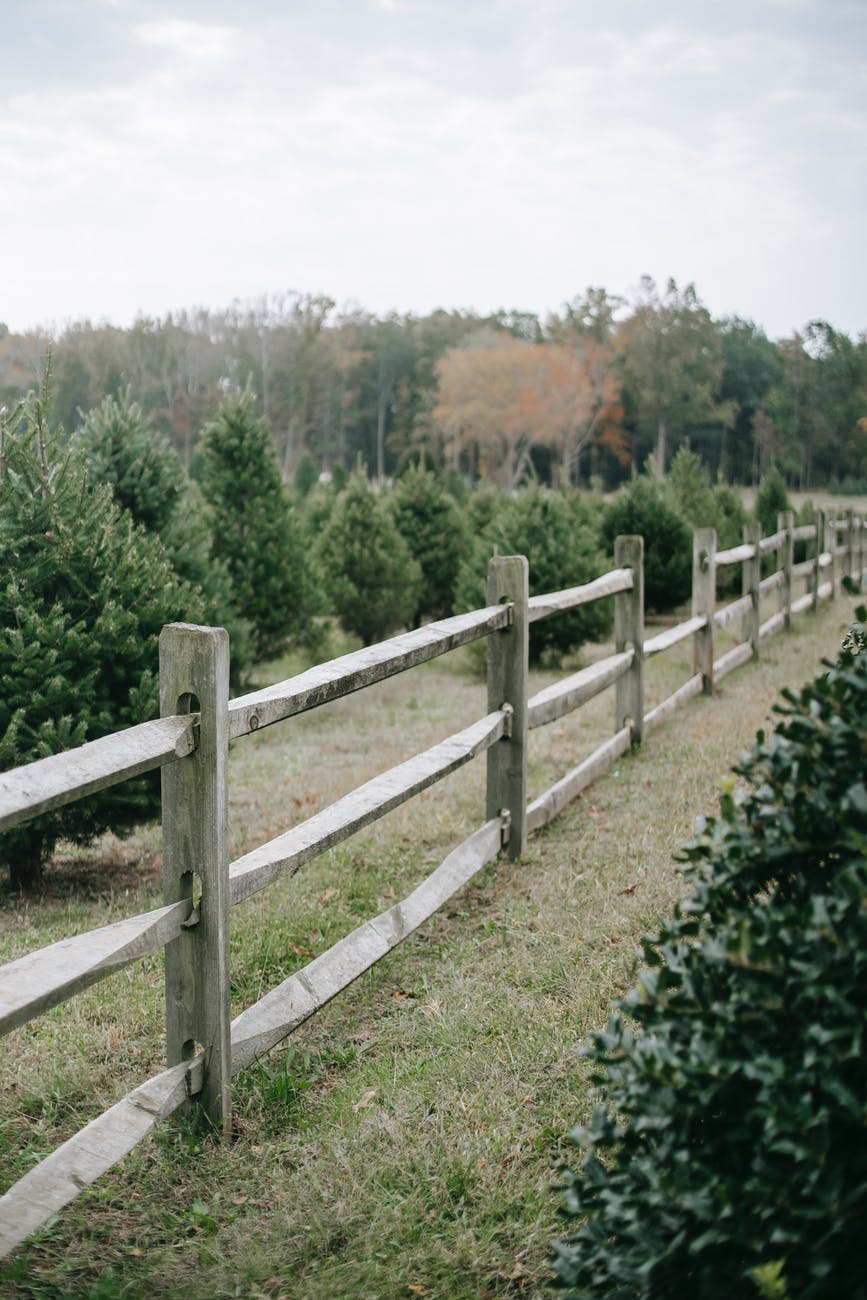
Sometimes we put up barriers when we write. This is different for everyone. Some of us analyze too much, while others plan too much. Yet some may strive for perfection before moving on. My barrier is the analyze thing. I question everything. Not that questioning things is bad to do. We should do that, but when you continue questioning whether what you wrote or in which place a scene/scenes was put, it takes up precious writing time.
Another author I follow and get advice from, told of a first time writer working on his first novel. This young writer asked his advice on his first chapter. So the author read the young writer’s first chapter and ended up being very impressed with it. He asked for more. The young writer didn’t have anymore to show, as he had been working on the first chapter for months trying to get it just right/perfect. The author shook his head and told the young writer to stop striving for perfection. Why? If you do that, you will never get your book written. As long a time it took him to get chapter one finished, he could have had multiple chapters finished had he focused more on getting the story out.
The first draft doesn’t have to be perfect. You just need to get the story written. When that first draft is finished, THEN go back to square one and change what you don’t like. This may be difficult at first, but with practice of letting go and letting the story unfold as it comes, perfection will take a back seat eventually.
Culturally Speaking

Research is a wonderful thing. Time consuming? Yes, absolutely. In the end it enriches your story because it brings believability to the reading experience. If you don’t want to do the research, then don’t include that researchable element in your story. I say this because readers know when you’re winging it. This is so true when it comes to including information about other cultures in your story. Maybe another culture is essential to the plot. I know what you must be thinking. We all know this already. Well, yes. But some will still skip the research. Does researching mean you have to read everything and take extensive notes? No. Here are some ways you can conduct your research and have fun at the same time.
- Read/take notes
- Watch a documentary/take notes
- Interview/record it/and/or take notes
- Take a trip to that place: Israel, Africa, Argentina, Brazil, Russia, Germany. Whatever place your story incudes.
- Pictures: for visual description if you aren’t able to go there.
- Print out your material to use it later if you need it again.
I enjoy researching because I love to learn. Sometimes I take too much time with it, and it ends up taking away from my writing time. This is okay. Just think about how much richer your story will be for having done all that work.
Writing Tired

You wake up in the morning, shuffle your way into the kitchen, turn on your coffee pot, put in a pod (or scoop of coffee depending on the type of coffee maker you have), and pour yourself a cup of coffee. As you sit and drink, you catch up on anything you may have missed on your phone while you were sleeping. The thought of writing starts scratching at your brain, as you begin to think about what you have to get done that day. Many other activities come to mind, but writing is still scratching at your brain. You know the only way to itch it is to sit down and write. But, you’re too tired, even with one cup of coffee in you. The creative juices aren’t being felt. So, you start to do other items on your list of chores to get done. Writing is now banging and clanging against your brain. The story wants to be written, but you don’t want to write because you’re still too tired. You continue doing other things. It’s now 3:00 in the afternoon and you don’t have anything written. You feel guilty because you promised yourself the day before that you would write at least 1000 words today. Uh oh, what do you do? Can you pop out 1000 words from 3:00 pm on?
YES, YOU CAN. Force yourself to do it. You CAN do it. Yes, even if you’re tired. Something will come. I’ve been caught in the “I’m too tired” trap too (too many times). Don’t let procrastination be your mantra.
 WRITE TIME AND AGAIN