
Write like yourself and not like other people as they would write it. Only YOU can write the story inside of you.
Tag: Write
Character Reactions within a Story
When throwing the unexpected at your characters, it’s important for those characters to react in a way that’s realistic to the situation. If you don’t, the reader is going to end up rolling their eyes or pause in their reading and scratch their head in wonder, which you don’t want. You want your readers to be into your story and to keep going with it. Worse, they could put the story down and never finish reading it.
If you aren’t sure if your characters’ reactions aren’t what they should be, have someone else, like a test/beta reader, read it first before publishing it to the world. Get their feedback. It’s important.
Examples:
Unrealistic: A couple of your characters, let’s say to John and Kevin, are out hunting Big Foot, a.k.a. Sasquatch. They are walking through the forest at night then hear the snap of twigs. They stop and look around. Sasquatch jumps out in front of them and they start laughing.
Realistic: The same characters scream, when Sasquatch jumps out at them, and they run. (Be more creative with their terror besides screaming and running. But you get the idea.)
Unrealistic: One of your characters teleports for the first time in their life and they react as though they’ve been doing it all their life. (Trust me, that’s not a realistic reaction.)
Realistic: The same character teleports for the first time in their life and feels feint afterwards. (Here again, get creative with this.)
Overall, you want your readers to enjoy and take in the story you took so much time and care to write. You want them to experience it and feel it. So don’t ruin that experience for them by causing them to roll their eyes or put the book down.
Pinkish Hues by L. M. Montes
Pinkish hues of gradient splendor
spread your colored robes so free,
across the sky a dance you render
for such souls who yearn to see.
A vacuumed hush with mists of dusk
whisper songs of silence floating,
nature’s calm and slowness brusque
gives way to darkness’ dewy coating.
Nighttime shines with speckled lights’
canopy gently dotting ebony skies,
moonlight hovers beams so tight
commanding coverage until rise.
Morning rays o’er the horizon render
with arms caressing soft and free,
pinkish hues of gradient splendor
for such souls who yearn to see.
Love Beseeches by L. M. Montes
A sea of indifference bobbed
upon waves of unknowing
where life would lead,
currents snatched with need
and hunger overflowing
’til life from all were robbed.
From depths goodness reaches
smoothing waves of worry
when life grows weary,
hands above guide clearly
without swells or hurry
but with love beseeches.
I Shouldn’t Have Blinked by L. M. Montes
Life crept steady when I was little,
speed took a seat for just a while,
days morphed into weeks morphed
into months morphed into years,
then looking back I wondered
where childhood skipped to,
time gazed back, threw me a wink,
then I realized I shouldn’t have blinked.
Looking Back by L. M. Montes
While staring backwards
I walked forward,
searching future’s mind
yet awaiting what stood behind,
a pillar blocked my path
as I slammed into its wrath,
many a time this happened
and my head turned misshapen,
then a sign of truth
popped up from my youth,
One can’t move forward
if they keep looking back.
The Opposite Side of Adverb Usage
Adverbs aren’t always bad. There are times when they should be used. If they serve a purpose such as building upon the emotions of a character’s actions, then use them. BUT, be sure to use them sparingly.
Louise Harnby says it quite well (quoted below). You can go to her website here to read more.
“Adverbs, used well, can show motivation, indicate mood, and enrich our imagining of a scene.
I love books that tell it straight because every word pushes me forward. David Rosenfelt is a writer who never disappoints. His Andy Carpenter series features a tenacious lawyer with a dry wit.
The author’s prose is sharp as a knife. Does he use adverbs? Absolutely, though sparingly and they’re always purpose-filled.”
A link to Louise Harnby’s website will also be added on my Resources page.
Adverbs and Your Writing
I have read quite a bit regarding the usage of adverbs when writing fiction. Most of what I’ve read says not to use them. Period. Yet, I still see adverbs in fiction. Can we catch them all. Hmm…maybe. I think the key is to go back through during your edits and look for those and those alone and nothing else. Yes, do an edit just for searching out adverbs in your writing. When you do your initial search for them, circle them, then go back through and rework the sentences they’re in so that they aren’t there at all.
What do adverbs do that are so bad? They make the writing sound amateurish and unprofessional, they take away from any real action going on, and they take away the show out of the “show don’t tell” rule. There are better ways to say/write something.
Example 1:
(with adverb) Jason stepped lightly across the room to surprise Jill.
(without adverb) Jason tiptoed across the room to surprise Jill.
Example 2:
(with adverbs) Max’s harshly spoken words undoubtedly jumpstarted angry thoughts within Jason’s own mind.
(without adverbs) Max spat his words out.
Jason glared back at him, as angry thoughts jumpstarted within in his own mind.
After reading each example, how does each sound to you? The sentence with the adverb doesn’t do much for the reader at all. Plus, the action that should be there isn’t because the adverb throws “water on it” so to speak. But, the examples without the adverb creates more feeling, action, and pictures within the reader and makes for a better reading experience. You may have to play around with the words and create more than one sentence when you move to fix it without the adverbs. That’s ok, as long as it sounds better. Hence, the “show don’t tell” rule.
Time Flew by L. M. Montes
In a year,
time flew–
flowers sprouted,
and kissed the dew–
trees transformed,
collages glistened of every hue–
snowflakes danced,
nothing grew–
sprouts peeked,
all things new–
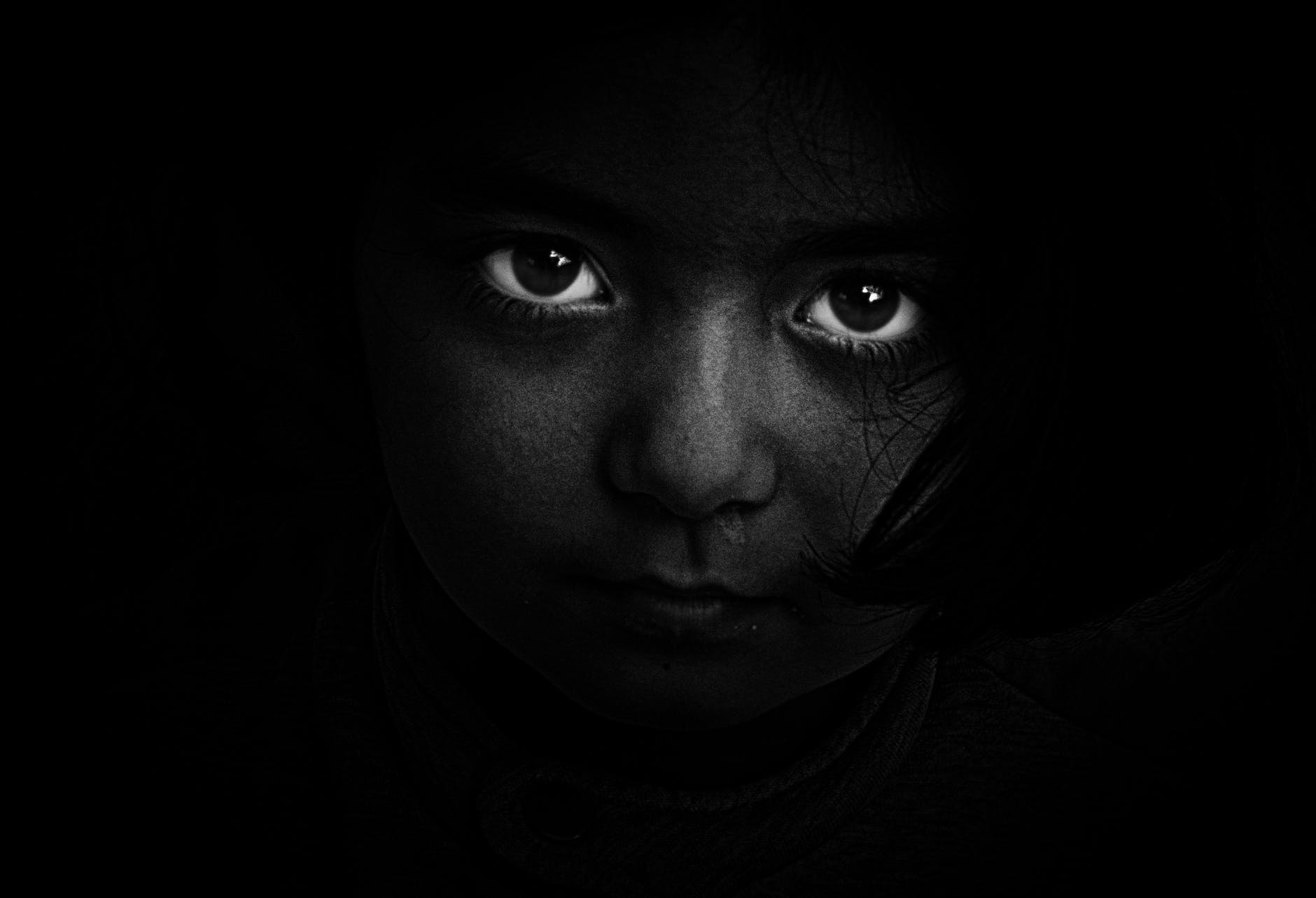
Unspoken by L. M. Montes
Portrayed within the eyes are words unspoken,
perhaps they are of joy or of one broken,
seek me from within to know the depth
of thought conveyed with facial breadth.
 WRITE TIME AND AGAIN