
Tag: stories
Keep Them Reading
In writing a story, remember something; keep the reader reading. How do you accomplish that? I equate this to dangling a carrot in front of a rabbit. Dangle information by leading the reader on but give them just enough to make them curious. After all, curiosity entices the mind to seek closure. When they seek closure, that means they are turning pages.
Increase tension within the story. Create a question or two but don’t answer it (at least not yet). Up the ante by increasing the stakes in such a way that it appears there’s no way out. The reader will have to turn the pages. They will just have to know. I can’t give you exact information as to what you should write, because I don’t know your story/stories. All I can do is give you something to think about.
Hot Air Balloons and Stories
That moment when you start reading a book and the story lifts you up and carries you away.

You’re Inner Story
Write like yourself and not like other people as they would write it. Only YOU can write the story inside of you.
Digging Deep
How often have you read a book with great mean hidden deep within its story? I truly believe anyone can find meaning in just about anything they read. We don’t always look for it though. Why? Because we are so engrossed with what is going on in the story that we aren’t focused on what we can learn from it. In these instances I think anything learned goes straight to our unconscious mind. Now, I’m not a psychiatrist or a psychologist or anything, but to me it’s only common sense.

As an author, I want my readers to gain meaning from what I write. As I mentioned above, not everyone will on the surface. This doesn’t mean we don’t create meaning in our stories. After all, the stories we write have to have some kind of meaning to them in order for there to be a story. Actually, we call it Theme. Finding a theme to center your story around can be daunting at times. Seriously, you can be sitting there in front of your computer wondering what theme to use. In the meantime your story is dying to be written.

The solution is simple. Just start writing your story. The theme will develop itself or will unfold in your mind, and you will have an “A-ha!” moment. This is how I write. I know that sounds backwards, but it works for me. Once you have your theme (a meaning your story centers around), put it down on paper. Yes, literally, write it down. Then go into more detail about it. For example, how can you develop your characters around your chosen theme? In which direction can you take your story now that you have your theme? Will your settings connect to it in any way? What about dialogue? How can you use your theme to increase tension?

Continue to ask yourself these questions. Then answer each of them. Again, do this on paper, not your computer. The act of writing helps it to stick in your brain better. At least it does for me. When you feel you’ve developed your theme enough, go back to your story and continue writing. All the while, you will be using what you wrote down about your theme in various parts of your story.

When I was half way finished with my second book, I realized I didn’t have a theme. As a result, it was becoming increasingly difficult to continue with the story. Then it dawned on me what the problem was. Lack of a theme. It didn’t take me long to figure out what it should be because I knew the direction I wanted my story to go. Plus I knew my main character well. All I had to do was go back and look at his character sketch. The answer was right there. It smacked me in the face, so to speak. Without that theme, the story fell flat.

Once I found it though, I had to go back to the beginning of what I had already written and insert story elements that developed that theme. It wasn’t hard to do. It was just time consuming. But I loved every minute.
What is Coming
Projects I am currently working on will be coming to completion in the coming months. Please see the list below.
- THIS BOOK IS NOW OUT😁😃. My novel: The Cross’s Key. I plan on this being published in August. However, issues have arisen with our house which may cause some delays (I hope not). But if there are delays, it will be published in September.
- My book of poems: Hanging by His Hand. This will be published in September.
- My book of short stories: Lights of Fantasy and other Short Stories. This will be published in January 2023.
Plot Holes

Have you ever read a short story or a novel and somewhere along the way the story/plot didn’t make any sense? It felt as though information was missing, or there was a lack of consistency. The result of all that is you scratching your head in wonder, putting the book down, or leafing back through previously read parts to see what you missed.
That gets too distracting. So how do you as the writer avoid making those same mistakes as a writer? In your own writing, some of the inconsistencies you may be aware of and some you may not be. For the ones you know of, write them down in a plot holes log. For the ones you are not aware of, you will catch those later in your editing.
To expand on this, here is what I do. In the writing software I use, Scrivener (You can find it at Literatureandlatte.com), I create an extra file labeled Edits. Within that file folder I have various files for the different types of editing I will do later. One of those files is called Plot Holes. When I know of a plot hole that I need to address later, I write it there. When I am finished with my manuscript later, one of the things I do is go to that list and fix those plot holes one by one. THEN I start reading my manuscript from page one and go straight through to the end. Along the way I am searching for any more plot holes I may have missed. I make note of them in the manuscript with my red pen and move on. When I get to the end of the manuscript, I go back to those plot holes I made note of in red pen and fix those. Please note…..when I am reading for plot holes like this, plot holes are the only things I am searching for as I am reading. DO NOT fix anything else or make note of anything else during this process because you will lose track of what you’re doing, and you don’t want to start over. If you have to stop to run an errand or cook dinner or something, mark your spot and go back to it later. Trust me, this is the process I used and it served me well.
Water’s Time by L. M. Montes
Water is as old as time,
the stories it tells
are yours and mine.
From whales to pirates,
from ships to wrecks,
these tales of old in our minds do rest.
The Pushoff

That moment before you start. Your mind is filled with so many thoughts. How do I begin? I know what I want to say; but how to write it in such a way that hooks the reader? Will what you write be good? Will it hook the reader? Will it inspire them? Will my beginning be as good as the beginning of my last book/story? What if I “sink”? What if it “takes off”? Yes, I can do this.
It’s all so thrilling isn’t it? You may have written many books/stories before and still have these questions going through your mind before you start. You want to make your readers happy, and you want them to have fun. Not to sound pessimistic, but we can’t please everyone. Many will enjoy your stories/books and many won’t. So, relax. Have fun. Don’t stress yourself out. The truth of it is, you have what I call “Your Circle”. These are the people who you trust to give you an honest critique of your writing before you publish your work. If your beginning, middle or end or anything in between doesn’t sound right, they will tell you. Listen to what they’re saying, take it into consideration, and go from there. If you’re new to the writing craft, your self-confidence may need to be built up more. If you are more experienced, you may have more confidence and so on.
Trust yourself. Based on your writing experiences you will come to know what is good and what needs to be scrapped. So…..DIVE IN. Enjoy.
WarmUp
Do you warm up your writing engine before you start working on your writing project? I guess I would have to say, for me, it’s split 50/50. Sometimes I will warm up and sometimes I won’t. It all depends on whether or not the creative juices are flowing when I sit down to write. If I know what I’m going to write next in my work in progress (WIP), I don’t do a warm up. If I’m stuck, I do a warm up. That will get the ideas flowing again.
Types of Warmup Exercises
- Writing prompts
- Journal writing
- Writing a blog article
- Write a poem
- Look at a painting/picture:
- Describe the setting
- Describe what’s is going on (Remember, a picture is worth 1000 words)
- Write a poem using your descriptions (Who knows, you might be able to use it in your WIP)
- Take a walk in a cemetery. Speculate about the people who once lived. What do you think they looked like? What do you think they did for a living? How do you think they died and/or what’s the story behind it? Come up with scenarios/stories regarding random people. Did they know each other? If so, what was their relationship? You could go on and on with this.
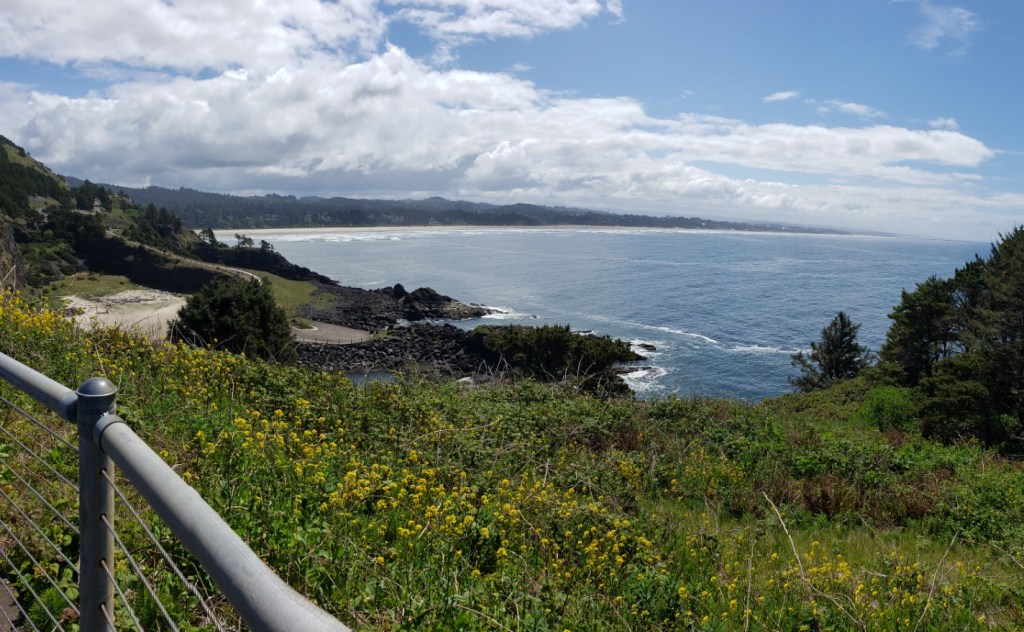
- Go to the beach. What do you see? What connections can you make with what’s in front of you? Maybe the people you see walking along the beach are sea people. If so, why are they there on the beach? What’s their story? (FEEL FREE TO STEAL THIS IDEA IF YOU LIKE)
Don’t be daunted by the blank page ever again. The only reason the blank page is a stopper is because nothing is there. So put something in your head first before you look at that blank page, then you’ll be able to readily transfer it to the blank page when you look at it.
 WRITE TIME AND AGAIN