Do you warm up your writing engine before you start working on your writing project? I guess I would have to say, for me, it’s split 50/50. Sometimes I will warm up and sometimes I won’t. It all depends on whether or not the creative juices are flowing when I sit down to write. If I know what I’m going to write next in my work in progress (WIP), I don’t do a warm up. If I’m stuck, I do a warm up. That will get the ideas flowing again.
Types of Warmup Exercises
Writing prompts
Journal writing
Writing a blog article
Write a poem
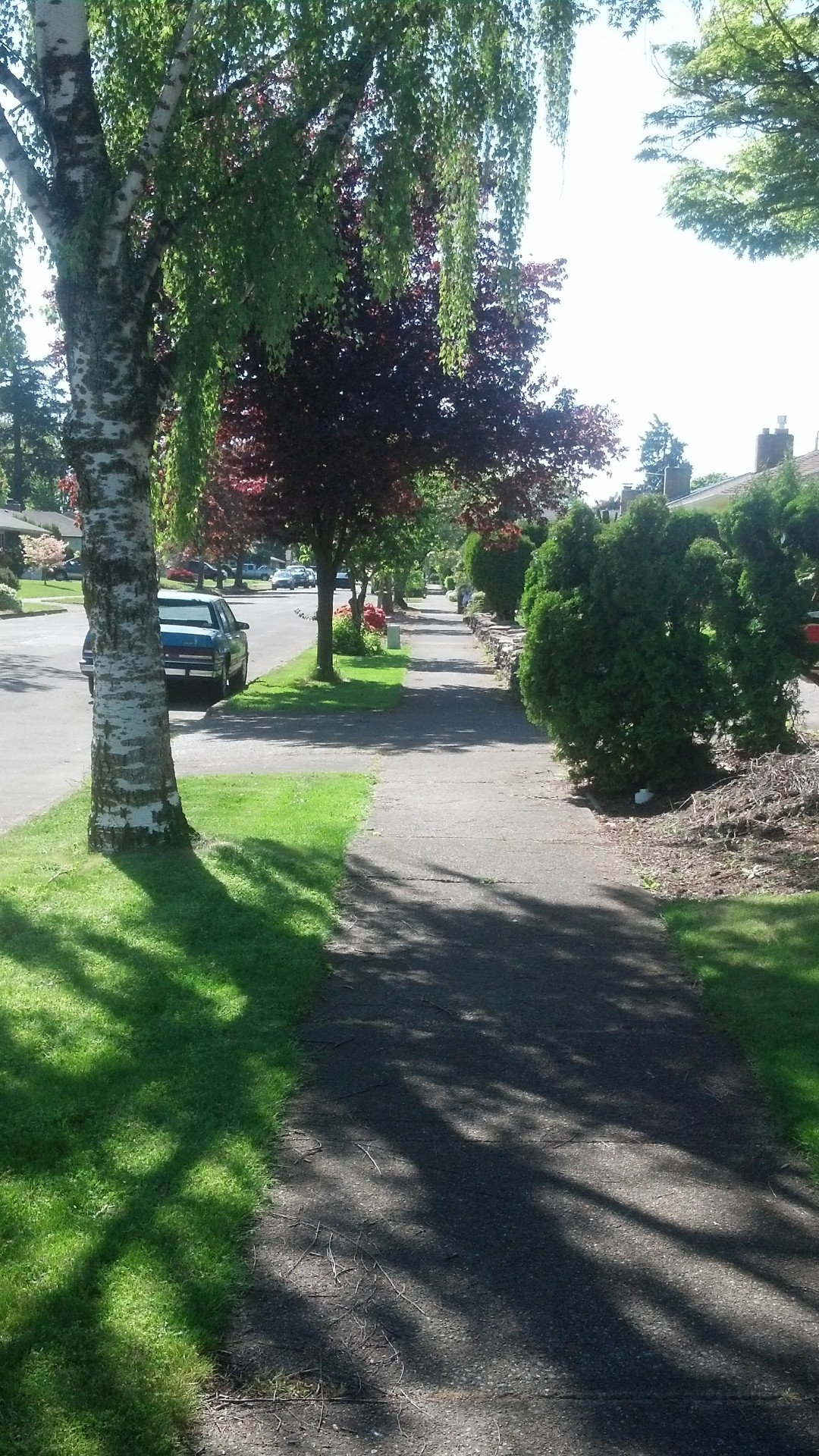
Look at a painting/picture:
Describe the setting
Describe what’s is going on (Remember, a picture is worth 1000 words)
Write a poem using your descriptions (Who knows, you might be able to use it in your WIP)
Take a walk in a cemetery. Speculate about the people who once lived. What do you think they looked like? What do you think they did for a living? How do you think they died and/or what’s the story behind it? Come up with scenarios/stories regarding random people. Did they know each other? If so, what was their relationship? You could go on and on with this.
Go to the beach. What do you see? What connections can you make with what’s in front of you? Maybe the people you see walking along the beach are sea people. If so, why are they there on the beach? What’s their story? (FEEL FREE TO STEAL THIS IDEA IF YOU LIKE)
Don’t be daunted by the blank page ever again. The only reason the blank page is a stopper is because nothing is there. So put something in your head first before you look at that blank page, then you’ll be able to readily transfer it to the blank page when you look at it.
Research is a wonderful thing. Time consuming? Yes, absolutely. In the end it enriches your story because it brings believability to the reading experience. If you don’t want to do the research, then don’t include that researchable element in your story. I say this because readers know when you’re winging it. This is so true when it comes to including information about other cultures in your story. Maybe another culture is essential to the plot. I know what you must be thinking. We all know this already. Well, yes. But some will still skip the research. Does researching mean you have to read everything and take extensive notes? No. Here are some ways you can conduct your research and have fun at the same time.
Read/take notes
Watch a documentary/take notes
Interview/record it/and/or take notes
Take a trip to that place: Israel, Africa, Argentina, Brazil, Russia, Germany. Whatever place your story incudes.
Pictures: for visual description if you aren’t able to go there.
Print out your material to use it later if you need it again.
I enjoy researching because I love to learn. Sometimes I take too much time with it, and it ends up taking away from my writing time. This is okay. Just think about how much richer your story will be for having done all that work.
You wake up in the morning, shuffle your way into the kitchen, turn on your coffee pot, put in a pod (or scoop of coffee depending on the type of coffee maker you have), and pour yourself a cup of coffee. As you sit and drink, you catch up on anything you may have missed on your phone while you were sleeping. The thought of writing starts scratching at your brain, as you begin to think about what you have to get done that day. Many other activities come to mind, but writing is still scratching at your brain. You know the only way to itch it is to sit down and write. But, you’re too tired, even with one cup of coffee in you. The creative juices aren’t being felt. So, you start to do other items on your list of chores to get done. Writing is now banging and clanging against your brain. The story wants to be written, but you don’t want to write because you’re still too tired. You continue doing other things. It’s now 3:00 in the afternoon and you don’t have anything written. You feel guilty because you promised yourself the day before that you would write at least 1000 words today. Uh oh, what do you do? Can you pop out 1000 words from 3:00 pm on?
YES, YOU CAN. Force yourself to do it. You CAN do it. Yes, even if you’re tired. Something will come. I’ve been caught in the “I’m too tired” trap too (too many times). Don’t let procrastination be your mantra.
I like to think of writing a novel much like putting together a jigsaw puzzle. There are so many pieces and there is so much to think about. Placement of each piece/part is key if it’s going to fit with the rest of the ‘picture’. One wrong placement can make the rest of the story appear out of place. So, where do you start? Better yet, what do you start with? That really is up to you. As long as all the pieces fit together and the ‘picture’ at the end fits together, how you get there doesn’t matter. After all, we’re all different.
Still, there is so much to think about. Please see the list below.
Characterization
Setting
Story Structure
Scene structure
Theme
Voice
Point of View
Generally speaking, these are the biggest elements that go into the creation of a novel. It’s quite a bit to keep track of while you’re writing. For the first time author writing their first book it can be daunting. One might ask, “How do you work with all of them as you’re writing?” It’s simple. You don’t. Yup, I said it. You don’t. What you do instead is this:
Write the first draft to get your story down. Start from the beginning and work toward the end. Start from the middle and work your way to the end then write the beginning. Write the end then the beginning and then the end. Whichever way you go about getting that first draft done is up to you. Just get that done first without worrying about the particulars listed above. Put if away for a few weeks when you finish the first draft. This will keep your mind fresh when you go back to write draft two.
In draft two look at the story structure. Make sure make sure each Act has the appropriate information in it (Please see my post from July 17, 2020 entitled Story Structure in Three Acts). Story Engineering by Larry Brooks is a wealth of information. I highly recommend it.
Go through each scene. Is the structure of each what it should be? There are two types: 1. Action 2. Reaction (Please stay tuned for a later post on this topic).
Here is where I would go through and look at the character development of your Main Character. There must be character growth from the beginning to the end. Here is where their character flaw comes into play. Remember, by the end of the book they will overcome their flaw. How they do that is part of their growth.
Setting is huge. Readers need to get a good idea/picture of where your story takes place, what it looks like, and how it’s connected.
Point of View is a huge one. You don’t want to confuse your readers by accidentally moving from first to third person or vice versa. So, choose a point of view and stick with it. Go back and make sure it’s consistent throughout.
Voice encompasses more than one thing. It incudes diction, detail, imagery (through description or use of simile or metaphor), dialogue, tone, and syntax (the way words are arranged). As you read through your manuscript looking for these elements as it relates to voice, you might find you need to add something here or there or change the way a character said something.
Theme goes along with the main message you are trying to convey to your reader. What is it you want them to learn by the end of the book? Do you accomplish this?
PLOT HOLES. This is huge. After all is said and done, please read through your whole manuscript and look for those pesky inconsistencies. Readers will find them and you don’t want them to. Keep a style sheet where you keep track of details you need to remember throughout your story. Your 31 year old MC can NOT be 42 in the last half of the book (unless they’ve been lied to and that’s part of the story). Her/his birthday you had mentioned on page 20 as being January 8, 1972 can’t be mentioned later on page 245 as being March 23, 1974. I just won’t work.
The editing is the very last thing that’s done. Grammar, spelling, sentence structure, etc. This comes last before publishing.
As you can tell, these tasks are not done in one swoop. They are done one at a time (generally). Hey, if you are able to focus on one or more at once that’s fine too. The point is take your time. Focus, do not rush. The story won’t grow legs and walk away. It’s yours, so take your time and make it the best YOU you can make it. By doing this, all of the pieces will fit together, so that when someone else looks at it (reads it), they will be looking at something that will stay with them and make them come back for more.
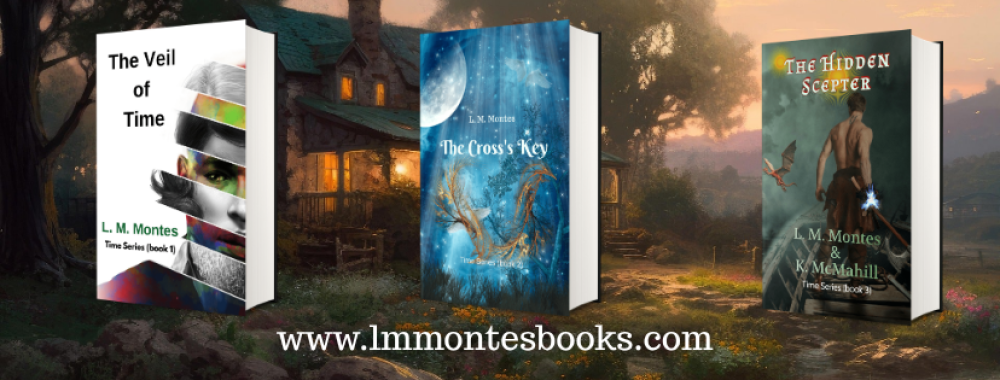
My books arrived yesterday, Sunday, January 31st. They are now available on this site for purchase at $12.50. That’s 50% off the regular price on Amazon. Get your SIGNED COPY today while supplies last. Just go to http://www.lmmontes777.com, scroll all the way to the bottom of the Home page and click on the button entitled PURCHASE A SIGNED COPY OF MY BOOK: THE TRIUNIX OF TIME
How is it I received them so early instead of the February 15 notification I received last Friday, January 29th? You see, the day after I received that notification, Amazon sent me a message saying they had been shipped. I was like, “Hmmm, and it’s going to take until the 15th to get here? That’s silly. Where are they coming from, across the Atlantic?” Then, after church yesterday, Sunday, January 31st, I went out to my car and checked my phone for messages etc. I saw I had received another notification saying my books had been delivered. I was like, “Really? That was fast.” I arrived home and low and behold there they were on my doorstep. So, you may now purchase them on this site here.
Words travel across the page and along with them, our eyes. From our eyes our brains receive the “picture” that, when put together, the words project to us. This journey of words is not only for the benefit of the reader but for the author/writer as well. It’s a two sided gratification. The readers reap the benefits of a great story, which they can chew on for days afterwards. They will even pass it on to others who then get excited to read it. This cycle continues from reader to reader. It’s a form of advertising, whether they realize it or not.
There are two journeys authors go on. The first being that of the story itself, which changes more than once along the way. Sometimes they may even feel as though they’ll never get it finished (many of us go through that), but they/we do, and they/we gain the satisfaction of having finished such a lengthy project. The second journey begins when the book is finished, which involves passing the book along to others. Marketing. It’s fun because there are so many creative ways to do this (not going into details, as this is for another post), yet it’s challenging. But, once you get going with it, the momentum picks up. Time, give it time. My point is, authors pass along just as the readers pass along. The two are on two different highways, but the goals are the same. They’re getting the book out there.
I received notification today that the order containing my books, which was supposed to arrive today (January 29th), has been delayed until February 15. My plan was to begin selling them on Monday February 1st, but now it will have to wait until the February 16th (this gives me a day to set things up).
I am so sorry for the delay. Thank you for understanding.






 WRITE TIME AND AGAIN