Posted in Characterization

Character Moments

Creating book characters can be a lot of fun, but there is a process. How you wield that process is really up to you as the author. Many authors create a character bible consisting of everything from physical attributes to personality analysis. Some do this before writing that first chapter. Don’t get me wrong, it’s always a good idea to know who your character is before you place them in your story. But you will not know everything about them when you start writing that first chapter.

There will be moments while you’re writing your story when ideas about your character will begin to germinate in your mind, thereby giving him/her more depth. That’s great! Go with that! Those are unplanned parts of the character’s personality. Now, that type of situation typically works out great. But there are times when that happens, and it can throw a monkey wrench into the situation. For example, years ago when I was in the middle of writing my first novel, I had one of my male characters do something out of character. And I’m talking WAY out of character. I sat there, stared at the screen, and said, “What do I do now? I like what I had him do?”

The easy way to fix this situation would have been to change his action and move on. The complex way to fix it was to go back to the beginning and change his whole character, moving forward to that point. So that is what I did. In the end I was happier with him, and the story was better off as a result.

Can you plan everything about your characters from the start? You can try, but be ready when that runaway moment comes that makes your story that much better.
Posted in Characterization

Blocks of Knowledge

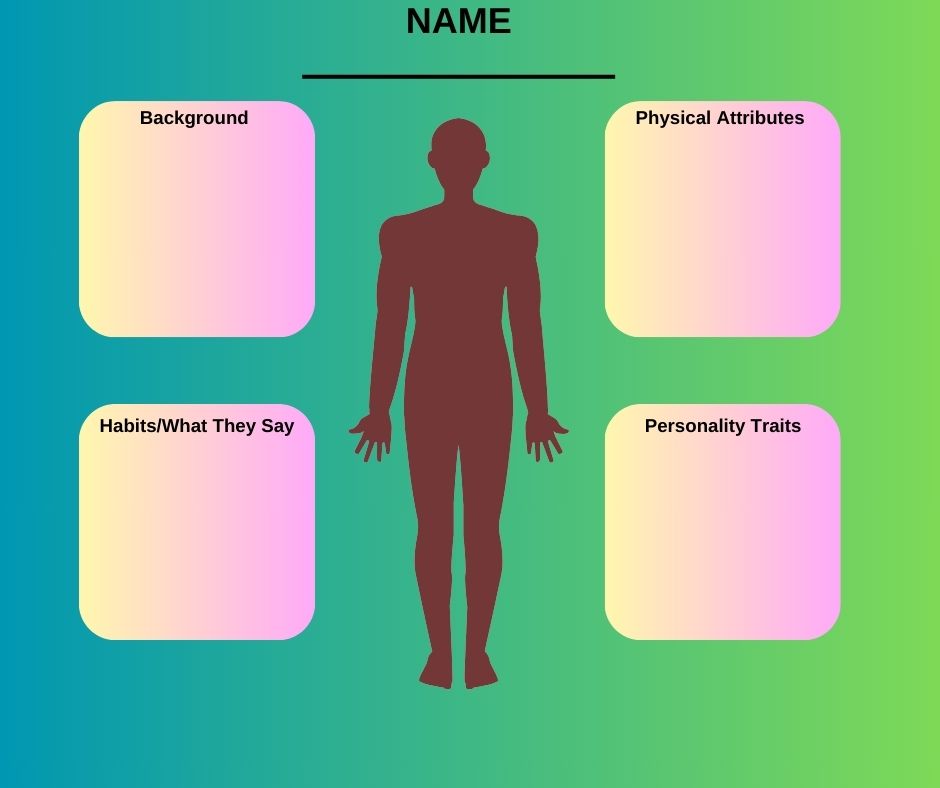
Think of your main character as you would a lump of clay. At first that’s all they are, someone ready for molding and maneuvering into whoever you want them to be. People are complex, so there is much information that goes into creating them. First think of the different types of qualities, traits, and information needed for a character’s creation. Then break that information down into categorical blocks. Then fill in each block with the type of information assigned to it. Please see the example below.

Posted in Characterization

Kyle Stevens and His Cat Bubba from my Novel The Cross’s Key

Posted in Characterization

Character Arc

In reality we all go through our own personal growth. It’s called life. In a story our main characters go through their own personal growth. It’s called a character arc. With all of the mistakes we make, most of us learn from them and move on to the right path. Along the way we hit another snag, we learn (hopefully), and continue on. Because we learned our lessons from the past, if we’re hit with the same situation again, we’ll know how to handle it the right way. We grow from our experiences.

But here’s the thing. Our lessons in real time are learned over the course of a lifetime, which can be years. In a book the character arc for the main character progresses for the life of the story/book. Think of it of as a cycle of sorts or a path. The character starts out at point A then moves to point B by way of various experiences, conflicts, decisions, and mistakes. From point B they move forward using what they learned to get to point C. They go through more challenges and are faced with more fears. Then they reach point D. By the end of the book they’ve gone through some changes personally and overcame their fatal flaw. Growth. If your main character goes through each of the points in the character arc cycle without showing any kind of growth, there’s something wrong. There must be growth.

A character arc that has a fascinating and compelling character arc will have characters overcoming challenges and facing fears as the story unfolds. The outcome? Personal growth, much like how people in real life obtain personal growth.

Posted in Characterization

There’s Always that One

How many times have you been part of a group or team where there is at least one person who has to be a stickler for keeping things on track? They correct you if they feel you’re wrong, and/or make sure everything is done right. I think it’s a rule of life that every group has to have someone like this in their life in order to keep everyone on track whether it’s their job or not (I’m laughing here, because I know people like this). These people can (but not always) cause tension in your story. So if you want to spice things up a bit, included one of these types of characters within your story.

Posted in Characterization

Character Richness

Have you ever read a book, and you liked the characters so much that you didn’t want the book to end? Oh yes, I’ve been down that road myself. That means the author did their job of creating characters that stand out and touch your heart. But, how did they do that?

  1. Their characters displayed emotion to the point that the reader ‘felt’ right along with them.
  2. The character displayed a habit or two. This personalizes the character, makes them human.
  3. The character was relatable. We as a reader could identify with that character. We may have understood what they were experiencing. If not, then we could at least feel for them and/or root for them.
  4. The dialogue sounded real and not mechanical or robotic. Maybe they made you laugh or cry.

These are just some of the elements a writer uses in order to bring a richness to their characters. Take your time developing them. Observe people around you and jot down notes of things you see or hear them say or do.

Posted in Characterization

List of Character Flaws

Below is a list of character flaws you might find helpful when creating characters for your story. It always helps to consult a reference when the mind goes blank and you can’t think of enough possible ideas. My article I published on January 18, 2021 called Character Flaws goes into more detail about this topic.

  • stubborn
  • vain
  • lazy
  • headstrong
  • cowardice
  • cruelty
  • selfishness
  • manipulative
  • dishonest
  • unfair
  • paranoid
  • hypocrisy
  • negative
  • entitlement
  • cynical
  • petty
  • assertive
  • wrathful
  • violent
  • player
  • user of others
  • superstitious
  • shy
  • sensitive
  • jealous
Posted in Characterization

Likeable Characters

Have you ever finished reading a book of fiction and were disappointed it ended? And was part of that disappointment because you were going to miss the characters? You actually liked the characters so much you didn’t want the story to end. You enjoyed your time with them. Why do you think you liked them so much?

The answer is very simple. The author did a fantastic job creating them. But how were they able to be that effective in their creation? It lies in the attention to detail. It goes beyond physical appearance. Go deep within your characters, their minds: how they think, feel, react to certain things, mannerisms. Study other people around you and make notes in a journal. What do you like and dislike about them? Make a list of habits and choose some for your character to have.

Also, consistency is a huge key to creating believable characters. Don’t have them be unafraid of spiders in one chapter and afraid of them in the next. Don’t give them one habit in the first part of the book and it not be their habit in another part of the book. That will only serve to frustrate the reader, and they’ll put the book/story down.

You won’t know if your readers will like your characters or not, but if you do your job and pay attention to detail, the chances of them having such an impact on the reader will go up.