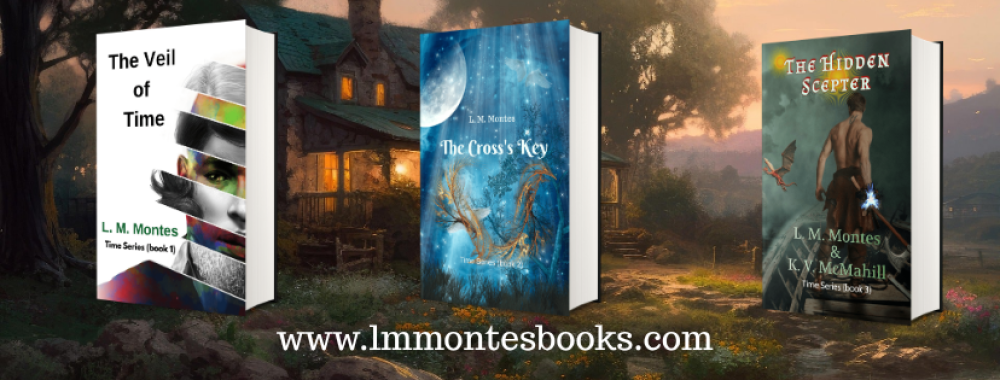
Coming in February, my novel, The Triunix of Time, will be on sale here on my blog. See details below.
Format: Paperback
Price: $12.50 – This is HALF OFF the regular price of $25.00 on Amazon.
Special Feature: Each book will be a signed copy.
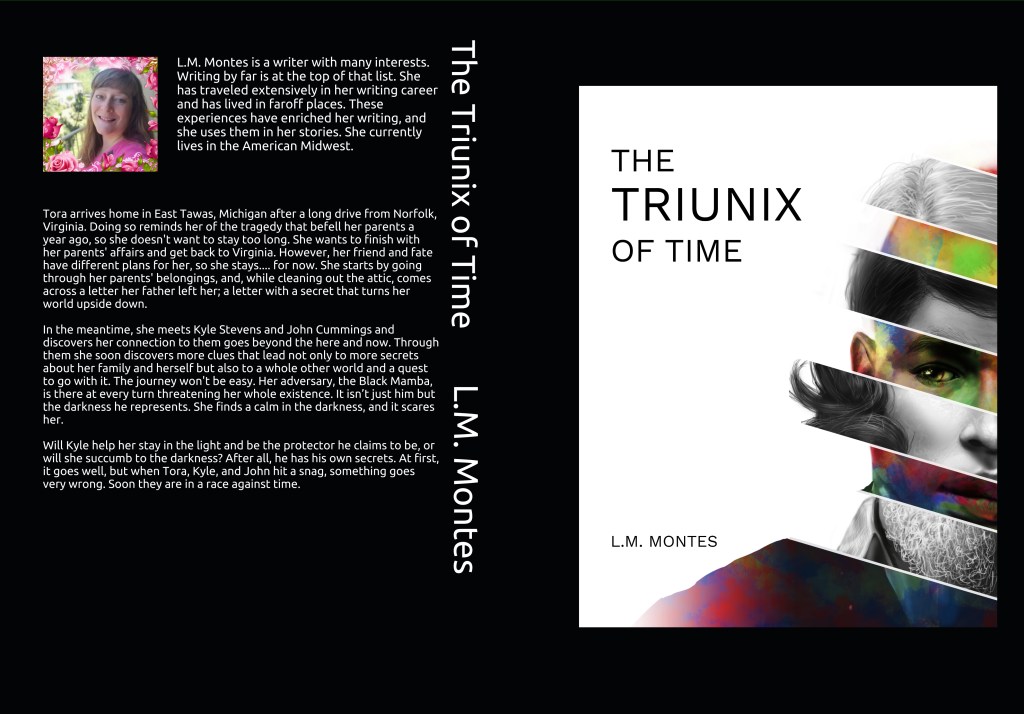
Coming in February, my novel, The Triunix of Time, will be on sale here on my blog. See details below.
Format: Paperback
Price: $12.50 – This is HALF OFF the regular price of $25.00 on Amazon.
Special Feature: Each book will be a signed copy.
O Holy Lamb of God,
You hold eternity in Your hand.
Only You can break the seals
To bring the beginning of the end.
O Angels from on high,
You sound your trumpet blast.
Thunder peals and stars they fall
Christ Jesus has come at last.
Our King He reigns forever,
And wipes our tears with peace.
To Him all praise and glory
As we live eternally.
Refrain
Call to Jesus, Call to Him
Call His Holy name, in that hour
of dark destruction, to you His
light He will ordain.
What holds you back? What is one of your character traits that works against you more often than you care to admit.
Are you:
When I was younger, and for many years, I was very naïve. I hadn’t had the experiential knowledge of many things that would have allowed me to make the correct decisions. In other words, I hadn’t learned anything about life. Worse yet, it took me a while to get past that naivety. Some individuals learn life’s lessons quicker because they are willing to rely on new information without letting their own opinions get in the way. Well…I wasn’t one of those people. I had a stubborness to me which made me more headstrong than most. The result is that I didn’t listen to good advice. Because I didn’t listen, I ended up hurt (not physically, but a lesson learned type of thing). It cost me financially at one point. That was one instance. Another example came in the form of a relationship. I became involved with someone I had no business getting involved with. I let my heart guide me and not my common sense and certainly not the advice of others to the contrary.
I should have listened to what others were saying. I should have listened to that conscience of mine. But I didn’t. I truly though I knew better. I learned my lessons in the end, but it took a long time to get to that point. It shouldn’t have taken that long, but it did. The silver lining came when I FINALLY learned. When I learned my lesson, that’s when things started to change for the better. I now knew how to avoid those missteps. I knew what to look for. My story changed and the ending was GREAT.
My character flaws at the beginning were naivety and stubborness. Over the course of my life (or story), I was presented with challenges that created setbacks based on my own behavior (character flaws). In the middle of it all, once I ended up hurt, these instances made me rethink what I was doing. I was able to go back in my mind and go over what wasn’t working, THEN I was better able to correct and attack my issues head on and take them in a more positive direction by changing my behavior. THIS IS THE PATH YOU MUST TAKE YOUR CHARACTERS ON when you are writing you story/novel/book. The character flaw(s) in your main character is a large part of what carries them on their journey throughout the story. If they don’t learn anything by the end of the book, how are they able to overcome the antagonist?
We all have something to say, and how we say it is unique to us. No one else can say what we want to say in quite the same way. Let’s say for example there are two different people writing on the same exact topic, and they don’t put their names on their paper. They give them to you (you’re blind folded when they give them to you so you don’t know who gave you what), and you read them. Will you be able to tell which paper came from which individual? One’s personality comes through in their writing. If you don’t know the writer personality, would you still be able to tell? Whether or not we know someone doesn’t take away from the fact that their writing is still unique to them.
This uniqueness is your voice, your light. Who you are comes through on the pages. Whether you’re writing in one character or in more than one, your words are the words that are bringing the story to life. Don’t hold back for fear someone might not like it, because, truth be told, there’s always someone out there who won’t. That’s part of life. Put your all into your work. Put your light into it and let it shine.
As a side note here, if you are editing someone else’s work, be careful to not change too much because you run the risk of inserting your unique style into their work, then it won’t be theirs. You don’t want to take away from their voice/style. A better idea would be to suggest the type of change that’s needed, and let them to the changing.


Everyone has an odyssey of sorts. If you are still in your 20’s, your odyssey is still in the beginning stages. If your are older, say in your 50’s, your odyssey is still in progress, but you have quite a life journey up to that point even more so.
We all have experiences that lead us somewhere. Maybe yours led you exactly to the point at which you wanted to be, even though how you got there wasn’t the road you wanted to take. Or, maybe it was. If you’re a writer, your odyssey is chucked full of material from which you can choose to include in your story. This goes along with a post I did earlier that talked about writing what you know. Today I want to touch on the variety of events in one’s journey/odyssey. I’ll use my own as an example.
My odyssey is in 2 parts. The first part started out in the beautiful state of Michigan, which is where I’m from. There isn’t a lack of places to camp and swim because of the huge coastline due to the lakes we have access to year round. As a result, my family camped quite a bit. The explorations, hiking, bike riding, fishing, and swimming added to the adventures. One summer at the age of 16 was the last camping trip me and my family went on together. An incident happened involving me. A moment of tragedy can happen in an instant but last a lifetime. This began the beginning of my second odyssey. From this point forward there was much I had to overcome, and it wasn’t easy. I, like many human beings, made right decisions and wrong decisions. These decisions helped me to learn and grow from. They gave me something to reflect on and use in order to mature and end up at a place in my life that leaves me saying to myself, “I made it. The journey was rough, but I made it.”
This doesn’t mean that there aren’t still decisions and mistakes to be made, but at least now I have some concrete lessons to base my decision making process on. I’m more informed. Even more, I have something I can reflect on by using these experiences in my books, which is what I did in my novel The Triunix of Time. The book isn’t about my life, but some truths lay within it. In your stories, you will embed your own truths, as many writers do. What I found by doing this is that these bits of truth enrich the story itself because you are leaving your mark. Your feelings regarding them come through to the reader by way of your story characters, your descriptions, and the like.
Don’t use all of your odyssey in one story/book (unless you’re writing an autobiography). Use them as they apply to the story you’re writing. This way, in future books/stories you will have more to use.
Coming in February, my novel, The Triunix of Time, will be on sale here on my blog. See details below.
Format: Paperback
Price: $12.50 – This is HALF OFF the regular price of $25.00 on Amazon.
Special Feature: Each book will be a signed copy.



What inspires you? Is it a beach somewhere? Is it on a balcony overlooking palm trees and a beautiful garden? Is it on your couch at home in the comfort of your living room and your imagination? I’ve done my story writing at my kitchen table a few times, but truthfully, it’s difficult for me to be creative that way. I love being comfortable, so on my couch it is. If I’m writing while at a beach or outside at a park, I’d rather take my writing journal and put pen to paper. We all have our preferred modes of writing. What’s yours?
Another way to find inspiration is to use Pinterest. Yes, Pinterest. I do this. I have private boards for my fiction writing use. In each of these private boards I have sections for each type part of my story I’m working on.
These sections include:
For great information on how use Pinterest for your writing, click the 4:45 minute YouTube link below.
I would love to hear about what inspires you and what your favorite places to write are, so please feel free to comment.


