Blog Feed

Posted in Fiction

Excerpt from the Prologue

Here is an excerpt from the prologue of my new novel, The Cross’s Key

The Triplet Septfinitude bragged of mountainous peaks and plush grassy meadows. Trees with leaves of several hues of reds, yellows, and greens cascaded own each slope. Between each mountain rested deep blue and turquoise-colored lakes and streams. Living dwellings made of marble peeked out in various areas of the sides of each mountain. Small wooden bridges decorated with leafy vines connected each living dwelling from one to the next and all the way down to the grass below.

Paul and Susan Stevens looked on as their eight-month-old triplet boys lay on their blanket under the Fophawna tree. The Tantis Lake lay several yards away. A gentle breeze touched the furry bark of the tree just right, and the follicles billowed and shimmered. Susan got down on the blanket to play with her boys and moved into a sideways leaning position when the triplets touched each others hands haphazardly clapping them together. She chuckled as she watched. As they continued to do this, their hands became attached to each other. Then the three little bodies moved and melded together and giggled. The end result was one baby, not three. Susan’s mouth gaped open, and her vocal cords refused to work, rendering her silent. She was so horrified and so focused on the one baby that she didn’t see her husband on the blanket across from her trying to do what he could to make the one baby three again. All the while glancing over his shoulder several times to see if anyone else witnessed what just happened. They were alone.

“How do we get them apart?” said Susan now able to speak.

Paul didn’t respond as he poked and prodded the baby in front of him.

“Paul?””

“What!” he thrust out. “How in hell should I know? This is the first I’m seeing this myself.”

“You don’t have to be so…..” Susan said with a start. “I didn’t…..damn!”

“You knew there was a possibility this would happen. We both did.”

She opened her mouth to talk but thought better of it. He was right, but she put this possibility behind her never thinking it would happen to her babies. She didn’t want this, not for her children. This kind of ability was dangerous. She knew what it meant for their future and the future of the triplets if anyone found out.

“Paul, what are we going to do?”

“We’ll have to keep them apart as best we can. Then, when they get a little older, we can leave and go to Shir in the Natural Septfinitude.”

He was right.

*****

Fourteen years and Four Months Later

Shir’s early morning dew glistened across the lush grass as Ethan bent over the creek and whisked his fingers through his blond close-cropped curls. He gave himself one last look at his reflection in the still creek water then splashed the cool, wet liquid on his face a couple times and stood. He crossed his long sleeve shirted arm across his face to dry it then turned to face his triplet brothers.

“Why can’t we touch each other? You know, like pat each other on the back for a job well done or something. What’s all the fuss about?” asked Jace.

“Why? Do you need a pat on the back? Are you in need of a compliment? Well, job well done, Jace,” said Ethan with a voice dripping of sarcasm. “How are we supposed to know? We’re in the same situation as you.”

“You’re the oldest, Ethan. You should now,” said Mason with a chuckle. He knelt next to the creek, dunked his close-cropped, straight black hair in the cold water, shook his head several times, then whipped his head back, bringing with it a stream of water heading straight for Jace, who saw it in time and ducked. The splash landed on Ethan’s face.

Ethan gasped then took another swipe at his face to dry it. “I am the oldest by nine minutes,” replied Ethan. “And keep your water to yourself damn it. My being the oldest does not mean squat. Ask dad. Although, I doubt he would say anything. I tried asking once, and he blew me off.”

“Mom and dad never said anything to me either. I asked them once, too. Mom looked away and dad changed the subject. You know how he is. If he doesn’t want to tell you something, no amount of probing or coercion is going to get him to talk,” said Mason.

“So, let’s try it,” said Jace.

Ethan and Mason threw him a blank stare.

“What? It’s not like we’re going to blow up or something.”

“Dude,” said Ethan. “I don’t think we should go against mom’s and dad’s wishes.”

Mason smacked his tongue, then said, “Come on, he’s right. He is the youngest, so we can blame him if something goes wrong. Besides, they’ll never know.”

“Ok, fine,” said Ethan. “But not here in the open. Let’s go in the barn. We have chores to finish up anyways.”

The late July heat rendered the barn an oven of sorts. The three stood inside the main entrance looking around. One of thee horses in one of the distant stalls stamped his hoof and gave a low whinny.

Ethan spied his father’s small office on the far end and walked in that direction. “Come on.”

The three stood in the center of the room and looked at each other. Neither one wanted to go first. Finally, Mason gave Jace a quick poke. Nothing happened. Seeing this, Ethan and Jace did the same to Mason. Again, nothing happened. They started laughing and felt ridiculous. Then they slapped each other the way guys do.

“Damn,” said Ethan. “All this time we’ve been afraid to come in contact with one another. Again, I wonder what the big deal was?”

“He five bros,” said Mason as he put up both of his hands.

Ethan and Jace put up both of their hands. Now standing in a tiny circle, they all smacked each other’s hands at the same time. Then their bodies melded into one. Now they knew.

“What? Who? How? Oh God. What have we done?” asked the brothers who were now one person. What is this person’s name? My name? Our name? Damn! Who is this?” His voice didn’t sound like any one of the three brothers.

He turned to face the corner desk. A small 8″ x 10″ mirror hung on the wall above the section of desk on the right. He peered into it. A different person stared back. In a way he was a compilation of the three, yet different. He touched his mouth, then pulled the skin under his right eye down and let go. He ran his hands through his dark brown hair and exhaled.

“We need to tell dad. Wait, I’m talking to myself. Hey, you guys there?” Nobody answered back. “What’s my name, our name?” Again, no one answered. He didn’t know if he was one person or three.

A translucent green materialized around the frame of the mirror and intensified until it filled the room. He plucked the mirror off the wall and a certain oddness peered back at him….

(If you enjoyed this snippet and would like to continue reading more, follow the link to the book in the book’s title above. It is free on Kindle Unlimited. The Kindle version is $8.99 on Amazon).

Posted in Poetry

Malice by L. M. Montes

Hardness hails the deepest creases
of tainted thoughts and goodness taken,
breaks the inside then snaps to pieces
the person meant to be forsaken.

Hurt abounds from one’s behavior
as meanness hurls from they to thee,
until karma returns the nasty favor,
blind to all and will not see.

Posted in Writing

Descriptive Words

Please note that some of the descriptive words in this table are found in more than one box. This is because they hold two different descriptive meanings.

Sometimes it’s nice to have many in one place rather than always resorting to look up single words at a time. When you are in the middle of writing a piece of fiction and you want a unique way to describe something, your mind can go blank. Here is a table to help you.

Really
Certainly
Easily
Genuinely
Honestly
Positively
Precisely
Truly
Undoubtedly
Unmistakably
Very
Absolutely
Acutely
Decidedly
Deeply
Eminently
Exceedingly
Excessively
Greatly
Highly
Extremely
Really
Remarkably
Seriously
Significantly
Singularly
Supremely
Terribly
Terrifically
Thoroughly
Normally
Commonly
Generally
In general
Mainly
Most of the time
Mostly
Ordinarily
Usually
As a rule
Quickly
Swiftly
Rapidly
Hurriedly
Speedily
Fast
Quick
Hastily
Briskly
At high speed
Seriously
Passionately
Earnestly
Sincerely
Vigorously
Gravely
All joking aside
Cut the comedy
Intently
Resolutely
Kindly
Genial
Gentle
Good-hearted
Generous
Humane
Kind
Mellow
Merciful
Pleasant
Finally
Definitely
Assuredly
Once and for all
Past regret
Settled
With conviction
Determinately
Beyond recall
Lastly
Only
Apart
Individual
Lone
Matchless
Once in a lifetime
Sole
Unaccompanied
Unequaled
Unique
Perfectly
Altogether
Completely
Fully
Quite
Utterly
Wholly
Consummately
Well
Totally
Accidentally
By chance
Inadvertently
Casually
By accident
Randomly
Unconsciously
Unintentionally
Unexpectedly
Unwittingly
Confused
Bewildered
Dazed
Glassy-eyed
Mixed up
Not with it
Addled
Discombobulated
Perplexed
Puzzled
Posted in Poetry

Types of Poems

Here are a few types of poems I thought you might be interested in. There are more, but I went with some common types that people enjoy writing more often. They range in difficulty. For more information about each, you can go to www.Google.com

TypeDefinition# of Lines# Syllables
Per line
Rhyme Scheme
HaikuAn ancient form of
Japanese poetry.
Small in size
3 linesline one has 5
line two has 7
line three has 5
none
LimerickAre funny and
sometimes rude.
They have a set rhyme.
The subject is a short, pithy
tale or description
5 linesnoneAABBA
SonnetA poem expressing a single,
complete thought, idea
or sentiment. There are two types: Petrarchan and
Shakespearean
14 lines10
(Iambic Pentameter)
Petrarchan Sonnet: ABBA, ABBA, CDECDE

Shakespearean Sonnet:
ABAB, CDCE, EFEF, GG
Free VerseA popular style of modern
poetry. It has a great amount of freedom when it comes to number of lines, cadence, and rhyme (if any)
variesvariesvaries
VillanelleA short poem of fixed form, written in tercets, usually five in number followed by a quatrain.19 linesvariesABA for the first 5 tercets. Line 1 from the first tercet gets repeated in line 3 of tercets 2 and 4. Line 3 from tercet 1 gets repeated in line 3 of tercets 3 and 5. In the stanza 6 (the quatrain at the end), lines 3 and 4 are lines 1 and 3 from the first tercet in order).
Blank VersePoetry written with a precise meter, often in iambic pentameter but doesn’t rhyme.varies10 (Iambic pentameter)none
SestinaA poem of six six-line stanzas and a three-line envoy, originally without rhyme, in which each stanza repeats the end words of the lines of the first stanza, but in a different order, the envoy using the six words again, three in the middle of the lines and three at the end.39 linesIambic pentameter is optional. Otherwise there is none.Line 1: ABCDEF
Line 2: FAEBDC
Line 3: CFDABE
Line 4: ECBFAD
Line 5: DEACFB
Line 6: BDFECA
TankaA Japanese poem that means “short poem”5 lineslines 1 and 3 have 5 syllables. All other lines have 7 syllables.none
Posted in Theme

Digging Deep

How often have you read a book with great mean hidden deep within its story? I truly believe anyone can find meaning in just about anything they read. We don’t always look for it though. Why? Because we are so engrossed with what is going on in the story that we aren’t focused on what we can learn from it. In these instances I think anything learned goes straight to our unconscious mind. Now, I’m not a psychiatrist or a psychologist or anything, but to me it’s only common sense.

ParticipantKSC-20190228-PH_KLS01_0050s in NASA Social Briefing Learn About SpaceX Demo-1 Mission by NASAKennedy is licensed under CC-BY-NC-ND 2.0

As an author, I want my readers to gain meaning from what I write. As I mentioned above, not everyone will on the surface. This doesn’t mean we don’t create meaning in our stories. After all, the stories we write have to have some kind of meaning to them in order for there to be a story. Actually, we call it Theme. Finding a theme to center your story around can be daunting at times. Seriously, you can be sitting there in front of your computer wondering what theme to use. In the meantime your story is dying to be written.

The solution is simple. Just start writing your story. The theme will develop itself or will unfold in your mind, and you will have an “A-ha!” moment. This is how I write. I know that sounds backwards, but it works for me. Once you have your theme (a meaning your story centers around), put it down on paper. Yes, literally, write it down. Then go into more detail about it. For example, how can you develop your characters around your chosen theme? In which direction can you take your story now that you have your theme? Will your settings connect to it in any way? What about dialogue? How can you use your theme to increase tension?

Continue to ask yourself these questions. Then answer each of them. Again, do this on paper, not your computer. The act of writing helps it to stick in your brain better. At least it does for me. When you feel you’ve developed your theme enough, go back to your story and continue writing. All the while, you will be using what you wrote down about your theme in various parts of your story.

When I was half way finished with my second book, I realized I didn’t have a theme. As a result, it was becoming increasingly difficult to continue with the story. Then it dawned on me what the problem was. Lack of a theme. It didn’t take me long to figure out what it should be because I knew the direction I wanted my story to go. Plus I knew my main character well. All I had to do was go back and look at his character sketch. The answer was right there. It smacked me in the face, so to speak. Without that theme, the story fell flat.

Once I found it though, I had to go back to the beginning of what I had already written and insert story elements that developed that theme. It wasn’t hard to do. It was just time consuming. But I loved every minute.

Posted in Poetry

Villanelle IV by L. M. Montes

Hindsight gives agonizing birth to regret,
all the while walking forward getting hit,
so turn around, live life, and don’t forget.

Blunders born from stupid in a net,
ensnared one’s being then reality bit,
when hindsight gave agonizing birth to regret.

Mistakes equal life’s learning one must get,
but not when thought’s not given nor learning lit,
so turn around, live life, and don’t forget.

Talking kicks up dirt when as an outlet,
but ends up hurting innocents with grit,
as hindsight gave agonizing birth to regret,

Wicked words like daggers thrown with threat,
ricochets when dark minds do not submit,
so turn around, live life, and don’t forget.

Throw a radiant smile so to offset,
the evil undertow that won’t transmit,
hindsight giving agonizing birth to regret,
so turn around, life life, and don’t forget.

Posted in Prompts

Listen

What advice would you give to your teenage self?

I would most definitely tell my teenage self to listen, understand, pay close attention what your parents and sisters tell you. If you don’t, you will regret certain things happened that could have been prevented had you followed their advice.

Posted in Poetry

Villanelle III by L. M. Montes

Waves whisper a cadence soft and free,
gliding forward, lingering, rolling back,
as sun beams dim and fold beneath the sea.

Seagulls swoop white wings so feathery,
dipping downward, soaring, as black
waves whisper a cadence soft and free.

Shadowed palm trees sway in the breeze,
bowing down, billowing, and whack
as sun beams dim and fold beneath the sea.

On horizon’s bed a ship sails carefree,
buoyantly bouncing, gliding, as off-track
waves whisper a cadence soft and free.

Gray cloudy wisps stretch in mystery,
languidly looming, searching, but lack
as sun beams dim and fold beneath the sea.

A gate clinked open amidst a rocky lee,
beauteously inviting, summoning, while black waves whisper a cadence soft and free
as sun beams dim and fold beneath the sea.

Posted in Prompts

Bordum

What bores you?

Nothing bores me more than a lecture going no where.

Posted in Plot/Story

Creating Empathy

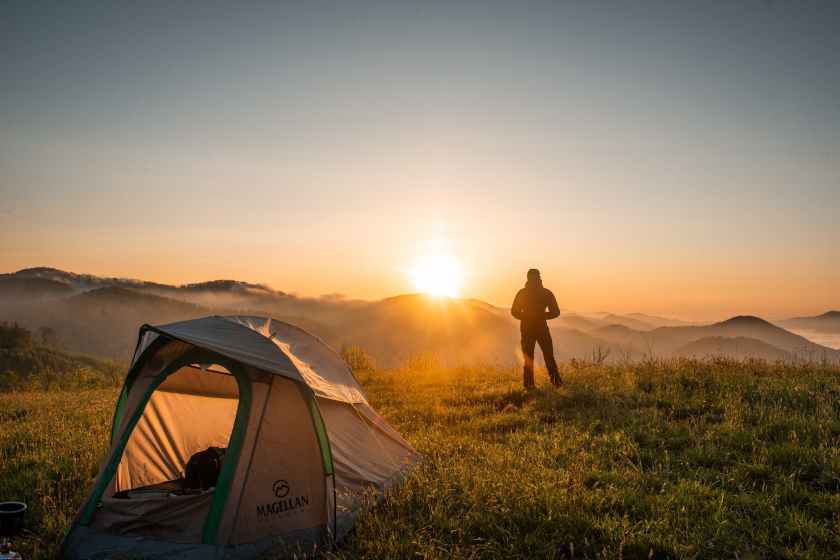
On October 6, 2021 I wrote a blog post entitled Connections. Toward the end of the article I talked about a character, Mary, who was in a heated argument with her boyfriend as they were walking along. They had come to an area or clearing where the sunset could be seen much better in all of its glory. The boyfriend didn’t notice it. He could’ve cared less, but Mary noticed it and enjoyed it so much that for a moment she forgot about the argument. In this post I said that the sunset itself had nothing to do with the issue at hand, which was the argument. It was a random occurrence. But it had everything to do with creating empathy for the character of Mary. Add to this the dialogue between the two. Maybe Mary’s boyfriend said something nasty to her. The reader will be affected by these words to in that they will feel for her/have empathy for her. Mary may not be hurt by his words, but the reader will feel for her anyway. Well, most readers anyway.

Photo by Cliford Mervil on Pexels.com

Creating empathy for your characters is what draws your readers further into your story. Feelings, as we all know, have a strong connection to empathy. The two go hand in hand. As a side note, not everyone feels empathy, so don’t worry if your characters don’t connect with some readers. It’s just the nature of the beast.

Empathy, or even lack thereof, also gives incite into your character’s personality. In the above scenario we come to understand that Mary loves the beauty of sunsets even in the face of angst. It also hints towards her sensitivity. In addition, deep down she doesn’t let something like an argument with her boyfriend get to her. This indicates strength to get through it and not dwell on it. It could also indicate she feels as though the situation between her and her boyfriend will get resolved. The point being, in the ugly face of an argument, she saw beauty.

Photo by James Wheeler on Pexels.com

What drives the feelings within your characters? The situations they are thrust up against. Let’s say we have a character named Jack. He’s 31 years old, a successful corporate lawyer, and married with one child. He finds out his wife is cheating on him. Over the eight years they’ve been married, he has given his wife everything. He supports her in all that she enjoys doing. There isn’t anything that indicated to him that she had been unfaithful. Until he walks in on his wife and her lover when he comes home to surprise her (I know. This is a typical scenario, but it works for the point I’m trying to make). Already the reader feels empathy for him, and we haven’t gotten to how he is feeling yet. Although, his feelings will be interspersed throughout the scenario anyway.

Everything, the feelings and situations, even the words characters say to one another can create empathy within your readers. They will be pulled into your story. You want this. Of course, there are other ways besides creating empathy that can pull a reader in as well. Here again, that’s another blog post.