The deepest sorrow ever felt,
was when true love had
come and knelt,
then kissed my hand and blew away,
and clutched my heart but would not stay.
Author: L. M. Montes
Hi There!
Welcome to my site, and thank you for visiting. Please feel free to share this blog and any posts herein.
Cannon Beach, Oregon, USA


Embrace the Stress

Over the last 3 weeks I’ve been in and out of my blog and posting. The reason? My husband and I found a new house. Our first. YAYYY!!! We’ve been moving much of everything ourselves. Stressful? Yup. Worth it? Oh Yeah. Much like the process of writing a novel. Yes, it can be stressful, but in the end it is so very much worth it, and the effort you put into it will give you a sense of huge accomplishment. Words of wisdom….Embrace the Stress.
Autumn Spread


The above photos are from trees out my back yard and to the side of my house. The colors were to beautiful to resist.
Beginning a Scene (Part I)
One way to begin a scene is to start with some kind of action. Readers love action. Not everyone though. Back in the day when the first movie of Speed came out with Keanu Reeves, it was heart stopping action from the word ‘go’. The elevator scene at the beginning of the movie left me breathless. Those of you who saw that movie know what I’m talking about. I then recommended the movie to my mom who, after watching the elevator scene, stopped watching the movie because it was too much of a thrill ride. God bless her. She tried.
Essentially, any scene where events are flowing at a constant/continuous pace is an action scene. Some good ways to depict action in your story include:
- Use shorter sentences. They are easier to comprehend, and they allow for faster reading which leads to faster action (You want this).
- Use a mixture of action and dialogue. Stay away from long descriptions. It slows down the action.
- Don’t write what is going on inside the character’s mind at the time. These thought processes will happen before and after but not during.
Here are some types of scenes that lead to action:
- A character or characters faced with a choice and either option is equally as tough.
- A chase scene
- An argument between two characters
- A crime committed
- Fight scene
The Observer
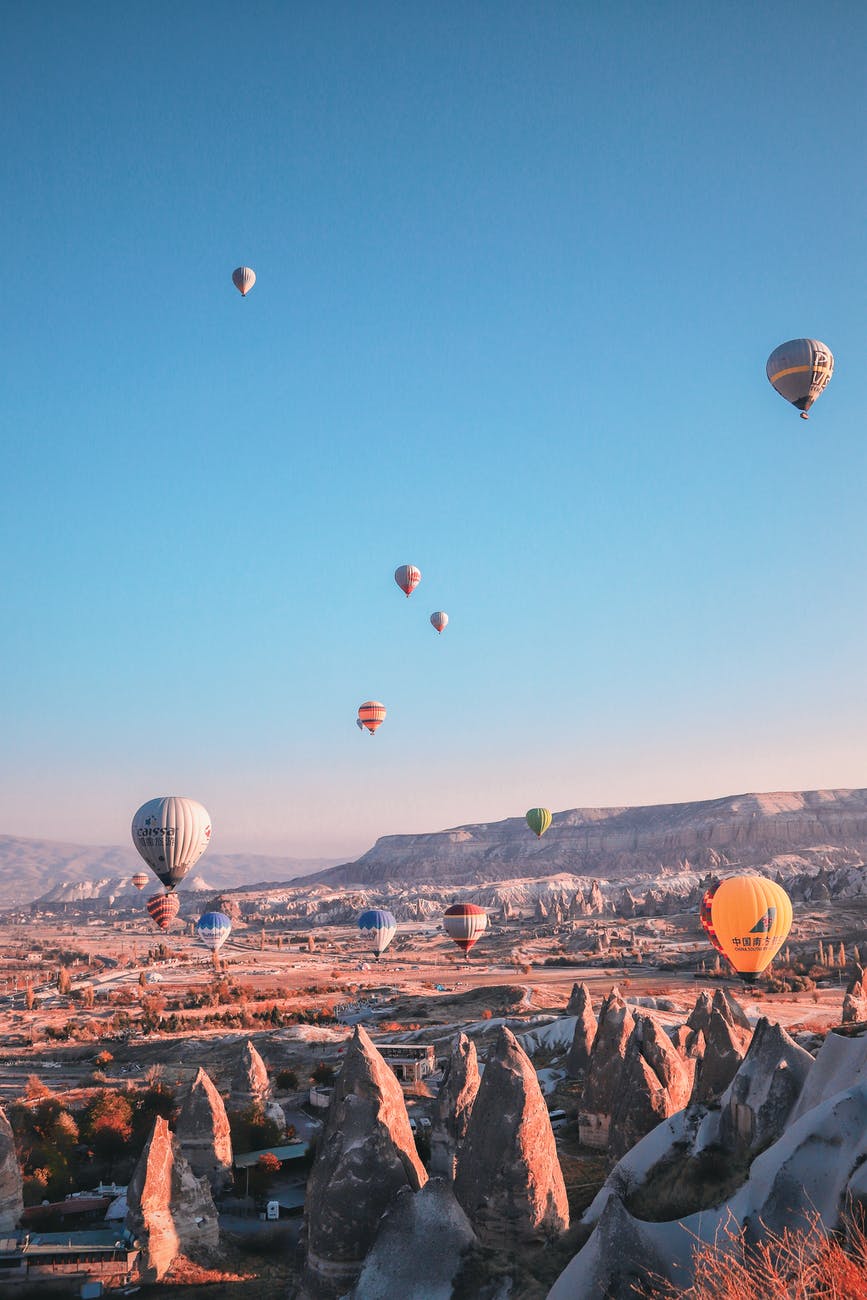
I love hot air balloons, yet I’ve never been up in one. I am afraid of heights, yet I would go up in one of these in a heart beat. The opportunity never presented itself. Just think about how quiet it must be up there. You’d be able to look down and wonder, letting your imagination go. Maybe you are going through some stressful times and need to get away from everything. This would be a great way to do that. Hiking is another fun activity to help one relax. Here again, I’ve never been hiking. Not really. I have friends who do and they send back some fabulous pictures of their trips. There’s so much so see in this world, not just here in America. Get out and live life. Enjoy the beauty it has to offer, whether you’re on the ground or up in a balloon.
From the Top of Pikes Peak

Colorado Springs, CO, United States of America
Writing Prompts
Hi Everybody. Good Morning, Good Afternoon, or Good Evening depending on the part of the world you are in. I hope your day is going well, and I wish you many blessings and peace. Please find listed below a list of writing prompts. Whether you are writing a short story or a book, or if you are looking for something to write in your journal, this list should help you.

- “Did you see this? Where did it come from?” asked Paul.
- I took my usual walk in the woods. The quiet and hush of the forest cleared my mind. But…..
- Jade grabbed her keys and stormed out the door.
- “For get it. I said you…..”
- We clinked our glasses together and stared into the other’s eyes while we sipped our Chardonnay. But little did Jack know…..
- Suzy hugged her teddy bear and huddled close to her mother.
- “Grab the hotdogs out of the refrigerator, would you? The grill is almost ready and…..”
- “Ok, hold that pose. Hold it. Hold it. Ok now. Walk over…..”
- The rowboat rocked and swayed, as the waves juggled it side to side.
- Walking through the mown grass, I plucked petals from the yellow rose.
- “Your arms are comfortable. I wish to never move,” cooed Katie.
- “It’s ok. You’re safe now,” whispered John.
- His chance of winning was slim, but he had to try.
- “What do you want from me?” asked Millie.
- “I think just found…”
- “It’s your choice,” she shrugged.
Coffee and a Book by L. M. Montes

You woke one morning to rain-drop spatter
A chill in the air did nip,
Out the window wind whipped,
The day now does not matter.
To the kitchen sluggish feet shuffle
Timed coffee now is pouring,
Aroma floats and tickles the nose,
You grab a book and a truffle.
The office and work the rain it took
Home soothed you so much better,
So get your blanket and bundle up
To coffee and a book.
By L. M. Montes
Dialogue: The Don’ts

In the real world we talk everyday, and what we say and talk about at the time could be part of a directed conversation about a topic or you may move from topic to topic. But, generally, what your are saying has nothing to do with moving a story forward, as in a book. Therefore, the dialogue/conversations in a the story you are writing should move the story forward. However, it needs to be done in such a way that it sounds real and everyday. So, how do you do this? Yes, this is a lot to think about, but remember you can go back later and fix it. I’ve said this before, get the words on the page first. Here are some things to keep in mind when writing dialogue.
- Remember your dialogue tags. You don’t need a dialogue tag after every line of dialogue. Every now and then put one in to remind the reader of who is speaking.
- Small talk is a killer. In real life we make small talk all the time for different reasons. Maybe we’re nervous and don’t know what to talk about, so we end up saying little tidbits of information to try and break the ice. In real life though, we aren’t trying to advance a story/plot. So, leave the small talk out of your dialogue, unless of course it advances your story/plot.
- Keep it natural. Make sure your dialogue sounds natural. One good way to tell if it sounds natural or not is to read it out loud.
- No same sounding characters. This closely relates to voice. I touched on this in a previous blog post (Voice from September 21, 2021) Make sure your characters sound different when they are speaking. Word choice, dialect, and how they say something all plays a part in this. Maybe one of your characters has a signature word they like to say. Use that.
- Using names in dialogue. Normally, one wouldn’t use someone else’s name when speaking to someone else unless one is trying to get the attention of the other or make a point. However, if it DOES work, then use it. But be careful.
- Using exposition can bore. When a character explains the story in dialogue it ends up being a form of telling. What happens when you ‘tell’ a story vs. ‘show’? You risk losing the reader. Obviously, you don’t want this. So, stay away from this.
- Don’t use ‘said’ all the time. Please refer to my blog post Words to Write By on October 18, 2021.
- Be accurate and consistent with punctuation. Some writers like to use double quotation marks (“), and some writers like to use single quotation marks (‘). Pick one and stick with it. Just don’t forget to use them. I knew a writer who, when I asked her what she felt her weakness was as it relates to story writing, said it was remembering to put the quotation marks in.
- Conversation that is unimportant doesn’t belong. If a conversation between your characters doesn’t cause some kind of friction, tension, or if it doesn’t advance the story/plot at all, leave it out.
- Silence is a good thing. Too much conversation can be detrimental to the story so be careful. Silence can add a lot to a conversation sometimes.
I know this is much to think about, but don’t sweat it too much. If you need someone to check your dialogue, have a writing buddy read it and give you feedback. Also there are some good books out there about dialogue. Here are some suggestions below (You can find any of them on Amazon):
How to Write Dazzling Dialogue: The Fastest Way to Improve Any Manuscript by James Scott Bell
The Writers Guide to Realistic Dialogue by S. A. Soule
Writing Vivid Dialogue: Professional Techniques for Fiction Authors by Rayne Hall

