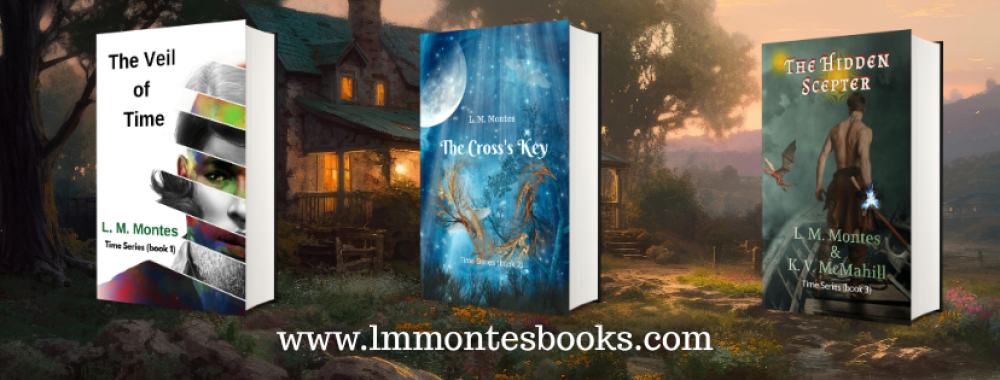

O’er the waves we sail,
To slow time’s pace but do fail,
Futile to prevail.
Tragedy so strikes,
Time it slows no speed it likes,
Through the heart it spikes.
by L. M. Montes
O’er the waves we sail,
To slow time’s pace but do fail,
Futile to prevail.
Tragedy so strikes,
Time it slows no speed it likes,
Through the heart it spikes.
by L. M. Montes
Across the bay I gaze,
Mountains with hats of snow do laze,
Boats a-sailing waiver and weave
Upon the sapphire waves then leave.
by L. M. Montes

A memory,
A thought,
In the foreground of your mind,
It sits awhile and lingers
In the glow before your eye.
Moments tease,
Others please,
In the foreground of your mind,
They sit awhile and linger
But your memories said goodbye.
You’re older,
You languish,
In the background of your mind,
You sit awhile and linger
To await a past that died.
One way to begin a scene is to start with some kind of action. Readers love action. Not everyone though. Back in the day when the first movie of Speed came out with Keanu Reeves, it was heart stopping action from the word ‘go’. The elevator scene at the beginning of the movie left me breathless. Those of you who saw that movie know what I’m talking about. I then recommended the movie to my mom who, after watching the elevator scene, stopped watching the movie because it was too much of a thrill ride. God bless her. She tried.
Essentially, any scene where events are flowing at a constant/continuous pace is an action scene. Some good ways to depict action in your story include:
Here are some types of scenes that lead to action:
Hi Everybody. Good Morning, Good Afternoon, or Good Evening depending on the part of the world you are in. I hope your day is going well, and I wish you many blessings and peace. Please find listed below a list of writing prompts. Whether you are writing a short story or a book, or if you are looking for something to write in your journal, this list should help you.

You’re walking with a friend in a crowded amusement park. In your pocket are some coins, but what you don’t realize is you have a hole in your pocket. The next time you reach in to get them, you may only have a couple quarters left. The hole sucked the rest of your coins and out it went without you knowing it. Well, think of the words you write with as your hole and the reader as your coins. You want to keep your readers hooked and reading, not lost and motivated to put your story down. So…..how do you keep your readers from falling out of that hole?
Your wording should be tightened up, and condensed. In other words, don’t be wordy. It shouldn’t take you several words to get your point across. Here are some examples:
In this example, both sentences pretty much say the same thing but number 1 uses more words to get to the point. Number 2 is straight forward AND it implies the wind is hitting the person in the face without having said that it is.
Here again all the words in number 1 aren’t needed in order to paint a picture of the setting. It’s boring because too many words are used to describe what few words can actually do. Not only that, but an auxiliary verb like ‘was’ only tells you about it. It doesn’t add to the picture. It takes away from it. Number 2 leaves you with a clear, strong picture in your mind.
Remember something though. When you’re writing your story, write your story. Concentrate on that. THEN, once you have your first draft finished, go back to the beginning and focus on the particulars and details like wordiness.
When it comes to writing tag lines, such as ‘said John,’ sometimes we need other words to say instead of the word ‘said’. Why? Because said gets too monotonous. And in this writer’s opinion, it can ruin the flow. It kind of takes the realism out of the dialogue. So…..what are some alternatives? See the list below.
There are much more than these, but you get the idea. Notice these words dig deeper into the mood/emotions of the speaker. That’s what you want because, what this does, is touch the readers’ emotions. That’s what you want.

You placed me in my room
through a wall when punched with doom,
and on the floor I lie
with pain and marks of gloom.
I woke to tick tock tick
on a ground of cold dank brick,
A clock it caught my eye
with a face of blood and grit.
In the heat my heart it froze
when horror it did grow,
the gush and ooze of red
from the time piece it did flow.
By L. M. Montes

When you’re in a competition, you give it your all, everything you’ve got. You may be nervous at first before you start because you want to win. You don’t want to lose. Then your mom, dad, or friend says, “Just do your best. That’s all you can do. That’s all anyone can do.” In your mind, losing is losing, not winning. But…..in your villains mind, losing is winning.
What do I mean by this? Remember in the previous post (Villains Part VI) I said villains take pleasure in the protagonist’s pain. Well, yes. If burning everything down so your main character will lose everything but gives your villain pleasure in that main character’s loss, then the destruction of all is worth it to them. Go for the gusto with your villain’s actions. Have your villain throw ‘fuel on the fire’ (so to speak) as many times as it takes to cause destruction.
Ultimately, what is the reason behind the importance of making a great evil villain? Readers who continue turning the pages of your story all the way through to the end.

Watching someone open a gift, listening to your favorite music, a day at the beach, or even a walk in the woods; might give you pleasure. Now, normally, activities like the this would. But for villains in your stories, what gives them pleasure is none of the above. Oh No. They get pleasure from the pain of others. To your villain, other peoples’ pain is climactic, exhilarating, and releases the feel good chemicals inside their brain. They thrive on seeing others’ hurt and to the point where they have to continue in their hurtful behavior so they can continue to feel that pleasure.
Types of pain they inflict can be:
When it comes to dreaming up ways your villain could possibly hurt your main character, think outside the box. Be creative about what you want them to do. What makes your villain’s actions different than others you have read about in other books. Mold them. Make their pain causing actions unique.

